Sick or Allergies? Difference, Symptoms, Causes, and Treatment can help when you’re feeling crummy or feeling unwell with a runny nose, cough, or congestion.
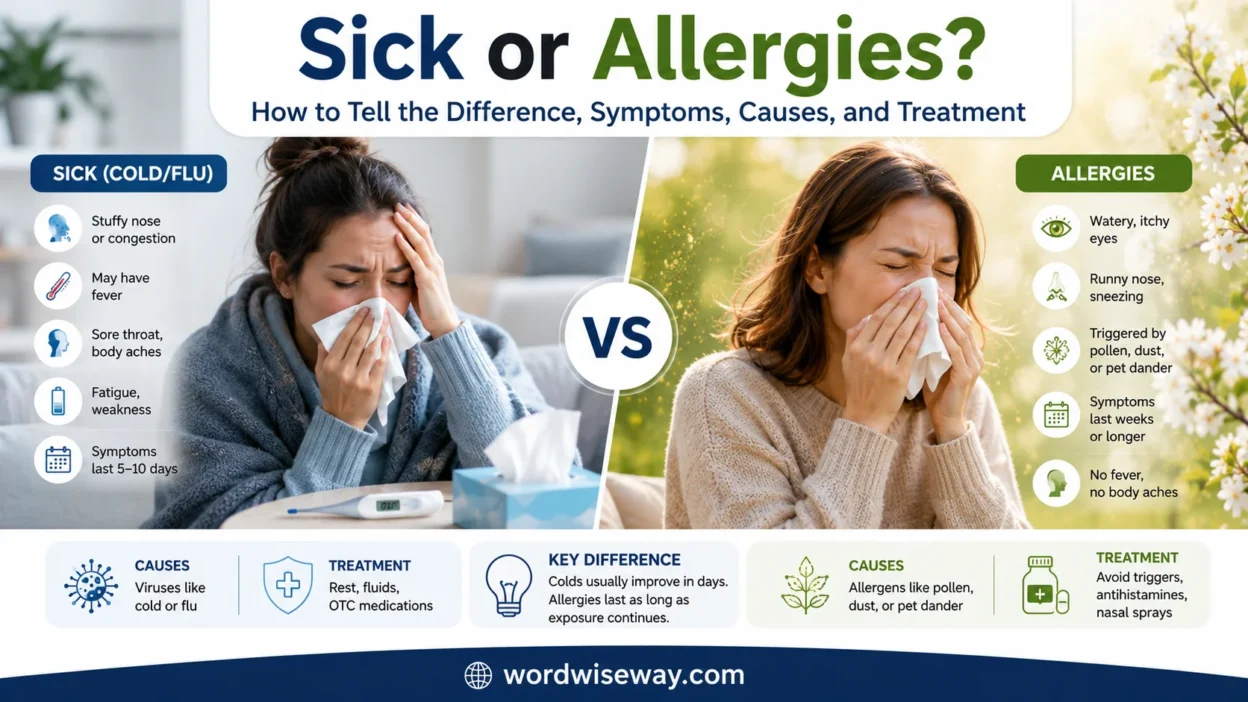
Allergies, a cold, seasonal allergies, a sinus infection, and the flu may cause similar symptoms, but their causes and timelines differ. Sneezing, itchy eyes, and a runny nose without fever often suggest allergies, while fever, fatigue, and body aches may mean you’re sick.
Learning how to tell them apart helps you know what to expect, choose the right treatment, and avoid unnecessary medications. Understanding these differences supports better care in everyday situations.
Checking symptoms, using practical advice, and following professional guidance can help. If you’re unsure, call your doctor rather than relying only on health online information.
Quick Answer
If you’re trying to figure out whether you’re sick or have allergies, start by looking at how your symptoms behave.
Allergies are more likely if you have:
- Itchy, watery, or red eyes
- Frequent sneezing
- An itchy nose or throat
- A clear, watery runny nose
- Nasal congestion
- Symptoms after exposure to pollen, dust, pets, or mold
- Symptoms that return during a particular season
- No fever
- Symptoms that continue while you’re exposed to the trigger
An infection is more likely if you have:
- Fever
- Sore or scratchy throat
- Cough
- Headache
- Body aches
- Chills
- Noticeable fatigue
- A general feeling of being unwell
- Recent contact with someone who was sick
One clue rarely settles the question. For example, sneezing happens with both colds and allergies. It becomes more useful when you consider what comes with it. Sneezing plus itchy eyes strongly favors allergies, while sneezing with a sore throat, cough, and body aches points more toward an infection.
Sick or Allergies: What’s Causing Your Symptoms?
The biggest difference comes down to cause.
A common cold is a viral respiratory infection. More than 200 respiratory viruses can cause cold symptoms, with rhinoviruses among the most common causes. These viruses can spread through respiratory droplets, close contact, and contaminated hands or surfaces.
Allergies don’t involve a virus or bacteria. Instead, your immune system reacts to an allergen that isn’t normally dangerous. Pollen, dust mites, mold, and pet allergens can trigger inflammation in the nose, eyes, and airways.
That difference explains why the two conditions can feel alike while behaving differently. A cold is your body responding to an infection. An allergy is your immune system reacting too strongly to a harmless substance.
Sick or Allergies Symptoms: How Can You Tell?
The symptoms themselves offer useful clues, but context matters.
Does Fever Mean You’re Sick?
Fever generally points toward an infection rather than allergies.
A common cold can sometimes cause a low-grade fever, particularly in children. Adults may have a fever less often. Allergic rhinitis, however, doesn’t typically cause fever.
So if you have a measured fever along with a sore throat, body aches, or chills, an infection becomes more likely.
Still, don’t treat fever as a perfect diagnostic test. Not every infection causes one. Some respiratory infections can produce cold-like symptoms without a noticeable fever.
Are Itchy Eyes a Sign of Allergies?
Itchy eyes are one of the strongest clues pointing toward allergies.
Allergies commonly cause watery, itchy, red, or irritated eyes. You might also notice an itchy nose, throat, or roof of your mouth.
A cold can make your eyes water, but intense itching is less characteristic. If you constantly want to rub your eyes, particularly during a specific season, allergies become more likely.
Can Sneezing Mean You’re Sick?
Yes. Sneezing doesn’t belong exclusively to allergies.
Both colds and allergies can irritate the nasal passages and trigger sneezing. The difference lies in the surrounding symptoms.
For instance, sneezing with itchy eyes and an itchy nose fits an allergy pattern. Sneezing accompanied by a sore throat, cough, headache, or body aches fits an infection more closely.
Is a Runny Nose a Cold or Allergy Symptom?
Unfortunately, this symptom doesn’t make the answer easy.
Both allergies and colds can cause a runny or stuffy nose. Allergies often cause a clear, watery discharge, while a cold may also begin with clear mucus before the discharge becomes thicker.
Mucus color alone doesn’t tell you whether you have a bacterial infection. Yellow or green mucus can occur during ordinary viral respiratory infections and doesn’t automatically mean you need antibiotics.
Does a Sore Throat Mean You’re Sick?
A sore or scratchy throat is more commonly associated with respiratory infections.
Allergies can still irritate your throat. Postnasal drip can cause mucus to move down the back of your throat, leading to irritation or coughing. However, a pronounced sore throat combined with fever or body aches makes an infection more likely.
What About Coughing?
Coughing can happen with both conditions.
A cold may directly irritate the respiratory tract and cause coughing. Allergies can also trigger a cough when mucus drains down the throat or when allergens irritate the airways.
The pattern matters. A cough alongside itchy eyes and seasonal sneezing may occur with allergies. A cough accompanied by fever, sore throat, and body aches fits an infection more closely.
Do Body Aches Mean You’re Sick?
Body aches generally favor an infection.
A common cold can cause mild aches. Other respiratory infections, including influenza and COVID-19, can cause more noticeable body aches and fatigue.
Allergies may leave you exhausted, especially if congestion makes sleeping difficult. They don’t usually cause the same generalized aching and sick feeling associated with many infections.
Cold vs. Allergies: Symptoms Compared
| Symptom | Common Cold or Infection | Allergies |
| Runny nose | Common | Common |
| Stuffy nose | Common | Common |
| Sneezing | Common | Very common |
| Itchy eyes | Less common | Very common |
| Watery eyes | Possible | Common |
| Itchy nose | Possible | Common |
| Sore throat | Common | Less typical |
| Cough | Common | Possible |
| Body aches | Possible | Uncommon |
| Fever | Possible | Not typical |
| Fatigue | Possible | Possible |
| Triggered by pollen or dust | No | Common |
| Follows contact with someone sick | Possible | No |
| Contagious | Yes, if infectious | No |
| Symptoms last while trigger remains | Less typical | Common |
This table can help you spot patterns, but it can’t diagnose the cause of your symptoms. Some illnesses don’t follow a textbook pattern, and allergies can occur alongside infections.
When Symptoms Begin Can Reveal the Cause
Timing is one of the most useful clues.
Cold symptoms generally don’t begin immediately after you encounter a virus. The CDC explains that cold symptoms can develop after exposure to a respiratory virus and typically follow a short incubation period.
Allergy symptoms often have a different rhythm. You may notice them soon after exposure to pollen, dust, pets, or another trigger.
Imagine that your nose starts running whenever you clean a dusty room. Your eyes itch after spending time around cats. You feel better after leaving the environment.
That recurring pattern is a strong clue that an allergen may be responsible.
Seasonal Symptoms Often Point Toward Allergies
Seasonal allergies can appear at predictable times of the year.
Tree pollen commonly causes problems during spring. Grass pollen can trigger symptoms during late spring and summer. Weed pollen, including ragweed, can cause symptoms later in the year.
Indoor allergens can behave differently. Dust mites, mold, and pet allergens may cause symptoms throughout the year.
If your “cold” appears around the same time every year and keeps returning, allergies deserve consideration.
Colds Usually Follow a Shorter Course
A cold usually improves as your immune system clears the infection.
The CDC says common colds generally last less than a week, although symptoms can vary. Some symptoms, particularly coughing, may last longer.
Allergies don’t necessarily follow that timeline.
If you’re exposed to an allergen every day, symptoms may continue for weeks. Remove the trigger and the symptoms may improve.
That difference can be a useful clue when you’ve been congested for longer than expected.
Are Allergies Contagious?
No. Allergies aren’t contagious.
You can’t catch hay fever or allergic rhinitis from another person. Allergies result from an immune response to allergens rather than an infectious organism.
A cold is different. Viruses that cause colds can spread from person to person through respiratory droplets, close contact, and contaminated hands or surfaces.
This distinction can help when several people around you develop similar symptoms. If a family member becomes sick and you develop a sore throat and cough shortly afterward, an infection becomes more plausible.
If your symptoms appear every spring when pollen rises, the explanation may be much less dramatic.
Can Allergies Cause a Fever?
Typical allergies don’t cause fever.
Allergic rhinitis can cause sneezing, congestion, itchy eyes, nasal drainage, coughing, and fatigue. Fever isn’t considered a typical allergy symptom.
If you have a confirmed fever, consider whether an infection could be responsible.
However, fever alone doesn’t tell you exactly which infection you have. Influenza, COVID-19, and other infections can produce overlapping respiratory symptoms.
That’s why the complete symptom pattern matters.
Can You Have Allergies and Be Sick at the Same Time?
Yes. You can have allergies and an infection at the same time.
This combination can be particularly confusing.
Suppose your allergies normally cause sneezing, congestion, and itchy eyes. Then you suddenly develop a fever, sore throat, and body aches.
Those new symptoms may indicate that an infection has joined the party.
The key is to notice what changed from your normal allergy pattern. New symptoms can provide more information than the symptoms you’ve experienced for months.
How to Manage Symptoms When You’re Sick
Most common colds improve without specific treatment. Treatment usually focuses on making symptoms easier to manage while your body fights the infection.
Helpful measures may include:
- Getting enough rest
- Drinking plenty of fluids
- Using saline nasal spray for congestion
- Using appropriate over-the-counter medicines according to the label
- Avoiding unnecessary antibiotic use
- Staying home when you’re feeling unwell
- Taking reasonable steps to avoid spreading respiratory viruses
Antibiotics don’t treat viral colds. They work against certain bacteria, not viruses.
If symptoms could indicate influenza or COVID-19, testing and medical advice may be appropriate depending on your circumstances.
How to Manage Allergy Symptoms
Managing allergies starts with identifying the trigger.
Common allergens include:
- Pollen
- Dust mites
- Mold
- Pet dander
- Cockroach allergens
Reducing exposure can make a meaningful difference.
For example, someone sensitive to pollen may benefit from limiting exposure during periods when pollen levels are high. Someone reacting to indoor allergens may need to focus on reducing those triggers inside the home.
Healthcare professionals may also recommend treatments such as antihistamines, saline nasal rinses, or nasal corticosteroid sprays, depending on the person’s symptoms and medical needs.
If allergies repeatedly disrupt sleep, school, work, or everyday activities, professional evaluation can help identify the trigger and an appropriate treatment plan.
Sick or Allergies: A Real-Life Example
Consider two people who wake up sneezing on the same morning.
Person One
The first person has:
- Itchy eyes
- Frequent sneezing
- Clear nasal drainage
- An itchy nose
- No fever
- Symptoms after spending time outdoors
The symptoms began during a period when pollen was triggering symptoms.
This pattern is more consistent with allergies.
Person Two
The second person has:
- Nasal congestion
- Sore throat
- Cough
- Headache
- Body aches
- Low-grade fever
- Recent contact with a sick family member
That combination is more suggestive of a respiratory infection.
The lesson is simple: the combination matters more than any single symptom.
Sick or Allergies: A Simple Self-Check
When you’re unsure, ask yourself a few practical questions.
Do I have a fever?
A fever makes an infection more likely because typical allergies don’t cause fever.
Are my eyes itchy and watery?
Strong eye itching, particularly with sneezing and nasal itching, points toward allergies.
Do I have body aches?
Body aches make an infection more likely.
Did symptoms appear after a known trigger?
If symptoms repeatedly appear after exposure to pollen, dust, pets, or mold, allergies become more likely.
Has someone around me been sick?
Recent exposure to someone with a respiratory illness can increase the likelihood of an infection.
Do my symptoms return during the same season?
A predictable seasonal pattern strongly suggests seasonal allergies.
Are symptoms continuing because I’m still exposed?
Allergies can persist as long as the triggering allergen remains around you.
When Should You See a Healthcare Professional?
Most mild colds improve without medical treatment. However, certain symptoms deserve professional attention.
According to the CDC, you should seek medical care for respiratory symptoms involving trouble breathing, dehydration, a fever lasting longer than four days, symptoms lasting more than 10 days without improvement, or symptoms that improve and then become worse.
You should also discuss recurring allergy symptoms with a healthcare professional if they interfere with normal activities or don’t improve with appropriate treatment.
Seek Urgent Help for Serious Breathing Problems
Difficulty breathing shouldn’t be dismissed as an ordinary cold or allergy.
Likewise, serious allergic reactions can involve symptoms such as significant swelling, wheezing, or difficulty breathing. Such symptoms require urgent medical attention.
When breathing becomes difficult, don’t wait for the symptoms to sort themselves out.
Sick or Allergies: Key Takeaways
Figuring out whether you’re sick or dealing with allergies becomes easier when you look at the whole picture.
Itchy eyes, frequent sneezing, nasal itching, and symptoms connected to pollen or another allergen favor allergies. Fever, sore throat, body aches, cough, and feeling generally unwell make an infection more likely.
Duration also matters. A cold usually follows a shorter course and gradually improves. Allergies can continue for weeks or return whenever you’re exposed to the trigger.
The lines aren’t always perfectly neat. You can have allergies and a cold at the same time. Other respiratory infections can also resemble either condition.
If symptoms become severe, persist longer than expected, or keep getting worse, professional medical advice can help determine the cause.
Read More: Allergies or Cold: Difference, Symptoms, Causes, and Treatment
FAQs
How can I tell if I’m sick or have allergies?
Allergies often cause sneezing, itchy eyes, and a runny nose without fever. A cold or flu may cause fatigue, body aches, fever, cough, and congestion.
Can allergies cause a fever?
Allergies usually don’t cause a fever. If you have a fever along with body aches or strong fatigue, an infection such as a cold or flu may be more likely.
Is a runny nose a sign of allergies or a cold?
It can be either. Allergies often cause a clear, watery runny nose with sneezing and itchy eyes, while a cold may bring congestion and other symptoms.
How long do allergy symptoms usually last?
Allergy symptoms can continue as long as you’re exposed to an allergen. Seasonal allergies may return during specific times of the year and improve when exposure decreases.
Can allergies cause coughing and congestion?
Yes. Allergies can cause nasal congestion and coughing, especially when mucus drains down the throat. However, a cold can cause similar symptoms.
What symptoms are more common with the flu?
The flu commonly causes fever, fatigue, body aches, cough, and feeling generally unwell. Symptoms can appear more suddenly than those associated with allergies.
When should I call a doctor?
Consider calling your doctor if symptoms are severe, persistent, worsening, or difficult to understand. Professional guidance can help identify the likely cause.
Can a sinus infection feel like allergies?
Yes. Both can cause congestion, nasal symptoms, and pressure around the face. The overall symptom pattern and duration can help distinguish them.
Should I take medicine for allergy or cold symptoms?
Treatment depends on the cause. Avoid taking unnecessary medications when you’re unsure what’s causing your symptoms, and ask a healthcare professional when needed.
Can allergies and a cold happen at the same time?
Yes. A person can experience allergies while also developing a cold. When symptoms overlap, paying attention to their pattern and duration can help clarify what’s happening.
Conclusion
Knowing the difference between allergies, a cold, the flu, and a sinus infection can make confusing symptoms easier to understand. Allergies commonly involve sneezing, itchy eyes, and a runny nose without fever, while infections may bring fever, fatigue, cough, or body aches.
Still, symptoms don’t always follow a neat checklist. If you’re unsure about what’s causing your symptoms, focus on how they develop and how long they last. When symptoms become severe or concerning, contacting a doctor is the safest way to get appropriate guidance.