Allergies or Cold: Difference, Symptoms, Causes, and Treatment can help people understand why they sneeze, have a runny nose, stuffy nose, or feel tired.
Allergies and the common cold share similar symptoms, but their causes differ. Seasonal allergies may flare up during certain times of the year, while colds can happen year-round. Sneezing, sniffling, and an annoying cough can occur with either condition.
The duration offers another useful clue. A cold usually runs its course, while allergies may continue indefinitely when triggers remain. Knowing these differences helps you identify the condition and choose suitable treatment.
Allergy medicine, rest, and fluids may help depending on the cause. Understanding the symptoms can also prevent common mistakes and unnecessary doctor visits.
Quick Answer
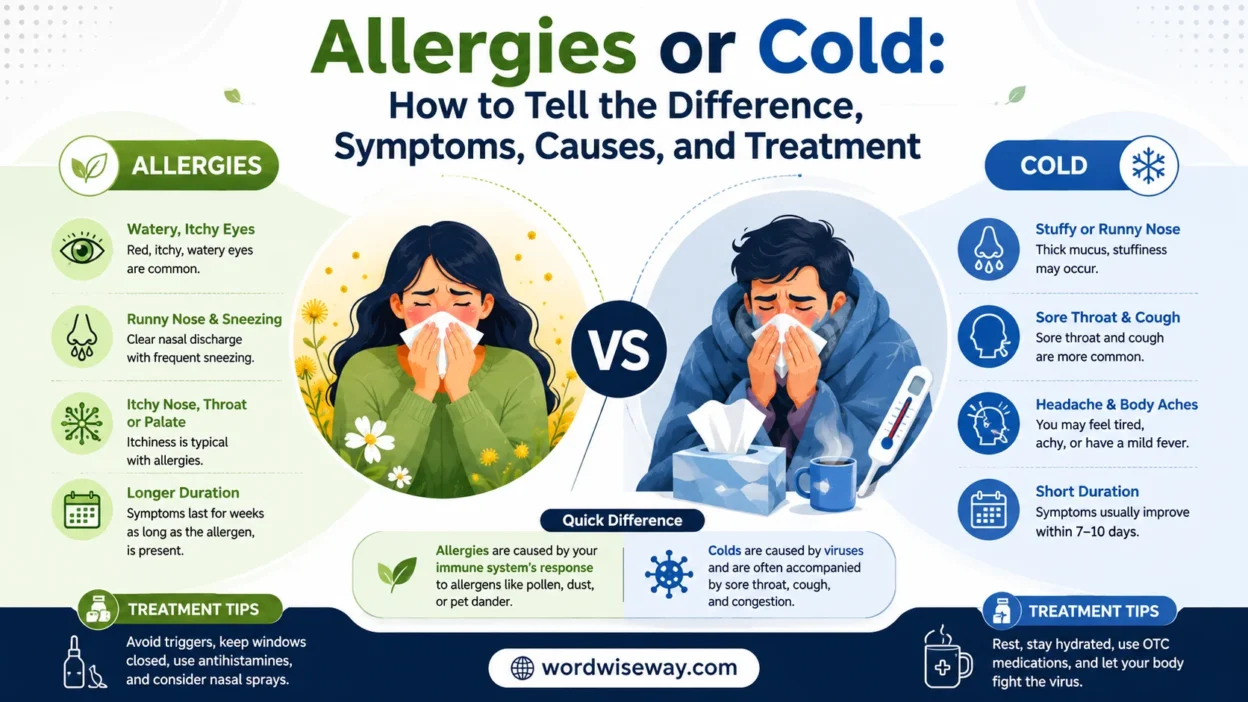
If you’re trying to figure out allergies or a cold, start by looking at the symptom pattern rather than one symptom alone.
Allergies are more likely when:
- Your eyes, nose, or throat feel itchy.
- Your eyes are watery.
- You sneeze repeatedly.
- Symptoms appear after exposure to pollen, dust, pets, or another trigger.
- You don’t have a fever.
- Symptoms continue for weeks or return whenever you’re exposed to a trigger.
A cold is more likely when:
- You develop a sore throat.
- You have a cough.
- You feel tired or mildly achy.
- Symptoms develop over a few days.
- You may have a low-grade fever.
- Symptoms gradually improve within roughly one to two weeks.
One important point: symptoms can overlap. You can also have allergies and a cold at the same time. When that happens, the usual clues become less obvious.
Symptoms at a Glance
| Symptom or Sign | Allergies | Common Cold |
| Sneezing | Very common | Common |
| Runny nose | Very common | Common |
| Stuffy nose | Common | Common |
| Itchy eyes | Very common | Less common |
| Watery eyes | Common | Sometimes |
| Itchy nose | Common | Less common |
| Sore throat | Sometimes | Common |
| Cough | Sometimes | Common |
| Fever | Unusual | Sometimes |
| Body aches | Uncommon | Sometimes |
| Fatigue | Possible | Common |
| Symptoms after allergen exposure | Common | No |
| Symptoms lasting weeks | Common | Less typical |
| Gradual improvement | Not necessarily | Usually |
This table isn’t a diagnostic test. Think of it as a symptom map that helps you recognize patterns.
What Are Allergies?
Allergies happen when your immune system reacts to a substance that normally isn’t dangerous. Your body mistakenly treats the substance as a threat and launches an immune response.
Common environmental allergens include:
- Pollen
- Dust mites
- Pet dander
- Mold spores
- Certain insects
- Some foods and medications
For seasonal allergies, pollen often plays a major role. Symptoms may become worse during particular seasons or after spending time outdoors.
During an allergic reaction, the body can release chemicals such as histamine. Histamine contributes to symptoms including sneezing, itching, watery eyes, and nasal congestion.
Common Allergy Symptoms
Allergies often affect the nose and eyes, especially when the trigger is airborne.
You may experience:
- Repeated sneezing
- Clear, watery nasal discharge
- Nasal congestion
- Itchy nose
- Itchy or watery eyes
- Postnasal drip
- Throat irritation
- Coughing
- Reduced sleep quality
- Fatigue
The itching clue deserves special attention. Persistent itchy eyes or an itchy nose strongly favors allergies over a typical cold.
For example, imagine that you start sneezing every morning after opening your bedroom window. Your eyes become watery, but you don’t develop a fever or body aches. If those symptoms repeatedly appear under similar conditions, an environmental allergy becomes more plausible.
What Is a Cold?
A common cold is a viral infection of the upper respiratory tract. Many different viruses can cause cold symptoms, which is one reason you can catch more than one cold over time.
Cold viruses can spread through respiratory droplets and close contact with infected people. Touching contaminated surfaces and then touching your eyes, nose, or mouth can also contribute to transmission.
A cold usually begins with symptoms such as a scratchy throat, runny nose, congestion, or sneezing. Coughing may become more noticeable as the illness progresses.
Common Cold Symptoms
Typical cold symptoms include:
- Runny nose
- Stuffy nose
- Sneezing
- Sore throat
- Cough
- Mild fatigue
- Headache
- Mild body aches
- Sometimes a low-grade fever
Not everyone experiences every symptom. Some people mainly develop congestion and a sore throat, while others have a stronger cough.
Unlike allergies, a cold generally runs its own course. Symptoms usually become noticeable, peak, and then gradually improve.
The Biggest Differences
The easiest way to distinguish allergies or a cold is to examine several clues together.
Itchy Eyes Often Point to Allergies
Itchy, watery eyes are one of the more useful clues when comparing allergies with a cold.
Allergies commonly cause eye itching because allergens can trigger inflammation around the eyes. You may notice redness, watering, or an uncomfortable urge to rub your eyes.
A cold can cause watery eyes, too. However, pronounced itching is less characteristic of a typical cold.
If your nose is running and your eyes are intensely itchy while you’re exposed to pollen, allergies become more likely.
Fever Favors an Infection
Fever isn’t a typical feature of ordinary environmental allergies.
A cold can sometimes cause a fever, although adults often have mild or no fever with a common cold. Other viral infections, including influenza and COVID-19, can also cause fever.
That means fever doesn’t automatically mean “cold.” It simply makes an allergic explanation less likely.
Body Aches Are More Common With Colds
Mild body aches can accompany viral infections. They’re not a typical feature of seasonal allergies.
If you’re congested, sneezing, and also feel generally unwell or achy, a viral infection becomes more plausible.
Severe body aches, pronounced weakness, chills, or sudden symptoms can point toward influenza or another infection rather than a simple cold.
Triggers Provide a Valuable Clue
Allergy symptoms often have a recognizable trigger.
For example, symptoms might worsen:
- During high-pollen periods
- After cleaning a dusty room
- Around cats or dogs
- In a damp or moldy environment
- After spending time outdoors
A cold doesn’t usually switch on because you walked through a park or entered a room with a pet.
This trigger-based pattern can be one of the most useful clues when distinguishing allergies vs. cold symptoms.
Duration Can Help You Tell the Difference
A cold typically lasts for a limited period. Many people recover within about one to two weeks, although a cough can sometimes linger longer.
Allergy symptoms can persist for much longer because they depend on continued exposure to the allergen.
For instance, if your symptoms disappear when you leave a particular environment and return when you’re exposed again, that pattern supports an allergic cause.
Duration isn’t perfect, though. Allergies can be intermittent, and different respiratory infections can last for different lengths of time.
Nasal Discharge Isn’t a Reliable Diagnosis
People sometimes assume that clear mucus means allergies while yellow or green mucus means a bacterial infection.
That’s too simplistic.
Nasal mucus can change during a viral infection as inflammation develops and immune cells enter the nasal passages. Mucus color alone can’t reliably tell you whether an illness is viral or bacterial.
Instead, consider the entire symptom pattern, including fever, facial pain, duration, worsening symptoms, and overall recovery.
Can Allergies Cause a Sore Throat or Cough?
Yes. Allergies can cause both.
One reason is postnasal drip, which occurs when mucus moves from the nasal passages toward the back of the throat. That drainage can irritate the throat and trigger coughing.
An allergy-related cough often occurs alongside other allergy symptoms such as sneezing, congestion, and itchy eyes.
A cold can produce a similar combination. That’s why the cough itself doesn’t provide a reliable answer.
The surrounding symptoms matter more.
Can a Cold Cause Itchy Eyes?
A cold can sometimes cause watery or irritated eyes. However, persistent itching is more strongly associated with allergies.
If your eyes constantly itch and water while you sneeze repeatedly, allergies deserve serious consideration.
If your eyes are merely watery while you also have a sore throat, cough, and general fatigue, a cold may fit the pattern better.
Can You Have Allergies and a Cold at the Same Time?
Yes. Having allergies doesn’t protect you from respiratory infections.
This combination can create a confusing symptom cocktail. Your allergies might already be causing sneezing and congestion when you develop a cold on top of them.
For example:
Before the infection:
You have seasonal allergies with itchy eyes and frequent sneezing.
After catching a cold:
You develop a sore throat, cough, fatigue, and thicker nasal congestion.
The new symptoms may indicate that something else has joined the party.
When symptoms change noticeably from your usual allergy pattern, pay attention to that shift.
Allergies vs. Cold vs. Flu
A cold isn’t the only condition that can resemble allergies. Influenza can also cause respiratory symptoms, but it often produces a more intense illness.
| Feature | Allergies | Cold | Flu |
| Onset | Often linked to exposure | Usually gradual | Often sudden |
| Itchy eyes | Common | Less common | Less common |
| Sneezing | Common | Common | Sometimes |
| Fever | Unusual | Sometimes | Common |
| Body aches | Uncommon | Mild sometimes | Often prominent |
| Fatigue | Possible | Common | Often substantial |
| Cough | Possible | Common | Common |
| Sore throat | Sometimes | Common | Common |
| Chills | No | Uncommon | Common |
Flu can hit hard and quickly. A person may suddenly develop fever, chills, significant fatigue, headaches, and body aches.
That pattern differs from the typical allergy experience, which tends to revolve around exposure and upper-airway symptoms.
What About COVID-19?
COVID-19 can also overlap with both colds and allergies.
Possible symptoms include:
- Fever
- Cough
- Fatigue
- Sore throat
- Congestion
- Runny nose
- Headache
- Muscle aches
- Changes in taste or smell
Because symptoms overlap, you can’t always identify COVID-19 from symptoms alone.
If you’ve had a known exposure or develop symptoms consistent with COVID-19, testing can help determine whether the virus is responsible.
How Are Allergies Treated?
Allergy treatment focuses on reducing exposure and controlling the immune response.
Reduce Exposure to Known Allergens
If you know what triggers your symptoms, reducing exposure can make a noticeable difference.
Depending on the allergen, practical steps may include:
- Keeping windows closed during periods of high outdoor pollen
- Showering after spending substantial time outdoors
- Washing bedding regularly
- Reducing indoor dust
- Addressing moisture and mold problems
- Keeping pets out of certain areas if pet dander triggers symptoms
You don’t need to eliminate every possible allergen from your life. The goal is to reduce meaningful exposure.
Medicines Can Control Allergy Symptoms
Several types of medication can help manage allergy symptoms, including:
- Antihistamines for symptoms such as sneezing and itching
- Nasal corticosteroid sprays for nasal inflammation and congestion
- Saline nasal rinses to help clear mucus and irritants
Medication choice depends on your symptoms, age, other medicines, and health circumstances. Follow the product instructions or ask a pharmacist or healthcare professional when you’re unsure.
How Is a Cold Treated?
Most uncomplicated colds improve without specific antiviral treatment.
Supportive care can include:
- Getting adequate rest
- Drinking enough fluids
- Using saline nasal spray
- Using humidified air
- Choosing appropriate over-the-counter medicines for specific symptoms
Antibiotics don’t treat the viruses that cause common colds.
Taking antibiotics when they aren’t needed won’t make a viral cold disappear faster. It can also contribute to antibiotic resistance and cause unwanted side effects.
A Simple Way to Think About Allergies or a Cold
When symptoms arrive, ask yourself a few practical questions.
Did Something Trigger the Symptoms?
If symptoms repeatedly appear around pollen, dust, pets, or another known trigger, allergies become more likely.
Are Your Eyes Itchy?
Itchy, watery eyes are a strong allergy clue.
Do You Have a Fever or Body Aches?
Those symptoms make an infection more likely than ordinary allergies.
Did You Develop a Sore Throat and Cough?
Those symptoms commonly occur with colds, although allergies can sometimes cause them through postnasal drip.
Are Symptoms Improving?
A cold generally improves with time. Allergy symptoms may continue or return when you’re exposed to the trigger.
No single question can diagnose the condition. Together, these clues create a much more useful picture.
Case Study
Consider two people who wake up with congestion and sneezing.
Person A has itchy eyes, clear nasal drainage, and repeated sneezing. Every spring, the same symptoms return after spending time outside. There is no fever or body ache.
That pattern strongly favors seasonal allergies.
Person B develops congestion after several days of feeling normal. The next day, a sore throat and cough appear, followed by fatigue. A family member recently had a cold.
That pattern fits a viral respiratory infection more closely.
The lesson is simple: don’t judge the diagnosis from congestion alone. Context changes the meaning of a symptom.
When Should You See a Doctor?
Most mild colds and ordinary allergies don’t require urgent medical attention. However, some symptoms deserve professional evaluation.
Seek medical care for concerning symptoms such as:
- Difficulty breathing
- Chest pain
- Severe or rapidly worsening symptoms
- Significant dehydration
- Persistent or concerning fever
- Severe facial or ear pain
- Symptoms that improve and then become substantially worse
- Symptoms that persist longer than expected without improvement
People with chronic medical conditions, weakened immune systems, or other risk factors may need medical advice sooner.
If breathing becomes difficult or you experience another medical emergency, seek urgent medical attention.
Read More: Pregnant or Period: How to Tell the Difference?
FAQs
1. How can I tell if I have allergies or a cold?
Allergies and colds can both cause sneezing, a runny nose, congestion, and tiredness. The biggest clues are often the cause and duration. A cold usually develops after exposure to a virus and improves within a limited period. Allergies happen when your immune system reacts to triggers such as pollen, dust, or other substances.
2. Can allergies cause a stuffy or runny nose?
Yes. Allergies commonly cause a runny or stuffy nose, especially when you encounter a trigger. You may also experience repeated sneezing, an itchy nose, or watery eyes. Unlike a cold, allergy symptoms can keep returning whenever you’re exposed to the substance that triggers them.
3. Does a cold cause itchy or watery eyes?
It can, but itchy and watery eyes are generally more associated with allergies. Colds are more likely to cause symptoms such as congestion, sore throat, coughing, and general tiredness. Still, symptoms can overlap, so one sign alone doesn’t always identify the condition.
4. How long do cold symptoms usually last?
A common cold generally follows a temporary course and gradually improves. Symptoms can vary from person to person, but they usually don’t continue indefinitely. If symptoms persist, become severe, or keep returning, it’s worth speaking with a healthcare professional to determine what’s causing them.
5. Can seasonal allergies happen all year?
Yes, allergies aren’t always limited to one season. Different triggers can appear at different times, and some people may experience symptoms throughout the year. Common indoor triggers can make allergy symptoms continue even when seasonal outdoor allergens aren’t prominent.
6. Can allergies cause a cough?
Yes, allergies can sometimes cause coughing, particularly when nasal drainage irritates the throat. An allergy-related cough may appear alongside sneezing, congestion, or watery eyes. A cold can also cause coughing, so you’ll need to consider the full group of symptoms.
7. Are colds caused by allergies?
No. A cold is caused by a virus, while allergies result from an immune response to specific triggers. That’s an important difference when you’re trying to understand your symptoms. The two conditions can feel similar, but they have different underlying causes.
8. Should I take allergy medicine for a cold?
Not necessarily. Allergy medicine targets allergy symptoms and won’t treat the virus responsible for a cold. Rest, fluids, and appropriate symptom relief are commonly used for colds. If you’re unsure about which treatment fits your symptoms, ask a healthcare professional.
9. Can allergies make me feel tired?
Yes. Allergy symptoms can interfere with sleep and leave you feeling tired during the day. Congestion, sneezing, and other persistent symptoms can become exhausting. A cold can also cause fatigue, which makes the distinction between the two conditions more difficult.
10. When should I see a doctor for allergy or cold symptoms?
Consider seeking medical advice if symptoms are severe, unusual, persistent, or interfering significantly with daily life. You should also get professional guidance if you’re unsure whether you’re experiencing allergies, a cold, or another condition. A healthcare professional can assess your symptoms and recommend appropriate treatment.
Conclusion
Understanding the difference between allergies and a cold doesn’t have to feel like solving a medical puzzle. Both conditions can bring sneezing, congestion, coughing, and tiredness, yet their causes and patterns can differ. Colds come from viruses, while allergies occur when the immune system reacts to particular triggers. The timing and duration of symptoms can provide useful clues, especially when allergy symptoms repeatedly appear around certain triggers or seasons.
Pay attention to how your symptoms develop and how long they last. Don’t rely on one symptom alone because allergies and colds can overlap in surprisingly confusing ways. Appropriate treatment depends on the underlying cause, so avoid unnecessary medication or prolonged self-treatment when you’re uncertain. If symptoms are severe, persistent, or difficult to explain, a healthcare professional can help you determine what’s happening and what steps to take next.

Emma Smith has dedicated 14 years to Princeton University’s English Department, mentoring students in textual interpretation, literary movements, and critical frameworks. Her research explores Shakespearean drama, Victorian serial fiction, postcolonial narrative theory, and manuscript studies and probing how literary forms evolve across cultures and centuries. Emma has delivered lectures at international humanities congresses and published findings in distinguished academic journals, underscoring her commitment to scholarly depth and vibrant teaching.