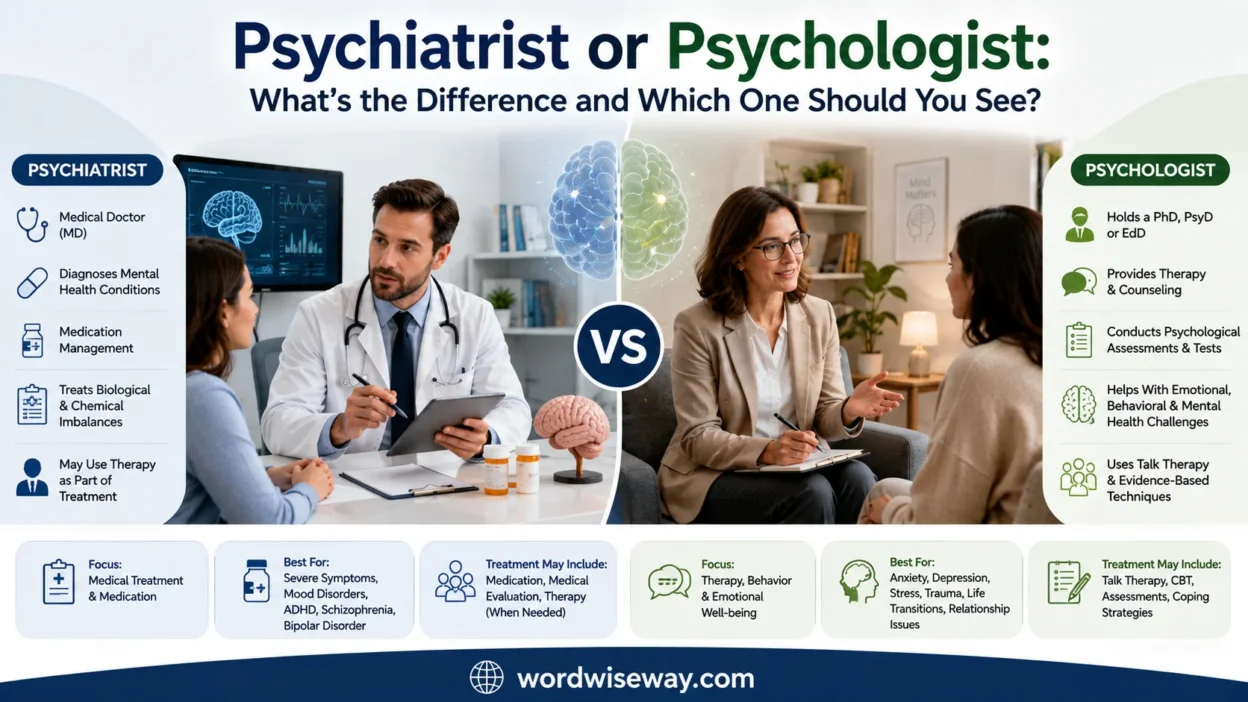
Psychiatrist or Psychologist: Difference and Correct Usage becomes easier to understand when you know their distinct roles, training, and approaches to care.
A psychiatrist can provide medical assessment and medication, while a psychologist commonly focuses on therapy and psychological treatment. Both professionals can work together when someone needs broader mental health support.
Whether you’re dealing with anxiety, depression, stress, or other mental health concerns, knowing the correct terms can prevent confusion and misunderstandings. Understanding this difference helps you confidently choose the right professional, ask better questions, and seek proper care based on your individual needs.
Quick Answer:
A psychiatrist is a medical doctor who can diagnose mental health conditions, evaluate medical factors related to mental health, and prescribe medication where legally authorized. Some psychiatrists also provide psychotherapy, although many focus primarily on psychiatric evaluation and medication management.
A psychologist specializes in psychology and commonly provides psychotherapy and psychological assessments. In the United States, most psychologists don’t prescribe medication. However, appropriately trained psychologists have limited prescribing authority in certain jurisdictions. The American Psychological Association reports that prescribing psychologists can practice in seven U.S. states, as well as certain federal systems.
| Feature | Psychiatrist | Psychologist |
| Medical doctor | Yes | No |
| Main training | Medical school and psychiatry residency | Graduate psychology training |
| Can diagnose mental health conditions | Yes | Yes, within professional scope |
| Provides psychotherapy | Some do | Commonly |
| Prescribes medication | Yes, where licensed | Only in certain jurisdictions |
| Psychological testing | May use assessments | Common area of practice |
| Medical evaluation | Yes | Generally refers when medical assessment is needed |
| Common focus | Diagnosis, medical care, medication | Therapy, assessment, thoughts, emotions, behavior |
The key isn’t deciding which profession is “better.” It’s figuring out which type of care matches your needs.
What Is a Psychiatrist?
A psychiatrist is a physician who specializes in mental health. Because psychiatrists attend medical school before completing specialized psychiatric training, they can approach mental health concerns from both medical and psychiatric perspectives.
This medical background matters when symptoms could have several possible causes. A psychiatrist can consider medical history, medications, physical health, psychiatric symptoms, and other factors during an evaluation.
What Does a Psychiatrist Do?
A psychiatrist may:
- Evaluate mental health symptoms
- Diagnose psychiatric conditions
- Prescribe psychiatric medication
- Monitor medication effects
- Adjust medication when appropriate
- Evaluate medical factors related to mental health
- Provide psychotherapy
- Coordinate treatment with other healthcare professionals
- Manage complex psychiatric conditions
For example, someone experiencing severe changes in mood, sleep, concentration, or behavior may need more than psychological support. A psychiatrist can evaluate the symptoms medically and determine whether psychiatric treatment is appropriate.
Medication isn’t automatically part of every psychiatric treatment plan. The approach depends on the person’s symptoms, medical history, preferences, and treatment goals.
How Is a Psychiatrist Trained?
Psychiatrists follow a medical education pathway. In the United States, this generally involves:
- Undergraduate education
- Medical school
- Psychiatry residency
- Additional fellowship training when pursuing a subspecialty
- Medical licensure
- Optional board certification
The American Medical Association notes that psychiatrists complete medical school followed by specialized postgraduate psychiatry training.
This training distinguishes psychiatry from psychology. A psychiatrist isn’t simply a psychologist who can prescribe medication. The two professions follow different educational pathways from the beginning.
What Is a Psychologist?
A psychologist is a professional trained in psychology, human behavior, emotions, cognition, and psychological processes. Clinical psychologists commonly work with people experiencing mental health concerns through psychotherapy and psychological assessment.
In the United States, psychologists may earn doctoral degrees such as a PhD or PsyD. Their training can include psychological testing, research methods, human development, behavior, psychotherapy, ethics, and clinical assessment.
What Does a Psychologist Do?
Depending on their specialty and license, psychologists may:
- Provide psychotherapy
- Conduct psychological assessments
- Perform psychological testing
- Evaluate behavioral concerns
- Assess cognitive functioning
- Help people develop coping skills
- Treat mental health conditions through psychotherapy
- Work with children, teenagers, adults, couples, or families
- Collaborate with psychiatrists and physicians
Psychologists don’t all perform identical work. A clinical psychologist may focus on psychotherapy, while a neuropsychologist may concentrate on cognitive and brain-related assessment.
That distinction matters when choosing a professional. The title tells you the broad profession, but the specialty tells you much more about what the person actually does.
How Is a Psychologist Trained?
Psychologists follow a psychology-focused education and clinical training pathway. In the United States, doctoral psychology programs commonly involve several years of graduate education, supervised clinical training, and licensing requirements.
Their education typically covers psychological science, assessment, human development, behavior, research, ethics, and clinical intervention.
Unlike psychiatrists, psychologists don’t attend medical school as part of their standard professional pathway.
Psychiatrist vs. Psychologist: Key Differences
The distinction becomes clearer when you compare their training and day-to-day responsibilities.
Education and Training
A psychiatrist follows the medical route. Medical school provides broad training in the human body and disease before psychiatry residency adds specialized mental health training.
A psychologist follows the psychology route. Graduate education focuses on psychological science, behavior, assessment, and psychotherapy.
Neither pathway is simply a shorter version of the other. They prepare professionals for different responsibilities.
Medication
Medication is one of the biggest differences between a psychiatrist and psychologist.
Psychiatrists can prescribe psychiatric medications within their medical license in the United States. They can also monitor treatment and consider how medications interact with a person’s broader health.
Most psychologists don’t prescribe medication. However, prescribing laws aren’t identical everywhere.
The American Psychological Association notes that psychologists with appropriate training and authorization can prescribe in certain U.S. jurisdictions and federal systems.
If medication is important to your treatment plan, check the laws and professional scope where you live.
Therapy
Psychologists commonly provide psychotherapy. Depending on their training, they may use approaches such as cognitive behavioral therapy, exposure-based treatment, or other evidence-based methods.
Psychiatrists can also provide psychotherapy. However, many psychiatrists structure their practices around psychiatric evaluation and medication management.
The important question isn’t simply, “Is this person a psychiatrist or psychologist?”
Instead, ask:
“Does this professional provide the type of treatment I need?”
That small shift can save you a lot of confusion.
Psychological Testing and Assessment
Psychologists often receive extensive training in psychological testing and assessment.
Depending on their specialty, they may evaluate:
- Cognitive abilities
- Learning difficulties
- Emotional functioning
- Behavioral concerns
- Personality characteristics
- Memory and attention
- Certain developmental concerns
- Neuropsychological functioning
Psychiatric assessment tends to emphasize symptoms, diagnosis, medical history, psychiatric history, and treatment needs.
The two forms of assessment can overlap, but they aren’t interchangeable.
Medical Evaluation
A psychiatrist’s medical training allows them to consider physical health when evaluating psychiatric symptoms.
That matters because some symptoms associated with mental health can also occur alongside physical health problems. Sleep changes, concentration difficulties, fatigue, appetite changes, and mood changes can have multiple contributing factors.
A psychologist can recognize when medical evaluation may be appropriate and refer or coordinate with a physician.
What Conditions Can Psychiatrists and Psychologists Treat?
There is significant overlap between the conditions they may address.
Depending on their training and professional scope, both may work with:
- Anxiety disorders
- Depression
- Trauma-related conditions
- Obsessive-compulsive disorder
- Mood disorders
- Behavioral difficulties
- Stress-related concerns
- Emotional difficulties
- Relationship-related problems
However, the treatment approach can differ.
A psychologist may focus primarily on psychotherapy and psychological assessment. A psychiatrist may emphasize psychiatric evaluation, medication management, psychotherapy, or a combination of approaches.
Some people benefit from one professional. Others need a broader treatment team.
Psychiatrist or Psychologist for Therapy?
If your main goal is psychotherapy, a psychologist may be a logical starting point because psychotherapy is a central part of many psychologists’ clinical work.
However, psychiatrists can also provide therapy. Their practice style varies from one professional to another.
Before booking an appointment, ask what type of therapy the professional provides and whether they regularly treat concerns similar to yours.
For example, someone seeking structured therapy for anxiety may want a provider experienced in evidence-based anxiety treatments. Someone seeking psychological testing may need a psychologist with the appropriate assessment training.
The National Institute of Mental Health recommends considering a provider’s credentials, experience, specialty, and treatment approach when choosing psychotherapy.
Psychiatrist or Psychologist for Diagnosis?
Both professionals can participate in diagnosing mental health conditions within their professional scope.
The difference lies partly in the lens they use during evaluation.
A psychiatrist can combine psychiatric assessment with medical knowledge. This can be especially useful when symptoms are severe, complicated, rapidly changing, or potentially connected with physical health.
A psychologist may conduct a detailed psychological assessment involving interviews, behavioral information, standardized tests, and other psychological measures.
The best choice depends on what needs to be evaluated.
Psychiatrist or Psychologist for Children and Teens
Mental health concerns in children and teenagers can appear differently from those in adults. Changes in behavior, school performance, sleep, mood, concentration, or relationships may have several possible explanations.
A psychologist may help with:
- Psychological testing
- Behavioral assessment
- Therapy
- Emotional difficulties
- School-related concerns
- Family-related challenges
A psychiatrist who specializes in children and adolescents may help when a medical psychiatric assessment is needed or when medication becomes part of the treatment discussion.
When choosing care for a young person, look for a professional who has specific experience with that age group.
Can a Psychiatrist and Psychologist Work Together?
Yes. In fact, collaborative care can make sense when someone needs both psychotherapy and psychiatric treatment.
For example, a psychiatrist might manage medication while a psychologist provides regular psychotherapy. The professionals can coordinate care when appropriate.
This approach recognizes that mental health treatment isn’t always a one-tool job.
Psychotherapy and medication can sometimes be used together. The appropriate combination depends on the individual’s needs and clinical situation.
A Practical Example
Imagine someone has persistent anxiety that affects sleep, school, relationships, and daily activities.
A psychologist could provide psychotherapy focused on anxiety patterns, coping strategies, and behavior changes.
A psychiatrist could evaluate the symptoms from a medical and psychiatric perspective and discuss whether medication might be appropriate.
In some situations, both professionals could contribute to the treatment plan.
The goal isn’t to collect professionals like trading cards. It’s to get the type of care that actually addresses the problem.
Psychiatrist or Psychologist: Which Should You See?
Your main concern can guide the decision.
1.Consider a Psychologist When You Want
- Psychotherapy
- Help understanding thoughts and behavior
- Psychological testing
- Cognitive or behavioral assessment
- Support with emotional difficulties
- Structured psychological treatment
2.Consider a Psychiatrist When You Need
- Medication evaluation
- Medication management
- Psychiatric assessment
- Medical evaluation related to mental health
- Treatment for complex psychiatric symptoms
3.Consider Both When You Need
- Therapy and medication management
- Psychological assessment and psychiatric treatment
- Coordinated care for complex mental health concerns
If you’re unsure where to begin, a primary care provider can also be a useful starting point. Primary care professionals can conduct an initial evaluation and refer you to appropriate mental health services when necessary.
How to Choose the Right Mental Health Professional
Finding the right professional involves more than searching for the first available appointment.
Check Credentials and Specialty
Confirm that the professional is appropriately licensed in your location.
Then look at their specialty.
For example, someone seeking therapy for anxiety may want a professional who regularly works with anxiety disorders. Someone seeking cognitive testing needs a professional trained in the relevant type of assessment.
Ask About Treatment
Before beginning treatment, consider asking:
- What concerns do you specialize in?
- What treatment approaches do you use?
- Do you provide psychotherapy?
- Do you perform psychological testing?
- How do you measure treatment progress?
- How often would appointments usually occur?
- Do you coordinate care with other professionals?
Clear answers can help you determine whether the provider is a good match.
Consider Practical Factors
Treatment also needs to fit your circumstances.
Consider:
- Appointment availability
- Cost
- Insurance coverage
- Location
- Telehealth availability
- Professional specialty
- Age-group experience
- Communication preferences
A provider’s qualifications matter. So does your ability to access and continue treatment.
Common Myths About Psychiatrists and Psychologists
“Psychologists Can’t Diagnose Mental Health Conditions”
That’s an oversimplification.
Psychologists can diagnose mental health conditions within their professional training and legal scope. Their evaluations may include interviews, behavioral observations, psychological tests, and other assessment methods.
“Psychiatrists Only Prescribe Medication”
Not necessarily.
Psychiatrists can provide psychotherapy. However, some focus primarily on medication management and psychiatric evaluation.
“Psychologists Never Discuss Medication”
That’s also too broad.
Psychologists may discuss treatment options and collaborate with professionals who prescribe medication. In certain jurisdictions, specially trained psychologists may also have prescribing authority.
“You Have to Choose One”
You don’t.
A psychiatrist and psychologist can work together when both types of care are appropriate.
Psychiatrist vs. Psychologist: Quick Decision Guide
| If you mainly need… | A possible starting point |
| Talk therapy | Psychologist or qualified therapist |
| Psychological testing | Psychologist |
| Medication evaluation | Psychiatrist |
| Medication management | Psychiatrist |
| Detailed psychological assessment | Psychologist |
| Therapy plus medication | Psychiatrist and psychologist |
| You’re unsure where to begin | Primary care provider or mental health professional |
This isn’t a rigid checklist. Licensing laws, professional specialties, and individual treatment approaches vary by location.
Case Study: Two People, Two Different Starting Points
Consider two fictional examples.
Person A wants help with persistent worry and negative thought patterns. Their main goal is psychotherapy. They aren’t currently seeking medication management. A psychologist who specializes in appropriate evidence-based therapy could be a sensible starting point.
Person B is experiencing significant mood changes that interfere with everyday life and wants to discuss medication. A psychiatrist may be a more appropriate starting point because psychiatric care can include medical evaluation and medication management.
Now imagine Person C needs both.
A psychologist could provide ongoing psychotherapy while a psychiatrist manages medication. With appropriate coordination, each professional can contribute their specialized expertise.
These examples show why the question isn’t simply “Psychiatrist or psychologist: which is better?”
The more useful question is:
“What kind of mental health care do I need?”
Read More: Sick or Allergies? Difference, Symptoms, Causes, and Treatment
FAQs
1. What is the main difference between a psychiatrist and a psychologist?
A psychiatrist is a medical doctor who can assess mental health conditions and prescribe medication. A psychologist usually focuses on psychological assessment, counseling, and therapy.
The right choice depends on what kind of support you need. Some people benefit from medication, while others may need therapy. In some cases, both professionals can work together.
2. Can a psychologist prescribe medication?
In most places, psychologists don’t prescribe medication because they aren’t medical doctors. Their work generally centers on therapy, behavioral strategies, and psychological assessment.
If medication may help, a psychologist can recommend that you speak with a psychiatrist or another qualified medical professional. Rules can vary by location, so local regulations matter.
3. Should I see a psychiatrist or psychologist for anxiety?
Either professional may be appropriate for anxiety, depending on your symptoms and needs. A psychologist can provide therapy to help you understand thoughts, emotions, and behaviors linked to anxiety.
A psychiatrist can evaluate whether medication or medical treatment may be useful. If anxiety is significantly affecting daily life, discussing your concerns with a qualified professional is a sensible first step.
4. Is a psychiatrist better than a psychologist?
Neither professional is automatically better. They have different training and responsibilities, so the better choice depends on the kind of help you need.
A psychiatrist may be useful when medical evaluation or medication is involved. A psychologist may be a better fit when your main goal is therapy and psychological support.
5. Can a psychiatrist provide therapy?
Yes, some psychiatrists provide therapy as part of their practice. However, many psychiatrists primarily focus on diagnosis, medication management, and medical aspects of mental health care.
Psychologists generally spend more of their professional time providing therapy. Your needs, the professional’s approach, and the treatment setting can determine who is the best fit.
6. Can a psychologist and psychiatrist work together?
Yes. They can coordinate care when someone needs both therapy and medical treatment. This approach can be especially useful when symptoms involve several aspects of mental health.
For example, a psychiatrist may manage medication while a psychologist provides ongoing therapy. Clear communication between professionals can help keep treatment organized and consistent.
7. What does a therapist do compared with a psychologist?
Therapist is a broad term for a professional who provides mental health therapy. Psychologists are one type of professional who may work as therapists, but not every therapist is a psychologist.
Different therapists can have different education, licenses, and areas of practice. Checking a professional’s credentials can help you understand what services they are qualified to provide.
8. Do psychiatrists and psychologists have the same training?
No. Psychiatrists attend medical school and complete specialized medical training in psychiatry. Psychologists follow a different educational path focused on psychology, assessment, research, and therapeutic methods.
Because their training differs, their roles also differ. Understanding these credentials can make the mental health system much easier to navigate.
9. Which professional should I choose for depression?
The right professional depends on your symptoms, treatment needs, and personal circumstances. A psychologist can provide therapy that addresses thoughts, emotions, and behaviors associated with depression.
A psychiatrist can evaluate depression from a medical perspective and determine whether medication may be appropriate. Some people receive both types of care as part of a coordinated treatment plan.
10. Why are psychiatrist and psychologist often confused?
The terms are easy to mix up because both professionals work in mental health and help people manage emotional or psychological concerns. Their names also sound closely related.
The important distinction is their training and scope of practice. Once you understand who provides medical care, who focuses primarily on psychological treatment, and when they collaborate, the difference becomes much clearer.
Conclusion
Understanding Psychiatrist or Psychologist: Difference and Correct Usage can make an unfamiliar mental health system feel far less confusing. Although psychiatrists and psychologists share the goal of helping people, their education, professional roles, and treatment approaches aren’t identical. Psychiatrists receive medical training and can generally prescribe medication, while psychologists commonly focus on therapy, psychological assessment, and behavioral support. A therapist is another broad term that can describe different qualified mental health professionals. Knowing these distinctions helps you avoid misunderstandings when looking for care.
Your needs should guide your choice rather than the title alone. If you’re dealing with anxiety, depression, stress, or another mental health concern, consider what type of support you’re seeking. Therapy may be useful for some concerns, while medical evaluation or medication may be appropriate for others. In many situations, a psychiatrist and psychologist can also work together. Understanding their differences gives you a clearer starting point and helps you approach mental health care with greater confidence.

Evelyn Shaw has spent 14 years at Yale University’s English Department, leading students through close readings, genre studies, and interpretive methodologies. Her scholarly interests include Renaissance drama, gothic fiction, feminist literary criticism, and archival research and examining how texts generate meaning across historical periods. Evelyn has presented at major academic conferences and published essays in peer-reviewed journals, reflecting her passion for rigorous analysis and student-centered learning.