Appendicitis or Gas: How to Tell the Difference? can be confusing because both may cause abdominal pain, discomfort, bloating, and cramping.
Gas is often minor, harmless, and temporary, while appendicitis can become a medical emergency. Understanding the difference is crucial for recognizing important symptoms.
If sudden stomach pain becomes severe or continues, seek immediate medical advice. A healthcare professional can help identify the cause, provide timely medical care, and help you avoid serious consequences from delayed treatment.
Quick Answer
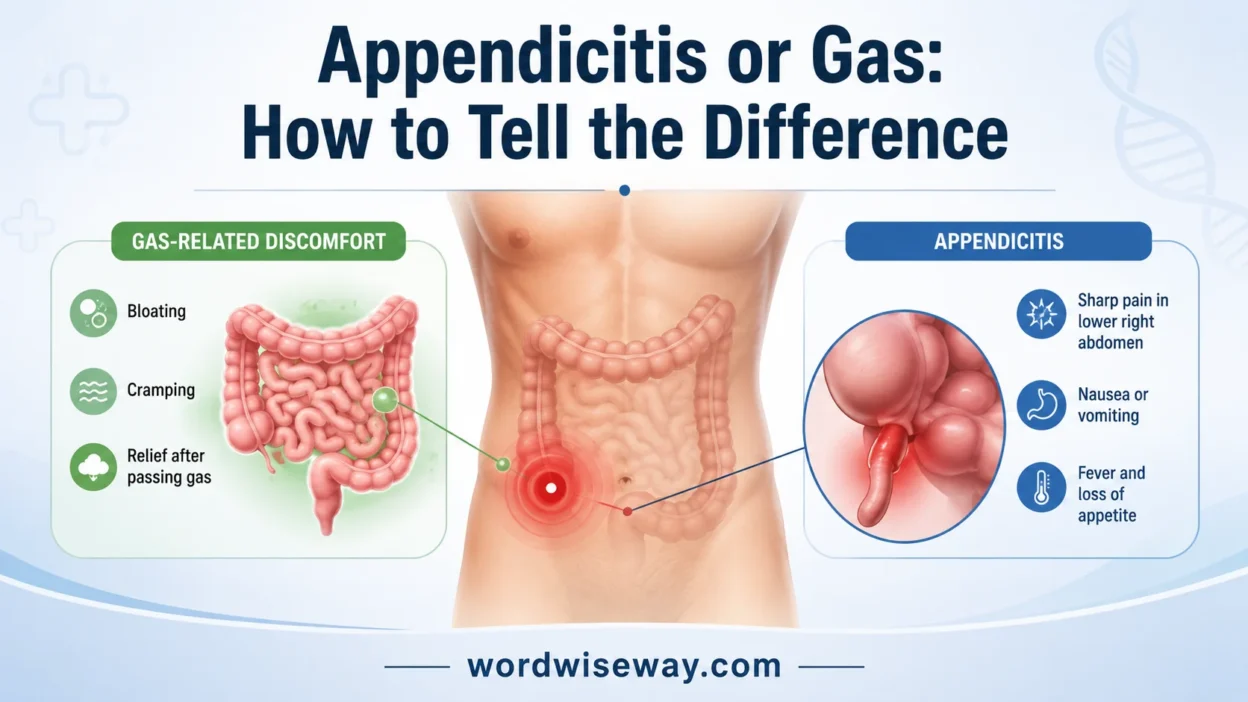
Gas pain is more likely to move around, come with bloating or burping, and improve after passing gas or having a bowel movement. Appendicitis more often causes abdominal pain that becomes persistent and increasingly severe, commonly moving from around the belly button toward the lower-right abdomen. Fever, nausea, vomiting, loss of appetite, and pain that worsens with movement can also occur with appendicitis.
Still, these patterns aren’t absolute. Appendicitis can develop without every classic symptom, especially in children and some other groups. That’s why worsening abdominal pain shouldn’t simply be labeled “gas” without considering other possibilities.
What Is Appendicitis?
Appendicitis occurs when the appendix becomes inflamed. The appendix is a small, finger-shaped pouch attached to the large intestine in the lower-right area of the abdomen. In many cases, inflammation develops after the appendix becomes blocked, although several causes are possible.
Appendicitis can progress quickly. The inflammation may initially cause discomfort around the belly button before the pain becomes more concentrated on the lower-right side. As inflammation increases, the pain may become more constant and severe.
According to NIDDK, roughly 5 to 9 out of every 100 people develop appendicitis at some point. It can occur at any age, although it occurs more often in teenagers and young adults.
Untreated appendicitis can cause the appendix to rupture. A ruptured appendix can lead to complications such as peritonitis, an abdominal abscess, or sepsis, which require urgent medical treatment.
What Does Gas Pain Feel Like?
Gas is a normal part of digestion. Your digestive tract contains air and other gases, which leave the body through burping or passing gas. Gas forms partly when bacteria in the large intestine break down carbohydrates that weren’t completely digested earlier in the digestive process.
Gas-related discomfort can feel surprisingly strong. You may notice:
- Abdominal cramping
- Pressure or fullness
- Bloating
- Burping
- Passing gas
- Abdominal discomfort that changes location
- Symptoms that occur after eating certain foods
- Relief after passing gas or having a bowel movement
The location can also be misleading. Gas can accumulate in different parts of the intestine, so discomfort may occur on the right, left, upper, or lower side of the abdomen.
NIDDK notes that passing gas 8 to 14 times a day on average can be normal, with up to about 25 times daily considered within the normal range for some people.
That doesn’t mean every episode of abdominal pain is gas. A sudden change in symptoms, persistent pain, or gas accompanied by other concerning symptoms should be evaluated by a healthcare professional.
Appendicitis or Gas: Key Differences
The most useful clues involve how the pain behaves rather than where it appears alone.
Pain Location
Appendicitis often follows a recognizable pattern. Pain may begin near the belly button and later move toward the lower-right abdomen. It can become more focused as the inflammation progresses.
Gas doesn’t follow the same predictable path. Discomfort may move from one area to another as gas travels through the intestines.
However, location isn’t a perfect test. Some people with appendicitis experience pain in an unusual location because the appendix can sit in different positions.
How the Pain Changes
This is one of the more useful distinctions.
Appendicitis: The pain commonly becomes more persistent and worse over several hours. Movement, coughing, sneezing, or taking a deep breath may make it hurt more.
Gas: Discomfort often comes in waves or changes as gas moves through the digestive tract. Bloating, burping, or passing gas may accompany the pain.
Imagine the difference between a pressure bubble shifting through a pipe and an inflamed area becoming increasingly irritated. The patterns aren’t identical.
Other Symptoms
Gas commonly occurs alongside:
- Bloating
- Burping
- Passing gas
- Abdominal fullness
- Cramping
Appendicitis may involve:
- Loss of appetite
- Nausea
- Vomiting
- Fever
- Abdominal swelling
- Constipation or diarrhea
- Difficulty passing gas
Not everyone develops every symptom. NIDDK specifically notes that some people with appendicitis, particularly children, may not experience the typical symptom pattern.
What Happens When You Move?
Movement can provide another clue. Appendicitis pain may become worse when you walk, cough, sneeze, take a deep breath, or otherwise move the abdomen.
Gas discomfort doesn’t necessarily follow this pattern. It may change as the intestines move and gas passes through.
That said, deliberately pressing, poking, or repeatedly testing a painful abdomen isn’t a reliable home diagnostic method.
Does Passing Gas Relieve the Pain?
If discomfort noticeably improves after passing gas or having a bowel movement, gas or another digestive cause becomes more plausible.
However, passing gas does not prove that appendicitis is impossible. Appendicitis can cause bowel symptoms, including constipation, diarrhea, difficulty passing gas, and a sensation that a bowel movement might relieve the discomfort.
The overall pattern matters more than one symptom.
Appendicitis vs. Gas Symptom Comparison
| Symptom or Feature | Gas | Appendicitis |
| Bloating | Common | Possible |
| Burping | Common | Not a typical feature |
| Passing gas | Common | May become difficult |
| Pain that moves around | Common | Less typical |
| Pain near belly button | Possible | Common early pattern |
| Lower-right abdominal pain | Possible | Common |
| Pain becomes progressively worse | Less typical | Common |
| Pain worsens with movement | Variable | Common |
| Fever | Uncommon | Possible and common |
| Nausea | Possible | Common |
| Vomiting | Possible | Possible |
| Loss of appetite | Less typical | Common |
| Constipation or diarrhea | Possible | Possible |
| Relief after passing gas | May occur | Doesn’t rule it out |
This table can help organize the symptoms, but it shouldn’t replace an examination. Appendicitis can present differently from the textbook pattern.
Where Does Appendicitis Pain Usually Start?
Appendicitis often begins with discomfort around the belly button. Over several hours, the pain may shift toward the lower-right side and become stronger.
This progression happens because inflammation begins inside the appendix and can later irritate surrounding tissues.
A classic pattern may look like this:
Around the belly button → increasing abdominal pain → lower-right abdominal pain → worsening pain with movement
But real symptoms don’t always follow that neat sequence. Young children, older adults, and pregnant people can experience less typical symptoms or pain in a different location.
Can Gas Cause Pain on the Right Side?
Yes. Gas can cause right-sided abdominal discomfort, and this can make the difference between gas and appendicitis especially difficult to recognize.
The intestines occupy a large portion of the abdomen. Gas moving through the intestinal tract can create pressure or cramping in different areas.
Right-sided pain therefore doesn’t automatically mean appendicitis.
The bigger question is what happens next. If the discomfort shifts, improves after passing gas, and occurs with bloating, gas may be a reasonable possibility. If the pain steadily intensifies, becomes focused in the lower-right abdomen, or comes with fever, nausea, vomiting, or loss of appetite, appendicitis becomes more concerning.
Can Appendicitis Feel Like Gas?
Yes. Early appendicitis can resemble gas or indigestion.
That’s one reason people sometimes wait too long before seeking medical care. Early pain may not immediately feel dramatic or highly specific. Over time, however, appendicitis often develops a more recognizable pattern as the inflammation progresses.
A person might initially think, “Maybe it’s something I ate.” If the pain keeps getting worse instead of settling, that assumption becomes less reassuring.
Important: Severe or worsening abdominal pain shouldn’t be diagnosed as gas simply because bloating or digestive symptoms are also present.
Warning Signs That May Point to Appendicitis
Certain symptoms deserve particular attention because they can occur with appendicitis.
Watch for:
- Pain that keeps getting worse
- Pain that moves toward the lower-right abdomen
- Persistent abdominal pain
- Fever
- Nausea or vomiting
- Loss of appetite
- Abdominal swelling
- Pain that becomes worse with movement
- Difficulty passing gas
- Constipation or diarrhea alongside abdominal pain
NIDDK advises seeking medical care right away when appendicitis is suspected because prompt treatment can reduce the risk of complications.
When Abdominal Pain Needs Urgent Medical Attention
Don’t wait for abdominal pain to become unbearable before taking it seriously.
Medical evaluation is particularly important when pain is severe, persistent, or progressively worsening. Pain that moves toward the lower-right abdomen also deserves prompt attention.
Seek urgent medical care if abdominal pain occurs with symptoms such as:
- Severe or rapidly worsening pain
- Fever
- Repeated vomiting
- Increasing abdominal swelling
- Significant weakness or feeling increasingly unwell
- Confusion or difficulty breathing
- Pain that spreads across the abdomen
A ruptured appendix can cause serious infection inside the abdomen. In some cases, pain may briefly change if the appendix ruptures before severe widespread abdominal pain develops.
Don’t try to confirm appendicitis by repeatedly pressing on the painful area. A healthcare professional can perform an appropriate examination and decide which tests are needed.
How Doctors Tell Appendicitis From Gas
Doctors don’t diagnose appendicitis from one symptom. Instead, they combine the patient’s history, physical examination, laboratory results, and imaging when appropriate.
Medical History and Physical Examination
A doctor may ask:
- When did the pain begin?
- Where did it start?
- Has it moved?
- Is it getting worse?
- Do you have nausea or vomiting?
- Have you developed a fever?
- Have your bowel movements changed?
- Can you pass gas?
- Do you have other medical conditions?
During the examination, the doctor may assess areas of abdominal tenderness and look for signs that point toward appendicitis or another condition.
Blood and Urine Tests
Blood tests can help identify signs of inflammation or infection. A high white blood cell count can support the clinical picture, although it doesn’t prove appendicitis by itself.
A urine test may help rule out other causes of abdominal pain, including urinary infections or kidney stones.
Depending on the situation, doctors may also perform a pregnancy test before choosing certain diagnostic tests.
Imaging Tests
When the diagnosis isn’t clear, imaging can provide important information.
Doctors may use:
- Ultrasound: Uses sound waves and doesn’t expose the patient to X-rays.
- CT scan: Produces detailed images of the abdomen and can help identify an inflamed or complicated appendix.
- MRI: Can provide detailed images without X-ray radiation and may be useful in selected situations.
NIDDK notes that ultrasound is often used as an initial imaging test in children, young adults, and pregnant women. MRI can also serve as an alternative to CT in appropriate circumstances.
Other Conditions That Can Mimic Gas or Appendicitis
Abdominal pain has a surprisingly large cast of possible causes. Appendicitis and gas are only two possibilities.
Digestive Causes
Other digestive conditions can include:
- Constipation
- Gastroenteritis
- Irritable bowel syndrome
- Food intolerance
- Indigestion
- Inflammatory bowel disease
For example, IBS commonly causes abdominal pain along with constipation, diarrhea, or both. Bloating can occur as well.
Indigestion tends to cause discomfort in the upper abdomen and may involve bloating, nausea, belching, or feeling overly full after eating.
Urinary Causes
Kidney stones and urinary tract infections can also produce abdominal or side pain. A urine test can help doctors investigate these possibilities when symptoms overlap with appendicitis.
Other Causes
Depending on the person and circumstances, doctors may also consider gallstones, gynecologic conditions, inflammatory bowel disease, intestinal obstruction, or other abdominal problems.
This is why searching for one “perfect” symptom can lead you down the wrong path.
A Simple Example: Gas or Something More Serious?
Consider two different symptom patterns.
Example A: After eating, someone develops bloating and cramping. The discomfort shifts around the abdomen. They burp, pass gas, and gradually feel better.
That pattern is more consistent with ordinary gas-related digestive discomfort.
Example B: Someone develops pain around the belly button. Several hours later, the pain becomes stronger and settles in the lower-right abdomen. They lose their appetite and develop nausea or a fever.
That pattern is more concerning for appendicitis and needs medical assessment.
These examples aren’t diagnoses. They simply demonstrate why symptom progression matters.
What Should You Do If You Aren’t Sure?
When abdominal pain is mild and clearly improving, it may be reasonable to monitor how it develops. But persistent or worsening pain changes the situation.
If you’re wondering whether your symptoms are appendicitis or gas, consider the whole picture rather than one symptom:
- Where did the pain begin?
- Is it moving or becoming more focused?
- Is the pain getting worse?
- Do you have fever, nausea, or vomiting?
- Has your appetite changed?
- Can you pass gas and have bowel movements?
- Does movement make the pain worse?
These questions can help describe your symptoms to a healthcare professional. They can’t confirm the diagnosis.
If appendicitis seems possible, don’t rely on home treatment or wait for the pain to become extreme. Appendicitis requires prompt medical assessment because untreated inflammation can progress to rupture and serious infection.
How Is Appendicitis Treated?
Treatment depends on the diagnosis and the person’s individual circumstances. Surgery to remove the appendix, called an appendectomy, remains the standard treatment for many cases. Doctors may use laparoscopic surgery or an open operation depending on the situation.
Some selected cases of uncomplicated appendicitis may be treated with antibiotics alone. However, that decision belongs to the medical team after evaluating the symptoms, test results, and overall health.
If the appendix has ruptured, treatment becomes more complicated because infection can spread inside the abdomen. Treatment may involve antibiotics, surgery, drainage of an abscess, or other hospital-based care.
Read More: Dandruff or Lice: Difference, Symptoms, and Treatment
FAQs
1. Can gas pain feel like appendicitis?
Yes. Gas can cause cramps, bloating, and abdominal discomfort that may feel similar to early appendicitis. However, gas pain often changes location or improves after passing gas or having a bowel movement.
2. Where does appendicitis pain usually begin?
Appendicitis pain may start around the belly button before becoming more noticeable in the lower-right abdomen. The pain often becomes stronger over time rather than gradually disappearing.
3. Does appendicitis cause bloating?
Appendicitis can cause bloating or a feeling of fullness, although these symptoms can also occur with gas and other digestive problems. Bloating alone can’t confirm the cause of abdominal pain.
4. Can gas cause lower-right abdominal pain?
Yes. Trapped gas can sometimes cause pain in different areas of the abdomen, including the lower-right side. Because appendicitis can also cause pain there, persistent or worsening pain deserves medical attention.
5. How long does gas pain usually last?
Gas pain may improve within a relatively short time as the trapped gas moves through the digestive system. If abdominal pain continues, becomes severe, or keeps getting worse, don’t assume it’s simply gas.
6. What symptoms can occur with appendicitis?
Appendicitis may cause worsening abdominal pain, loss of appetite, nausea, vomiting, fever, and tenderness. Symptoms can vary, so a healthcare professional should assess concerning or persistent pain.
7. Can appendicitis pain come and go?
Appendicitis symptoms can vary, particularly during the early stages. Pain that becomes persistent or progressively worse is more concerning than brief discomfort that completely settles.
8. Does passing gas mean it’s not appendicitis?
No. Passing gas doesn’t completely rule out appendicitis. If significant abdominal pain continues or other warning signs appear, medical evaluation is important.
9. When should abdominal pain be checked by a doctor?
Seek medical care when pain is severe, persistent, worsening, or accompanied by symptoms such as fever, repeated vomiting, or significant tenderness. Prompt evaluation can help identify the cause and prevent complications.
10. Can you tell appendicitis from gas at home?
You may notice patterns, but you can’t reliably diagnose appendicitis at home. Similar symptoms can come from several conditions, so concerning abdominal pain should be evaluated by a healthcare professional.
Conclusion
Knowing the difference between appendicitis and gas can help you recognize when abdominal discomfort may need attention. Gas commonly causes temporary bloating and cramps, while appendicitis can produce pain that becomes increasingly severe and may come with other symptoms.
Don’t rely on one symptom to make a diagnosis. If pain is severe, persistent, or getting worse, getting medical advice is the safer choice. Early evaluation can make it easier to identify the cause and receive appropriate treatment.

Emma Smith has dedicated 14 years to Princeton University’s English Department, mentoring students in textual interpretation, literary movements, and critical frameworks. Her research explores Shakespearean drama, Victorian serial fiction, postcolonial narrative theory, and manuscript studies and probing how literary forms evolve across cultures and centuries. Emma has delivered lectures at international humanities congresses and published findings in distinguished academic journals, underscoring her commitment to scholarly depth and vibrant teaching.