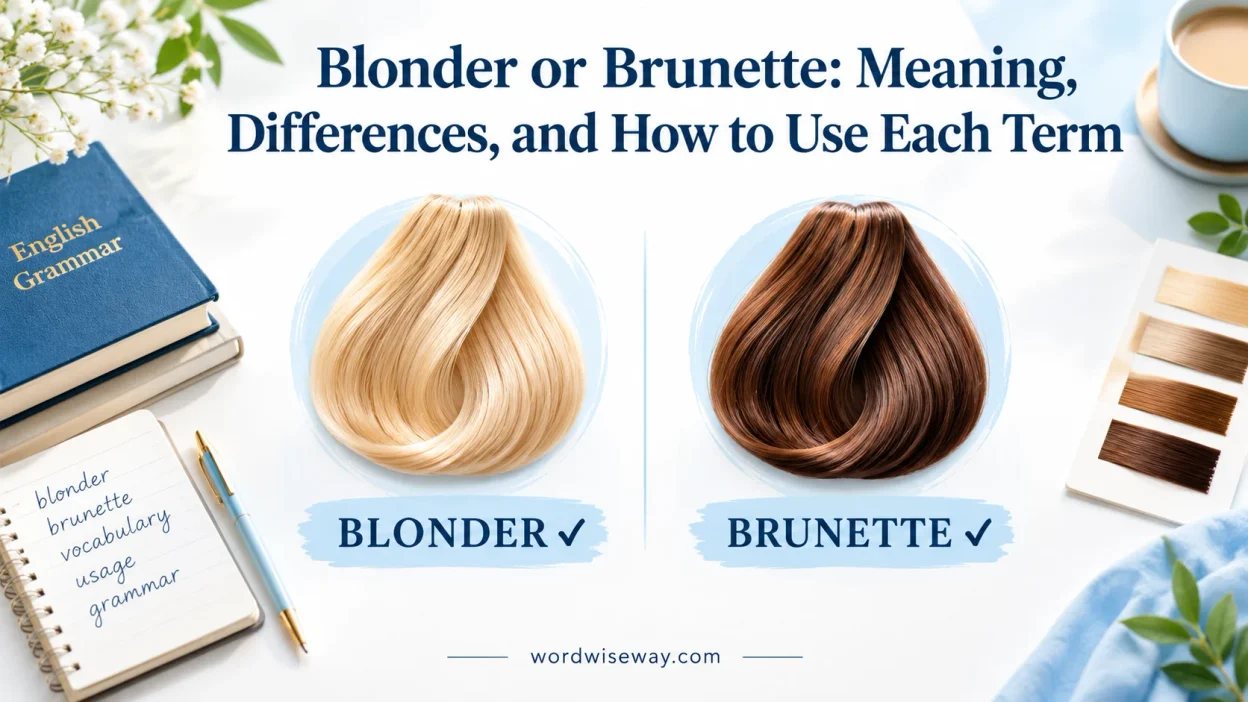
Blonder or Brunette: Meaning, Differences, and Usage explains how these terms describe different hair colors. Blonder means lighter blonde hair, while brunette refers to a person with brown hair. Although both words appear in beauty discussions, social media posts, and hair color comparisons, their meanings and usage differ.
For example, “Her hair looks blonder in sunlight” describes a lighter blonde shade. The word blonder is the comparative form of blonde, while brunette identifies someone with brown hair. Understanding these definitions helps you choose the correct word when describing hair color, personal style, or appearance.
In English grammar and everyday communication, context matters. Use blonder when comparing blonde shades, and use brunette when describing someone with brown hair. Learning their spelling, meanings, and differences helps you avoid common mistakes and improve your writing. These simple distinctions also make your hair descriptions clearer and more accurate.
Quick Answer:
Blonder is the comparative form of blonde. It means more blonde or lighter in color than something else.
Brunette usually refers to a person with brown or dark-brown hair. It can also function as an adjective when it describes someone’s hair or appearance.
| Term | Meaning | Main Function | Example |
| Blonder | More blonde or lighter | Shows comparison | “Her hair looks blonder this summer.” |
| Brunette | Brown-haired or dark-brown-haired | Describes hair color or a person | “She is a brunette.” |
| Blonde | Light yellowish or golden hair color | Describes a hair color | “She has blonde hair.” |
So, blonder and brunette aren’t interchangeable. Use blonder when you are comparing shades or changes in lightness. Use brunette when you are describing brown or dark-brown hair.
What Does Blonder Mean?
Blonder means more blonde than something or someone else. It expresses a comparison, which makes it different from the basic word blonde.
The word comes from the adjective blonde. Adding the comparative ending -er creates blonder in ordinary usage.
For example:
- “Her hair is blonder than mine.”
- “The new color makes her hair look blonder.”
- “His hair became blonder after spending time outdoors.”
- “This shade is blonder than the one you chose before.”
In each sentence, the word suggests a difference in degree. Something serves as the comparison, even when the sentence doesn’t state that comparison explicitly.
Blonder as a Comparative Form
Comparative adjectives help you compare two things. Words such as taller, smaller, darker, and lighter work in the same general way.
Blonder follows that pattern.
Consider these examples:
- Blonde → blonder
- Light → lighter
- Dark → darker
- Bright → brighter
If someone’s hair changes from a darker blonde to a lighter blonde, saying it became blonder makes sense. The word focuses on the change rather than simply naming the color.
This distinction matters because blonde and blonder don’t communicate exactly the same idea.
Blonde identifies a hair color, while blonder compares one degree of blonde with another.
When Should You Use Blonder?
Use blonder when the sentence involves a comparison, either directly or through context.
For instance, imagine someone dyes their hair a lighter shade. You could say:
“Her hair looks blonder now.”
The word now creates an implied comparison with how her hair looked previously.
You can also make the comparison explicit:
“Her hair is blonder than it was last year.”
Here, the meaning is unmistakable. The speaker compares the current hair color with the earlier shade.
However, if you’re simply identifying the color, blonde works better:
“Her hair is blonde.”
That sentence doesn’t compare anything. It simply describes the color.
What Does Brunette Mean?
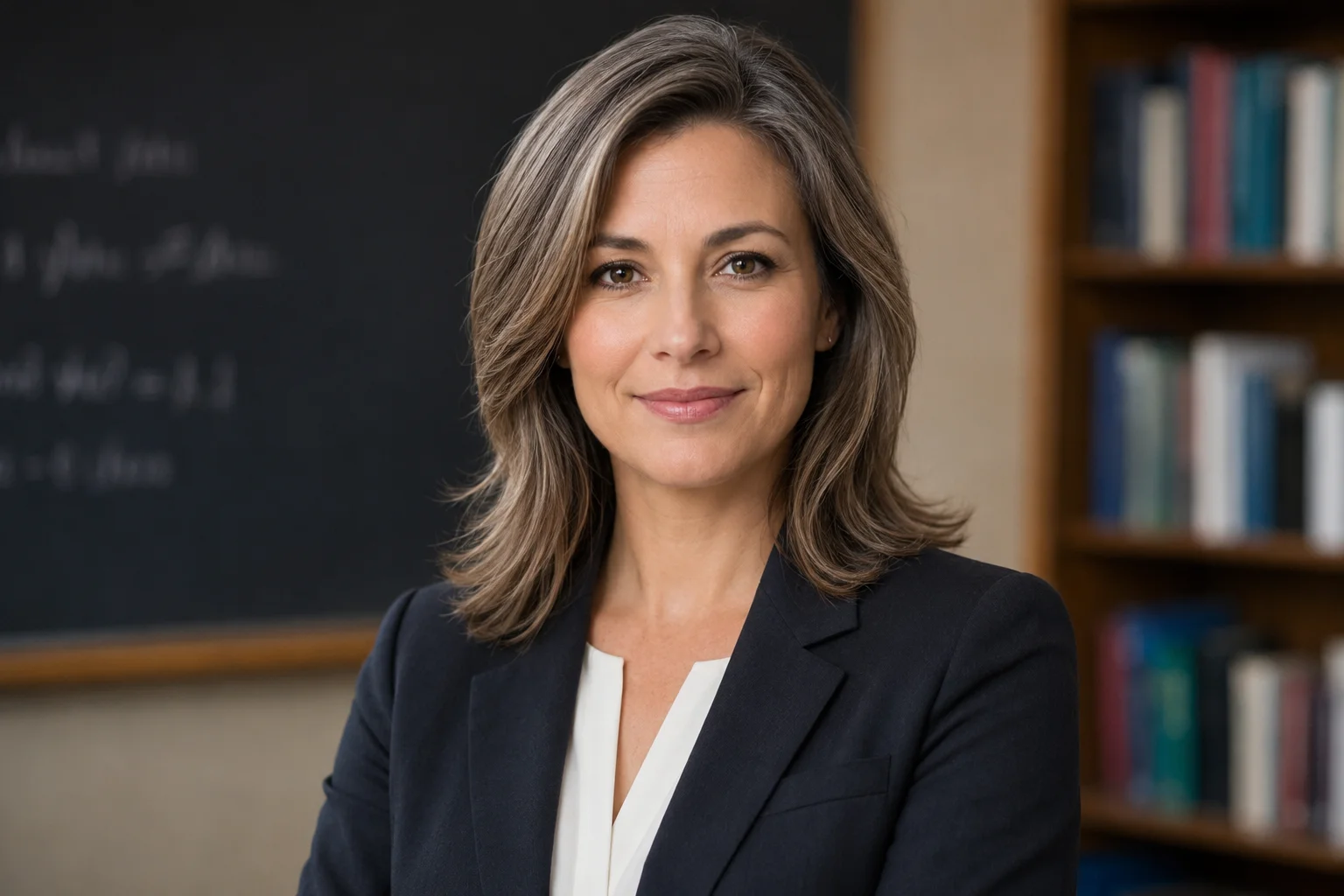
Brunette generally describes a person with brown or dark-brown hair. In American English, it commonly appears as a noun, although it can also work adjectivally in phrases such as brunette hair.
Examples include:
- “She is a brunette.”
- “The actress has brunette hair.”
- “He has naturally dark-brown hair.”
- “The brunette woman sat near the window.”
The key idea remains consistent: brunette identifies brown or dark-brown hair rather than expressing a comparison.
Unlike blonder, it doesn’t mean “more brown.” It names a hair-color category.
Brunette as a Noun
As a noun, brunette refers to a person with brown or dark-brown hair.
For example:
“She is a brunette.”
Here, brunette acts as the noun. The word itself identifies the person based on hair color.
Another example:
“The brunette in the photograph has dark-brown hair.”
The noun points to the person, while the rest of the sentence provides additional information.
Brunette as an Adjective
You may also see brunette used before a noun:
- brunette hair
- brunette model
- brunette character
- brunette actress
In these expressions, the word modifies another noun.
Still, everyday English often sounds more natural when you simply describe the color:
“She has brown hair.”
That phrasing is direct and neutral. “She has brunette hair” is also understandable, especially in beauty, fashion, or descriptive writing.
What’s the Difference?
The biggest difference lies in what the words communicate.
Blonder expresses a comparison. Brunette identifies a brown-haired person or describes brown hair.
Think of the distinction this way:
- Blonde = a color
- Blonder = a comparison involving that color
- Brunette = a brown-haired person or a description of brown hair
| Feature | Blonder | Brunette |
| Basic meaning | More blonde or lighter | Brown-haired or dark-brown-haired |
| Word type | Comparative adjective | Noun or adjective |
| Shows comparison? | Yes | No |
| Refers to hair color? | Yes | Yes |
| Can describe a person? | Yes, in comparison | Yes |
| Example | “Her hair looks blonder.” | “She is a brunette.” |
This explains why replacing one word with the other can completely change a sentence.
“Her hair looks blonder.” means her hair appears lighter or more blonde.
“She is a brunette.” means she has brown or dark-brown hair.
They’re describing different situations.
Which One Should You Use?
The correct choice depends on your intended meaning.
Choose blonder when you want to show that hair has become lighter or is lighter than another shade.
Choose brunette when you want to describe someone with brown or dark-brown hair.
Use Blonder for Comparison
These sentences all show comparison:
- “Her hair is blonder than before.”
- “The highlights make her hair look blonder.”
- “This shade is blonder than the original color.”
- “Her hair appears blonder under bright sunlight.”
The comparison can be obvious or implied.
Use Brunette for Brown Hair
These sentences identify or describe brown hair:
- “She is a brunette.”
- “My sister has brunette hair.”
- “The character is portrayed as a brunette.”
- “He has naturally brown hair.”
No comparison is necessary.
Blonde, Blonder, and Brunette
These three terms often appear together because they describe related hair-color concepts. However, each one has a distinct role.
Blonde
Blonde describes a light hair color that can range from pale yellow and golden shades to darker blonde tones.
Examples:
- “She has blonde hair.”
- “He chose a blonde hair color.”
- “Her natural hair is blonde.”
The word simply identifies the color.
Blonder
Blonder compares the degree of blondness or lightness.
Examples:
- “Her hair looks blonder after the treatment.”
- “The second shade is blonder than the first.”
- “Her hair became blonder over time.”
The important clue is the comparison.
Brunette
Brunette describes someone with brown or dark-brown hair.
Examples:
- “She is a brunette.”
- “The character has brunette hair.”
- “He changed from blonde hair to a brunette shade.”
The word doesn’t function as the comparative form of brown. It represents a separate hair-color label.
Is Blonder Always About Hair?
Not necessarily.
In most everyday contexts, blonder relates to hair. However, the underlying adjective blonde can describe a light color more broadly, particularly in descriptions of appearance or objects.
For example, a writer might describe a shade as becoming blonder when discussing a yellowish or golden tone.
Still, hair remains by far the most familiar context. If someone says, “Her hair looks blonder,” readers immediately understand the intended meaning.
Context acts like a small signpost. It tells the reader what kind of comparison you’re making.
Common Mistakes
Although these words are easy to distinguish once their roles become clear, several mistakes appear repeatedly.
Using Brunette When You Mean Blonder
Suppose someone’s hair becomes lighter after coloring. Saying:
“Her hair became brunette.”
would suggest that the hair became brown or dark-brown.
If the intended meaning is that the hair became lighter and more blonde, the better sentence is:
“Her hair became blonder.”
The difference isn’t cosmetic. It changes the actual meaning.
Using Blonder Without a Comparison
Blonder normally communicates a comparison.
For example:
“Her hair is blonde.”
simply identifies the color.
By contrast:
“Her hair is blonder than before.”
shows a change.
You can omit the second part when context already supplies it:
“Her hair looks blonder now.”
The word now strongly suggests a comparison with an earlier appearance.
Confusing Hair Color With Comparative Meaning
Another common mistake happens when writers treat brunette as if it were a comparative adjective.
It isn’t.
You wouldn’t normally use brunette to mean “more brown.” Instead, it identifies brown or dark-brown hair.
If you need a comparison, use an appropriate comparative construction:
- “Her hair is darker than before.”
- “Her hair looks browner than it did last year.”
- “She has a darker brunette shade.”
The exact wording depends on what you’re trying to describe.
Blonder or Brunette in Everyday English
Everyday conversations usually make these words easy to understand because context fills in the gaps.
Imagine someone returning from a salon. A friend might say:
“Your hair looks blonder!”
The speaker doesn’t need to explain the comparison. The recent change makes it obvious.
Now imagine meeting someone for the first time:
“She’s a brunette.”
That statement simply identifies her hair-color category.
The difference comes down to description versus comparison.
When you describe a current characteristic, you often use blonde or brunette. When you compare one shade with another, blonder becomes useful.
Examples
Here are practical examples that show how the terms behave in real sentences.
| Sentence | Correct Term | Why |
| “Her hair looks ___ after the color treatment.” | blonder | It suggests a lighter result. |
| “She is a ___.” | brunette | It identifies someone with brown hair. |
| “Her hair is ___ than last summer.” | blonder | The sentence compares two periods. |
| “The woman with brown hair is a ___.” | brunette | It identifies her hair color. |
| “This shade is ___ than the previous one.” | blonder | Two shades are being compared. |
| “She has naturally ___ hair.” | brunette | It describes brown hair. |
These examples reveal a simple pattern: the surrounding sentence often tells you which word belongs there.
A Simple Way to Remember
Here’s an easy memory trick:
Blonder = comparison.
Brunette = brown hair.
If you’re talking about hair becoming lighter, think blonder.
If you’re identifying someone with brown or dark-brown hair, think brunette.
You can also remember the grammatical pattern:
blonde → blonder
The first word describes a color. The second compares that color.
Meanwhile:
brunette → brown-haired person
The word identifies a hair-color category rather than expressing a degree of comparison.
Read More: Camoflauge or Camouflage: Which Spelling Is Correct?
FAQs
1. What is the difference between blonder and brunette?
Blonder describes hair that is a lighter shade of blonde, while brunette refers to a person with brown hair. These words have different meanings and cannot be used interchangeably.
2. Is blonder a real word?
Yes, blonder is a correct English word. It is the comparative form of blonde and describes hair that is lighter than another shade or was lighter in the past.
3. Does brunette mean brown hair?
Yes, brunette generally describes a person with brown hair. The word is commonly used when discussing natural hair color, dyed hair, beauty, and personal appearance.
4. Should I use blonder or more blonde?
Both expressions can describe lighter blonde hair. However, blonder is the usual comparative form of blonde, making it a simple and natural choice in everyday English.
5. Can someone be both blonde and brunette?
A person’s hair can contain both blonde and brown shades, such as through highlights or a blended hair color. However, blonde and brunette usually describe different overall hair color categories.
6. What is an example of blonder in a sentence?
You can say, “Her hair looks blonder after spending time in the sun.” Here, blonder suggests that her hair appears lighter than it did before.
7. Is brunette an adjective or a noun?
Brunette can function as both a noun and an adjective. It can describe a person with brown hair or refer to someone who has that hair color.
8. Is blonder the opposite of brunette?
Not exactly. Blonder compares shades of blonde hair, whereas brunette describes someone with brown hair. They relate to hair color but serve different grammatical purposes.
9. Do blonder and brunette have different spellings?
Yes, the words have different spellings because they come from different word forms and serve different purposes. Blonder is formed from blonde, while brunette is a separate word for someone with brown hair.
10. How can I remember when to use blonder or brunette?
Remember that blonder involves comparison, usually describing a lighter blonde shade. Brunette identifies someone with brown hair. Checking whether you mean a change in shade or a hair color category will help you choose correctly.
Conclusion
Choosing between blonder and brunette becomes much easier when you understand what each word means. Blonder describes hair that is lighter than another blonde shade, while brunette refers to someone with brown hair. Although these words often appear together in beauty articles and everyday conversations, they serve different purposes and cannot replace each other.
The key is to consider the hair color you want to describe. If someone’s blonde hair becomes lighter or looks lighter than before, blonder fits naturally. If you’re talking about a person with brown hair, brunette is the appropriate choice. Simple examples like these can help you remember the difference without struggling with complicated grammar rules.
Ultimately, understanding blonder or brunette helps you make better word choices in writing, conversations, and beauty-related discussions. Once you recognize their meanings and usage, you’ll find it easier to describe hair colors accurately and avoid common mistakes. A little attention to context goes a long way toward making your English clearer and more natural.