Pregnant or Period: How to Tell the Difference? can confuse many women because menstruation and early pregnancy share common signs and symptoms.
Cramps, feeling crampy or tired, mood swings, backaches, breast tenderness, and frequent urination may occur with PMS when your period is almost due. These pregnancy symptoms can look similar, making it difficult to distinguish between the two conditions.
A step-by-step guide offers clear guidance about the difference. If your period arrives shortly after, PMS may explain the symptoms. If you’re pregnant, a positive pregnancy test can confirm it. Reliable online information and professional advice can help you avoid common mistakes, understand useful tips, and make better health and planning decisions. These additional clues can provide useful answers.
Quick Answer
The biggest clue is often a missed period, especially if your menstrual cycles are normally regular. A missed period is one of the earliest and most reliable signs of pregnancy. Still, it isn’t proof by itself because many other factors can delay menstruation.
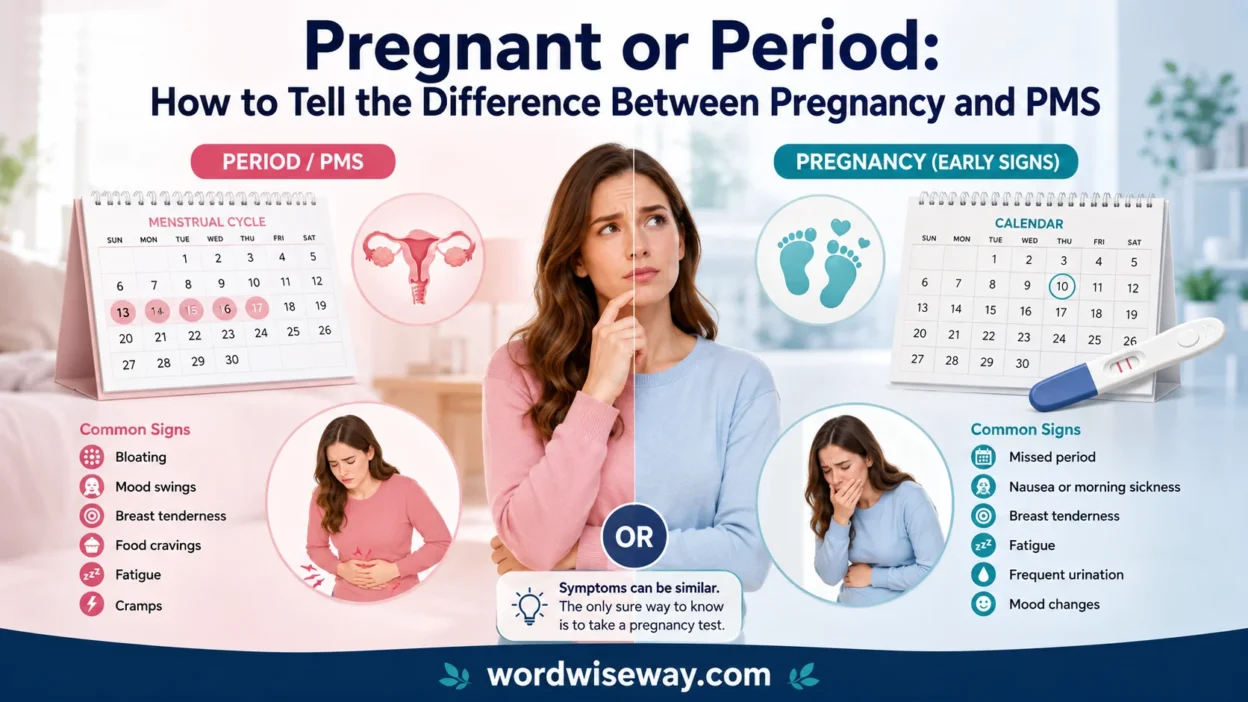
Symptoms such as breast tenderness, cramps, bloating, fatigue, mood changes, and headaches can occur with both PMS and early pregnancy. Pregnancy may also bring symptoms such as nausea, increased urination, unusual food preferences, stronger sensitivity to smells, constipation, and increased vaginal discharge. Yet not everyone experiences these signs.
If pregnancy is possible, the clearest next step is a home pregnancy test. Most tests are most reliable from the first day of a missed period. If you don’t know when your period was due, NHS guidance recommends testing at least 21 days after the last time pregnancy could have occurred.
Pregnant vs. Period Symptoms at a Glance
| Symptom | Before a Period | Early Pregnancy |
| Cramps | Common | Can happen |
| Breast tenderness | Common | Common |
| Bloating | Common | Can happen |
| Fatigue | Possible | Common |
| Mood changes | Common | Can happen |
| Headache | Possible | Can happen |
| Nausea | Less typical | Common |
| Frequent urination | Not a typical PMS sign | Can happen |
| Food cravings | Common for some people | Can happen |
| Food aversions | Possible | Can be more noticeable |
| Increased smell sensitivity | Less typical | Can occur |
| Vaginal discharge | Normal cycle changes can occur | May increase |
| Missed period | No | Common early sign |
The table shows why this question can be tricky. Several symptoms sit in both columns. No single symptom can reliably confirm pregnancy. A pregnancy test provides much more useful information.
Signs Your Period May Be Coming
PMS, or premenstrual syndrome, develops because hormone levels change during the menstrual cycle. For some people, those changes create a familiar cluster of physical and emotional symptoms in the days before bleeding begins.
If you’ve experienced PMS for several cycles, your usual pattern can provide a useful clue. For example, you might regularly notice breast tenderness, mild cramps, bloating, or irritability a few days before your period. When those symptoms follow the same pattern month after month, they may simply be your body’s usual premenstrual rhythm.
Period Cramps
Menstrual cramps commonly develop around the beginning of a period. They may feel like aching, pressure, or tightening in the lower abdomen. Some people also experience back discomfort or pain that spreads toward the thighs.
Early pregnancy can also cause mild cramping. That’s why cramps alone can’t settle the pregnant-or-period question.
A useful clue is your usual pattern. If the discomfort feels similar to what you normally experience before menstruation and your period arrives soon afterward, PMS becomes more likely. If the pain is unusual, severe, persistent, or occurs with concerning bleeding, seek medical advice instead of trying to identify the cause yourself.
Breast Tenderness
Breast tenderness is another classic overlap.
Before a period, hormonal fluctuations can make the breasts feel swollen, heavy, or sensitive. Early pregnancy can cause similar changes. Pregnancy-related breast changes may include tenderness, tingling, enlargement, more visible veins, or changes around the nipples.
That sounds useful until you realize the symptom has two passports. Breast soreness doesn’t reliably distinguish PMS from pregnancy.
Bloating and Appetite Changes
Feeling bloated before a period is common. Hormonal changes can influence digestion and fluid balance, leaving your abdomen feeling fuller than usual.
Food cravings can also appear before menstruation. You may suddenly want a particular snack or find yourself thinking about food more often.
Early pregnancy can bring appetite changes as well. Some people develop new food preferences, lose interest in familiar foods, or notice that certain smells suddenly bother them.
Mood Changes and Fatigue
Feeling tired, emotional, irritable, or less energetic can happen before a period. These symptoms can also occur during early pregnancy.
Pregnancy-related fatigue can become particularly noticeable during the first trimester. Hormonal changes are one reason tiredness is common during this stage.
Because both conditions can leave you reaching for an earlier bedtime, fatigue isn’t a dependable pregnancy test.
Early Signs That May Suggest Pregnancy
Early pregnancy doesn’t look identical for everyone. Some people notice several changes, while others notice almost nothing at first. In fact, having few or no symptoms doesn’t rule out pregnancy.
A Missed or Late Period
For someone with a regular cycle, a missed period is one of the strongest early clues of pregnancy.
However, the calendar isn’t infallible. Stress, weight changes, excessive exercise, hormonal birth control, PCOS, thyroid conditions, and other factors can shift the timing of menstruation.
Think of a missed period as a signal rather than a verdict. If pregnancy is possible, testing makes more sense than guessing.
Nausea and Vomiting
Nausea is often associated with early pregnancy. Despite the popular phrase “morning sickness,” it can occur at any time of day.
According to NHS guidance, pregnancy-related nausea commonly begins around 4 to 6 weeks of pregnancy. Not everyone experiences it, though.
If vomiting becomes severe and you can’t keep fluids down, medical advice is important because excessive vomiting during pregnancy can require treatment.
Increased Urination
Needing to urinate more often can occur during early pregnancy. You may notice more frequent bathroom trips during the day or night.
This symptom isn’t usually a defining feature of PMS. However, frequent urination can have other causes, including urinary problems. Don’t assume pregnancy is the explanation without considering the bigger picture.
Food Cravings, Aversions, and Smell Sensitivity
A sudden change in your relationship with food can stand out during early pregnancy.
You might notice that:
- A familiar food suddenly seems unappealing.
- Certain smells feel unusually strong.
- You develop a craving for foods you don’t normally choose.
- A strange or metallic taste appears in your mouth.
- Cooking smells become harder to tolerate.
These changes can occur during pregnancy, although they aren’t universal.
Increased Vaginal Discharge
Pregnancy can cause an increase in vaginal discharge. Normal pregnancy discharge is generally thin or milky and shouldn’t cause soreness or irritation.
Discharge by itself can’t confirm pregnancy. If it develops an unusual smell, changes color, or comes with itching, burning, or pain, speak with a healthcare professional because infection or another condition may be involved.
Light Spotting
Some people experience light spotting around the time early pregnancy begins. This can be confused with a very light period.
However, spotting isn’t a reliable way to diagnose pregnancy. Bleeding can have several causes, and pregnancy-related bleeding deserves appropriate attention, particularly when it becomes heavy or occurs with significant pain.
Symptoms That Can Happen With Both Pregnancy and PMS
Here’s where the confusion really starts.
| Shared Symptom | Why It Can Be Confusing |
| Cramps | Both PMS and early pregnancy may cause mild abdominal discomfort. |
| Tender breasts | Hormonal changes can cause breast soreness in both situations. |
| Fatigue | PMS and early pregnancy can both affect energy levels. |
| Bloating | Digestive and hormonal changes may cause bloating. |
| Mood changes | Hormonal shifts can influence mood before and during pregnancy. |
| Headaches | Hormonal fluctuations can contribute to headaches. |
| Appetite changes | Cravings or changes in appetite can occur in either situation. |
This overlap is why online symptom checklists can sometimes create more questions than answers. You might tick seven pregnancy symptoms and still be experiencing PMS.
The better approach is to consider timing, your normal cycle pattern, and pregnancy testing together. Symptoms can provide context. They can’t replace a test.
Is a Missed Period Always a Sign of Pregnancy?
No. Pregnancy is an important possibility, but it isn’t the only explanation.
A period can arrive late or disappear temporarily because of several factors, including:
- Stress or anxiety
- Sudden weight loss
- Being overweight
- Changes in exercise
- Hormonal contraception
- Breastfeeding
- PCOS
- Thyroid problems
- Perimenopause
- Natural variation in cycle timing
For example, imagine someone whose period normally arrives around the same date every month. They suddenly go through a stressful period and their cycle becomes late. A missed period doesn’t automatically mean pregnancy.
On the other hand, if pregnancy is possible, testing remains the sensible way to rule it in or out.
When Should You Take a Pregnancy Test?
Timing can make a major difference.
Most home pregnancy tests are designed to detect human chorionic gonadotropin (hCG) in urine. This hormone rises during pregnancy. Testing too early can result in a negative test even when pregnancy has occurred because hCG may not yet be high enough for the test to detect.
The Best Time to Test
For most home tests, the best time is from the first day of a missed period. If you don’t know when your period was due, NHS guidance recommends waiting until at least 21 days after the last unprotected sex before testing.
Always follow the instructions supplied with your particular test. Different products can have different procedures and result-reading times.
What If the Test Is Negative?
A negative test doesn’t always end the story if you tested early.
If your period still hasn’t arrived and pregnancy remains possible, repeat the test after several days. NHS guidance says to wait and try again if you still think you may be pregnant after a negative result.
If repeated tests remain negative while your period continues to be absent, speak with a healthcare professional. They can help determine whether another factor is affecting your cycle.
What If the Test Is Positive?
A positive home pregnancy test is usually highly reliable when you follow the instructions correctly.
If you receive a positive result, arrange appropriate medical care. A healthcare professional can confirm the pregnancy when needed and discuss the next steps for your health.
Can You Be Pregnant Without Having Pregnancy Symptoms?
Yes.
Pregnancy symptoms vary significantly. Some people notice nausea, breast tenderness, fatigue, food changes, and frequent urination early on. Others may have very few noticeable symptoms.
That means the absence of nausea doesn’t mean you’re not pregnant. Likewise, having several symptoms doesn’t prove that you are.
The same principle applies to PMS. A person can experience strong premenstrual symptoms one month and milder symptoms the next.
Your body doesn’t always follow a script. That’s normal.
How to Track Your Cycle More Accurately
Cycle tracking can make the pregnant or period question easier to understand over time.
Record the first day of each period and note how long bleeding lasts. You can also record symptoms such as cramps, breast tenderness, headaches, bloating, or mood changes.
After several cycles, patterns may become easier to spot.
For example:
- Your period usually arrives every 28 to 32 days.
- Breast tenderness usually begins several days before bleeding.
- Cramps normally appear shortly before your period.
- This month, your expected period doesn’t arrive.
That pattern doesn’t diagnose pregnancy. It does tell you that the timing has changed enough to consider taking a test if pregnancy is possible.
When to Talk to a Healthcare Professional
A late period isn’t always an emergency, but persistent changes deserve attention.
Consider medical advice if:
- You repeatedly miss periods.
- Your normally regular cycles suddenly become irregular.
- Your periods last longer than seven days.
- You experience unusually heavy bleeding.
- You have persistent or severe pain.
- You have repeated negative pregnancy tests but no period.
- You develop other unusual symptoms alongside missed periods.
ACOG advises seeking medical attention for very heavy menstrual bleeding, particularly when bleeding requires changing a pad or tampon every one to two hours or lasts longer than seven days. Dizziness, light-headedness, or a racing pulse alongside heavy bleeding also warrants prompt medical attention.
A healthcare professional can investigate possible causes of missed or irregular periods. Depending on the situation, evaluation may include medical history, examination, blood tests, or other testing.
When Pregnancy Symptoms Need Urgent Attention
Some symptoms shouldn’t be brushed off as ordinary PMS.
If pregnancy is possible and you develop severe abdominal or pelvic pain, particularly pain concentrated on one side, unusual bleeding, or significant dizziness or weakness, seek urgent medical care.
These symptoms can occur with serious pregnancy complications, including ectopic pregnancy. NHS guidance notes that ectopic pregnancy symptoms can include a missed period, lower abdominal pain on one side, vaginal bleeding, and shoulder-tip pain.
The goal isn’t to panic over every ache. It’s to recognize when a symptom falls outside your normal pattern and needs professional assessment.
A Simple Way to Think About Pregnant or Period Symptoms
When you’re trying to work out whether you’re pregnant or getting your period, use this three-step approach:
First, check the timing. Is your period actually late compared with your usual cycle?
Next, look at the pattern. Are the symptoms identical to what you normally experience before menstruation, or are there new changes such as nausea, unusual food aversions, or frequent urination?
Finally, test when appropriate. If pregnancy is possible, a correctly used home pregnancy test provides much more useful evidence than symptoms alone.
This approach avoids the symptom rabbit hole. You don’t need to assign a dramatic meaning to every twinge.
Pregnant or Period: Key Takeaway
The difference between pregnant or period symptoms isn’t always obvious because early pregnancy and PMS share many of the same signs. Cramps, tender breasts, fatigue, bloating, mood changes, headaches, and appetite changes can occur in either situation.
A missed period is an important pregnancy clue, especially when your cycles are usually regular. However, stress, hormonal contraception, PCOS, thyroid conditions, exercise changes, weight changes, breastfeeding, and natural cycle variation can also delay menstruation.
When pregnancy is possible, don’t rely on symptoms alone. Take a pregnancy test at the appropriate time and follow the instructions carefully. If the result is negative but your period remains absent, repeat the test or speak with a healthcare professional. If you experience severe pain, unusual bleeding, or other concerning symptoms, seek medical care promptly.
Read More: Miscarriage or Period: How to Tell the Difference?
FAQs
1. Can early pregnancy feel like a period?
Yes. Early pregnancy can cause cramps, tiredness, mood changes, and breast tenderness, which may feel similar to PMS. Because these symptoms overlap, they can’t confirm pregnancy on their own.
2. How can I tell if cramps are from pregnancy or PMS?
PMS cramps usually happen before or around your period and often improve once bleeding begins. Pregnancy can also cause mild cramping, so timing alone isn’t enough to tell the difference.
3. Is breast tenderness a sign of pregnancy?
Breast tenderness can occur during both PMS and early pregnancy. If your period doesn’t arrive as expected, taking a pregnancy test can provide a clearer answer.
4. Can frequent urination mean pregnancy?
Frequent urination can happen during pregnancy, but it isn’t proof by itself. Other factors can cause this symptom, so consider the timing of your period and use a pregnancy test when appropriate.
5. Can PMS symptoms happen in early pregnancy?
Yes. Some early pregnancy symptoms can resemble PMS, including mood swings, fatigue, cramps, and breast tenderness. That’s why symptoms alone can be confusing.
6. Does a missed period always mean pregnancy?
No. A late or missed period can happen for several reasons. Stress, changes in routine, and other factors can affect menstrual timing, so a pregnancy test is more reliable than symptoms alone.
7. When should I take a pregnancy test?
A home pregnancy test is generally most useful after your expected period has been missed. Following the test instructions carefully can improve the chance of getting an accurate result.
8. Can you be pregnant and still have bleeding?
Some bleeding can occur during early pregnancy, but it shouldn’t automatically be assumed to be a normal period. If you’re pregnant and have concerning or heavy bleeding, contact a healthcare professional promptly.
9. Why are PMS and pregnancy symptoms so similar?
Both PMS and early pregnancy involve hormonal changes. Those changes can produce overlapping symptoms, which explains why it can be difficult to distinguish between them based only on how you feel.
10. What is the most reliable way to tell pregnancy from a period?
The most reliable practical step is a pregnancy test. If the result is negative but your period remains absent, follow the test instructions about repeating it or speak with a healthcare professional.
Conclusion
Figuring out whether symptoms point to PMS or pregnancy can feel like trying to solve a puzzle with several pieces that look almost identical. Cramps, fatigue, breast tenderness, mood changes, and other symptoms can occur in both situations, so don’t rely on one symptom as your answer.
Pay attention to your menstrual timing and use a pregnancy test when pregnancy is possible. If you’re still uncertain or your symptoms concern you, professional medical advice can help you understand what’s happening and decide what to do next.

Evelyn Shaw has spent 14 years at Yale University’s English Department, leading students through close readings, genre studies, and interpretive methodologies. Her scholarly interests include Renaissance drama, gothic fiction, feminist literary criticism, and archival research and examining how texts generate meaning across historical periods. Evelyn has presented at major academic conferences and published essays in peer-reviewed journals, reflecting her passion for rigorous analysis and student-centered learning.