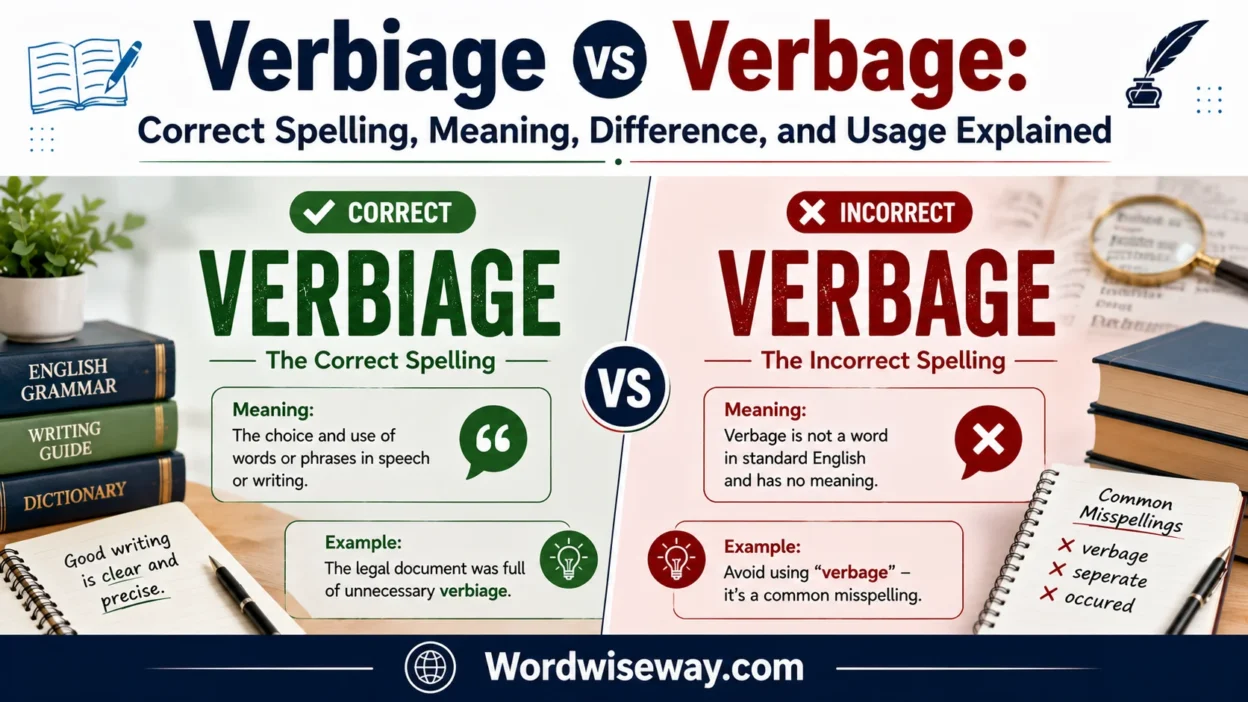
Verbiage vs Verbage: Correct Spelling, Meaning, and Difference explains the importance of choosing the correct word in the English language.
Verbiage means excessive words or wordiness, while verbage is a commonly used but incorrect spelling. This grammar confusion often affects professionals, writers, and learners. Understanding the correct spelling, meaning, and proper usage helps improve language accuracy and prevents mistakes in communication and writing.
The history of verbiage dates back to 1721, with roots connected to French wordiness and the verb verbier, meaning chatter. Today, it is common in corporate speak and professional vocabulary. Although verbage appeared in the 1800s, verbiage remains the accepted form.
Quick Answer:
Verbiage is the correct spelling. ✅
Verbage is incorrect and should be avoided. ❌
The word verbiage can mean the words used to express an idea or, more commonly, unnecessary and overly complicated language. For example:
- “The contract contains a lot of legal verbiage.”
- “The writer removed extra verbiage to make the article easier to understand.”
The spelling verbage is a mistake caused by confusion with the word verb. It may appear in informal writing, but standard English dictionaries do not recognize it as the correct form.
What Does Verbiage Mean?
Verbiage refers to the way words are used in communication. It describes the wording, language style, or amount of words in a piece of writing or speech.
The meaning depends on the context.
In some situations, verbiage simply means wording. It can describe the specific words chosen to communicate an idea.
Example:
“The company changed the website verbiage to make the instructions easier for customers.”
Here, verbiage means the wording or text used on the website.
However, people often use verbiage to criticize writing that contains too many unnecessary words.
Example:
“The report was full of confusing verbiage.”
In this sentence, verbiage means excessive, complicated, or meaningless language.
Two Common Meanings of Verbiage
| Meaning | Explanation | Example |
| Choice of words | The specific language used in communication | “The advertisement’s verbiage sounds friendly.” |
| Excessive wording | Too many unnecessary words | “Remove the extra verbiage from the report.” |
The second meaning is more common in everyday conversations, especially when someone wants writing to become shorter and clearer.
What Does Verbage Mean?
Verbage is not the correct spelling of the word.
Although some people use “verbage” because it seems logical, it does not follow standard English spelling rules for this term.
The mistake usually happens because people connect the word with verb, which is a grammar term for action words like run, write, speak, or create.
However, verbiage does not come from the word verb in modern English usage. The spelling developed from older language roots, which is why it includes the letter i.
Using “verbage” in professional writing may make your work look less polished because readers expect the standard spelling: verbiage.
Why Do People Confuse Verbiage and Verbage?
The confusion between verbiage vs verbage is understandable because English contains many words that change spelling when they evolve.
Several reasons cause this common mistake:
The Word Looks Like It Comes From “Verb”
Many people see “verbiage” and assume it combines:
- Verb + age = verbage
That assumption feels natural, but it is incorrect.
Pronunciation Creates Confusion
When people hear the word spoken, the middle sound can be easy to miss. The “i” in verbiage is not always strongly pronounced, which causes some people to write the word without it.
English Has Many Irregular Patterns
English borrowed thousands of words from other languages. Some spellings do not follow simple rules.
For example:
- Marriage does not become “marriag”
- Message does not become “messag”
- Verbiage does not become “verbage”
The spelling must be learned as a complete word.
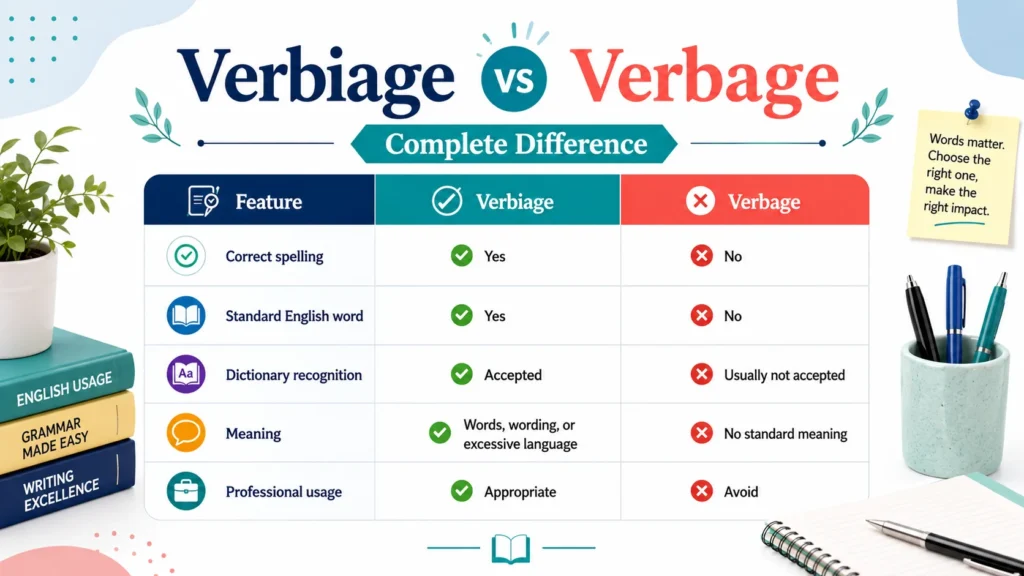
Verbiage vs Verbage: Key Differences
| Feature | Verbiage | Verbage |
| Correct spelling | ✅ Yes | ❌ No |
| Standard English word | Yes | No |
| Dictionary recognition | Accepted | Usually not accepted |
| Meaning | Words, wording, or excessive language | No standard meaning |
| Professional usage | Appropriate | Avoid |
The easiest way to remember the difference is simple:
Verbiage has an “i” before “age.”
How to Use Verbiage Correctly in a Sentence
Using verbiage correctly depends on the situation. It works well in formal writing, business communication, and discussions about language.
Verbiage Meaning “Wording”
When talking about the actual words used in something, verbiage describes language choices.
Examples:
- “The legal verbiage in the agreement confused some customers.”
- “The marketing team improved the product description’s verbiage.”
- “The teacher adjusted the assignment verbiage to make it clearer.”
In these examples, verbiage refers to the wording itself.
Verbiage Meaning “Too Many Words”
Writers often use verbiage when they want to point out unnecessary language.
Examples:
- “The introduction contains unnecessary verbiage.”
- “The editor removed extra verbiage from the article.”
- “The presentation needs less corporate verbiage.”
Here, the word suggests that the language is excessive or overly complicated.
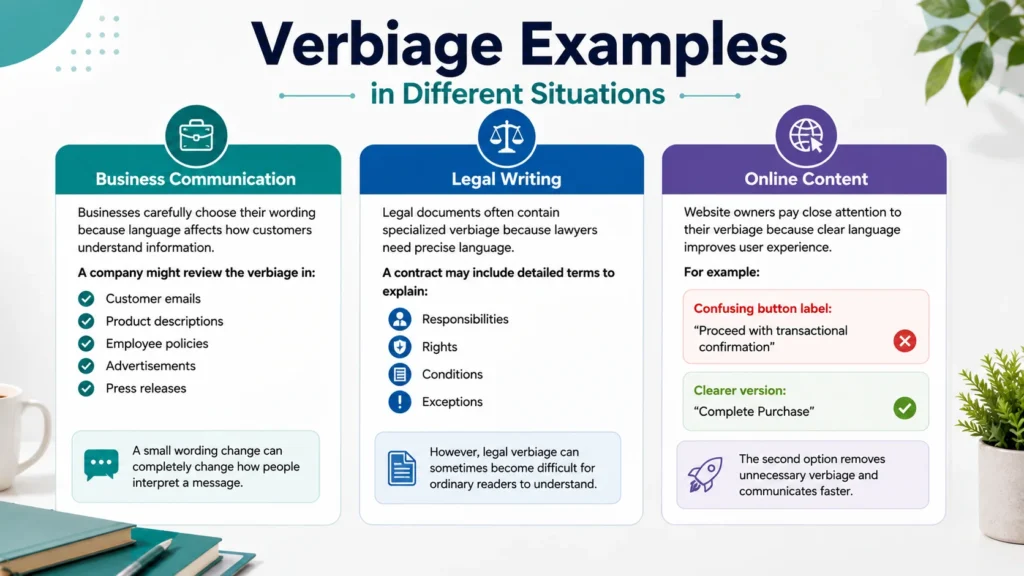
Verbiage Examples in Different Situations
Business Communication
Businesses carefully choose their wording because language affects how customers understand information.
For example:
A company might review the verbiage in:
- Customer emails
- Product descriptions
- Employee policies
- Advertisements
- Press releases
A small wording change can completely change how people interpret a message.
Legal Writing
Legal documents often contain specialized verbiage because lawyers need precise language.
A contract may include detailed terms to explain:
- Responsibilities
- Rights
- Conditions
- Exceptions
However, legal verbiage can sometimes become difficult for ordinary readers to understand.
Online Content
Website owners pay close attention to their verbiage because clear language improves user experience.
For example:
A confusing button label:
“Proceed with transactional confirmation”
A clearer version:
“Complete Purchase”
The second option removes unnecessary verbiage and communicates faster.
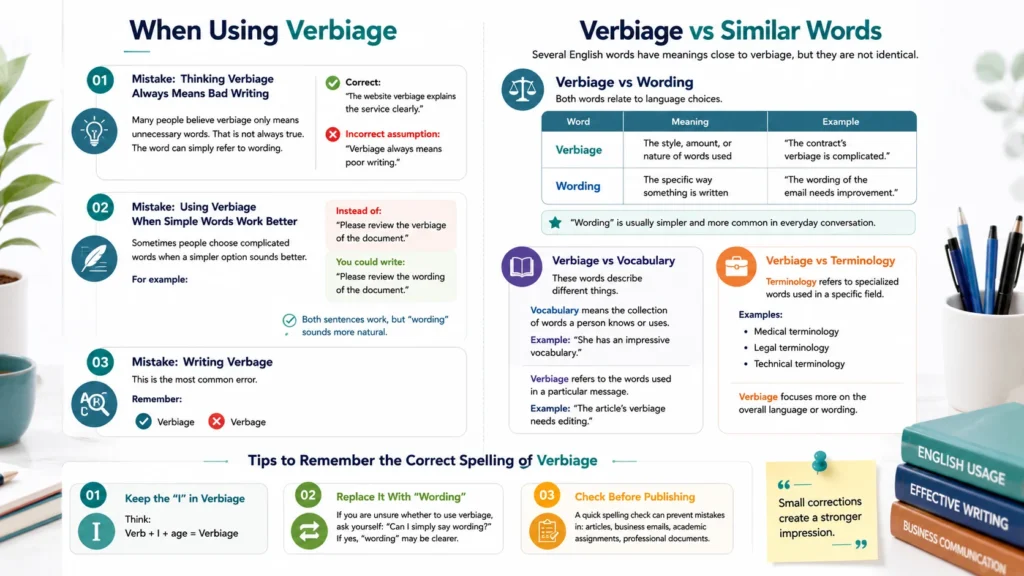
Common Mistakes When Using Verbiage
Even when people spell the word correctly, they sometimes misuse it.
Mistake: Thinking Verbiage Always Means Bad Writing
Many people believe verbiage only means unnecessary words. That is not always true.
The word can simply refer to wording.
Correct:
“The website verbiage explains the service clearly.”
Incorrect assumption:
“Verbiage always means poor writing.”
Mistake: Using Verbiage When Simple Words Work Better
Sometimes people choose complicated words when a simpler option sounds better.
For example:
Instead of:
“Please review the verbiage of the document.”
You could write:
“Please review the wording of the document.”
Both sentences work, but “wording” sounds more natural.
Mistake: Writing Verbage
This is the most common error.
Remember:
✅ Verbiage
❌ Verbage
Verbiage vs Similar Words
Several English words have meanings close to verbiage, but they are not identical.
Verbiage vs Wording
Both words relate to language choices.
| Word | Meaning | Example |
| Verbiage | The style, amount, or nature of words used | “The contract’s verbiage is complicated.” |
| Wording | The specific way something is written | “The wording of the email needs improvement.” |
“Wording” is usually simpler and more common in everyday conversation.
Verbiage vs Vocabulary
These words describe different things.
Vocabulary means the collection of words a person knows or uses.
Example:
“She has an impressive vocabulary.”
Verbiage refers to the words used in a particular message.
Example:
“The article’s verbiage needs editing.”
Verbiage vs Terminology
Terminology refers to specialized words used in a specific field.
Examples:
- Medical terminology
- Legal terminology
- Technical terminology
Verbiage focuses more on the overall language or wording.
Tips to Remember the Correct Spelling of Verbiage
Remembering the spelling becomes easier with a few tricks.
Keep the “I” in Verbiage
Think:
Verb + I + age = Verbiage
The letter “i” is the small detail that separates the correct word from the mistake.
Replace It With “Wording”
If you are unsure whether to use verbiage, ask yourself:
“Can I simply say wording?”
If yes, “wording” may be clearer.
Check Before Publishing
A quick spelling check can prevent mistakes in:
- Articles
- Business emails
- Academic assignments
- Professional documents
Small corrections create a stronger impression.
Expert Insight:
Verbiage is the correct spelling in standard English, while verbage is a common spelling mistake. Verbiage can mean wording or the use of excessive and complicated language. Understanding the correct spelling, meaning, and usage helps improve English language accuracy in professional, academic, and everyday writing.
The easiest way to remember the difference is to use verbiage when referring to words, wording, or excessive language. Verbage should be avoided in formal writing because it isn’t the accepted spelling. Choosing the correct verbiage helps make communication clearer and more professional.
Read More: Affect vs Effect: Meaning, Difference, and Correct Usage
FAQs
What is the correct spelling: Verbiage or Verbage?
The correct spelling is verbiage. It is the standard English word used to describe excessive words, wordiness, or a style of expression that uses more words than necessary. Verbage is a common spelling mistake and is not accepted in formal English writing.
Does verbiage mean too many words?
Yes, verbiage often refers to an excessive amount of words, especially when the message becomes unclear or unnecessarily long. However, it can also mean the manner or choice of expressing ideas depending on the context.
Why do people confuse verbiage and verbage?
People often confuse verbiage vs verbage because both words sound similar when spoken. The spelling mistake usually happens due to pronunciation changes and the influence of similar words like “garbage” or “baggage.”
Is verbage ever considered correct English?
No, verbage is generally considered an incorrect spelling. Although many people use it in conversations and informal writing, professional documents should always use verbiage.
What is the origin of the word verbiage?
The word verbiage comes from French roots connected with words and wordiness. It entered English usage in the early 18th century, with its first known use recorded in 1721.
How can I remember the difference between verbiage and verbage?
A simple way to remember is that verbiage contains “bi” after ver, similar to its connection with words and language. Always choose verbiage when writing professionally or academically.
Is verbiage a negative word?
Not always. Verbiage can be neutral when referring to wording or expression, but it often has a negative meaning when it suggests unnecessary, complicated, or excessive language.
How is verbiage used in professional writing?
In professional writing, verbiage may describe the wording used in reports, contracts, presentations, or business communication. Clear and precise verbiage helps improve credibility and understanding.
What is the difference between verbiage and wordiness?
Both terms relate to using many words, but wordiness mainly means unnecessary length. Verbiage can refer to excessive wording as well as the style or choice of words used to express an idea.
Why does correct spelling matter in words like verbiage?
Correct spelling improves communication, professionalism, and credibility. Using verbiage instead of verbage shows attention to language accuracy and helps avoid misunderstandings in formal writing.
Conclusion
Understanding the difference between Verbiage vs Verbage: Correct Spelling, Meaning, and Difference helps writers avoid a common English mistake. Verbiage is the correct form, while verbage is an incorrect spelling that often appears because the two words sound alike. Learning the proper meaning, history, and usage of verbiage improves grammar skills and makes communication more effective.
Using accurate vocabulary is important in professional, academic, and everyday writing. Choosing the right words builds confidence, strengthens credibility, and creates clearer messages. Whether writing emails, reports, or articles, using verbiage correctly ensures your language remains polished and grammatically acceptable.

Evelyn Shaw has spent 14 years at Yale University’s English Department, leading students through close readings, genre studies, and interpretive methodologies. Her scholarly interests include Renaissance drama, gothic fiction, feminist literary criticism, and archival research and examining how texts generate meaning across historical periods. Evelyn has presented at major academic conferences and published essays in peer-reviewed journals, reflecting her passion for rigorous analysis and student-centered learning.