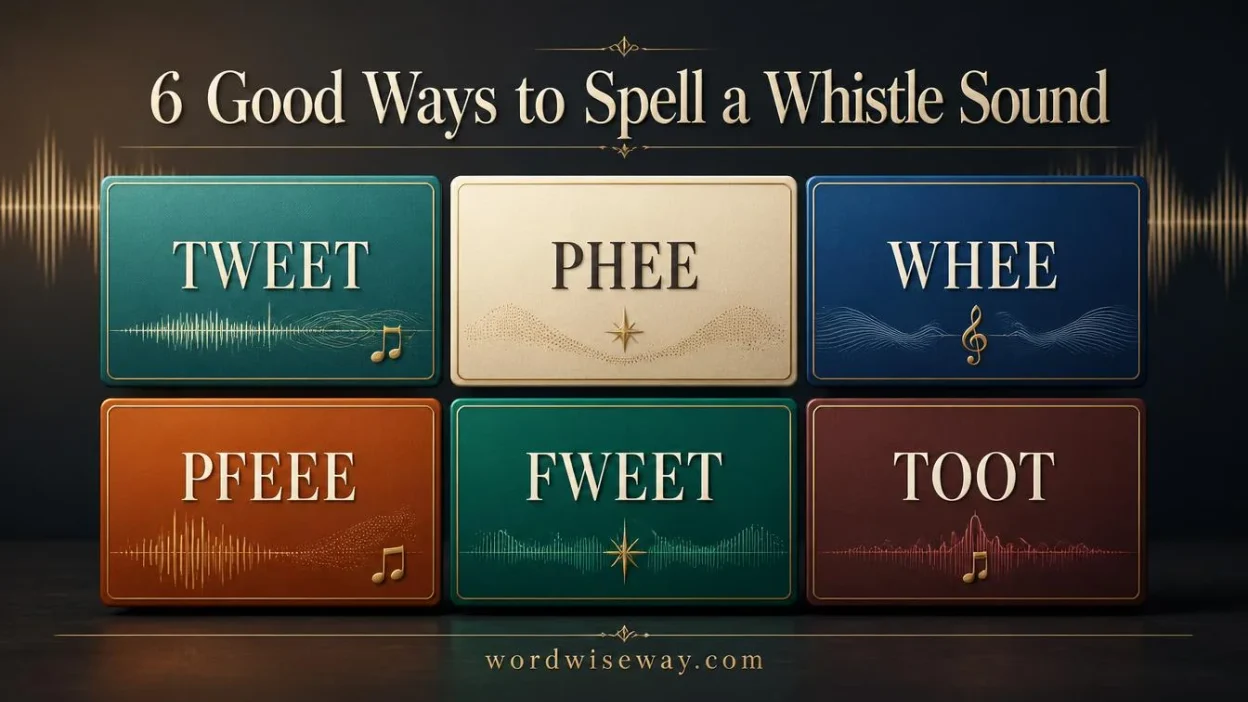
The 6 Good Ways to Spell a Whistle Sound help readers imagine how different whistles sound in real situations, from soft to sharp.Whistling happens when a sharp exhale passes through the mouth, while the formation of the lips controls the airflow. Although the action involves blowing air, describing the actual sound in writing requires words that help readers imagine it.
The right lip formation affects pronunciation and pitch, producing a soft whistling sound or a loud, sharp sound. Writers can use onomatopoeia, a linguistic expression that imitates real noises through written sounds. This sound imitation makes a scene feel more natural, helping readers understand the sound without lengthy explanations.
In this article, we’ll explore the best options for sound description, including familiar sound words and expressive sound effects. Each option represents whistling differently, depending on the situation and tone. A short, high-pitched whistle may need different spelling from a long, gentle whistle heard across a quiet room.
When choosing descriptive words, clarity matters because the spelling should bring the intended noise to readers’ minds. These practical spelling choices help you describe a whistle naturally and select a suitable written form for your sentence.
Quick Answer:
You can represent a whistle sound with words such as tweet, fweet, whee, and toot. Other creative forms, including phee and pfeee, can suggest particular whistle patterns in informal writing.
However, these spellings aren’t equally established. Tweet and toot are familiar English words, while the others work mainly as creative sound effects. The best choice depends on the pitch, duration, and character of the sound.
- Tweet: A short, high-pitched sound often associated with birds.
- Phee: A creative spelling for a clear, high-pitched whistle.
- Whee: An airy, playful sound that may suggest a rising whistle.
- Pfeee: An invented form that can represent a prolonged whistle.
- Fweet: A sharp, brief whistle effect.
- Toot: A short, distinct tone commonly associated with horns but sometimes used for whistles.
6 Good Ways to Spell a Whistle Sound
Different sound words create different impressions. Before choosing one, consider whether your whistle is short or sustained, gentle or piercing, and human-made or associated with an animal.
Tweet
Tweet is a familiar English word that represents a short, high-pitched sound, especially one made by a bird. Its crisp, compact form makes it easy to recognize in stories and everyday writing.
Writers sometimes use tweet for a brief whistle-like sound because it suggests a light, high note. However, the word often brings birds to mind rather than a person whistling. A little context can make the intended meaning clearer.
Examples:
- A tiny bird perched on the fence and chirped, “Tweet, tweet!”
- From the garden came a cheerful tweet that broke the morning silence.
- “Tweet!” The referee imitated a bird’s call to make the children laugh.
When should you use tweet?
Choose this word when the sound resembles a bird’s call or a short, bright whistle. It’s particularly useful in children’s stories, nature writing, and playful descriptions.
For a human whistle, you may want to describe the action directly. For example, “She whistled sharply to get his attention” leaves little room for confusion.
Phee
Phee is a creative spelling that can suggest a clear, high-pitched whistle. Unlike a familiar dictionary word such as tweet, it doesn’t have one widely established meaning as a written whistle sound.
The spelling may help readers imagine a thin, airy note, especially when the surrounding sentence describes the pitch or movement. You can also extend the vowel when you want to suggest a longer sound. Remember that readers may interpret unfamiliar spellings differently.
Examples:
- A thin “phee” floated across the quiet courtyard.
- He gave a quick phee to signal that he had arrived.
- A high phee echoed through the hallway before everything went quiet.
When should you use phee?
Use it when you want a distinctive sound effect rather than a conventional English word. It can suit experimental fiction, informal dialogue, or a scene in which the sound itself matters.
If clarity is your priority, pair the word with an action. For example, “He made a high phee with his lips” tells readers how to interpret it.
Whee
Whee commonly expresses excitement, delight, or the sensation of moving quickly. In creative writing, it can also suggest an airy, rising sound that resembles a playful whistle.
Context matters because whee doesn’t automatically mean someone is whistling. Readers may interpret it as a shout of excitement, particularly in a sentence about a roller coaster or a thrilling ride. A descriptive phrase can help establish the intended sound.
Examples:
- A soft “whee” rose as the wind passed through the narrow opening.
- She made a playful whee to imitate the sound of a tiny whistle.
- A rising whee slipped into the silence before fading away.
When should you use whee?
Choose this spelling when the sound has a playful or rising quality. It can work in humorous fiction, expressive dialogue, and informal sound descriptions.
Avoid relying on the word alone when the distinction between excitement and whistling matters. A phrase such as “a rising whistle” may communicate the sound more precisely.
Pfeee
Pfeee is an invented sound spelling that can represent a long, piercing whistle. Its extended vowel encourages readers to imagine a sound that continues rather than ending immediately.
Because the spelling isn’t standardized, different readers may imagine different sounds. Some may interpret the initial letters as an airy beginning, while others may find the form unusual. That’s why this option works best when the surrounding scene makes the intended sound clear.
Examples:
- A long “pfeee” rang out across the empty field.
- The character produced a sharp pfeee to imitate a referee’s whistle.
- A sustained pfeee cut through the background noise in the animated scene.
When should you use pfeee?
Use it sparingly when you want a stylized sound effect. It may suit comics, playful storytelling, or fictional scenes where the sound has a distinctive character.
For formal writing, a direct description is usually clearer. Instead of writing an unfamiliar sound spelling, you could say, “A piercing whistle echoed across the field.”
Fweet
Fweet is an informal, invented spelling that can represent a quick, sharp whistle. Its opening f may suggest escaping air, while the ending gives the word a clipped feel.
The form can be useful when a writer wants to distinguish a brief whistle from a long, sustained note. Still, readers won’t necessarily recognize it immediately because it isn’t a conventional spelling for a whistle sound.
Examples:
- “Fweet!” The coach whistled to call everyone back.
- A quick fweet came from the other side of the playground.
- He gave a short fweet, and his friend turned around.
When should you use fweet?
Choose it when a short, attention-getting whistle needs to appear as a sound effect. It can work in informal dialogue, comic panels, and lively fictional scenes.
If the whistle is important to the plot, consider adding a descriptive verb. For instance, “Fweet! She whistled sharply from the doorway” combines the sound effect with a clear explanation.
Toot
Toot is an established English word for a short sound, especially one produced by a horn or similar instrument. It can also represent a short, distinct tone in playful descriptions of whistles.
The word’s main association is important. Readers often imagine a horn, toy trumpet, or vehicle rather than a person whistling. Therefore, the sentence should establish the source when that distinction matters.
Examples:
- A quick toot echoed through the quiet street.
- He gave a tiny toot with his whistle to signal the start.
- “Toot, toot!” came the sound of a small horn outside the window.
When should you use toot?
Use it when the sound resembles a short, rounded tone. It’s especially suitable for horns and instruments, although a clear context can make it work for a whistle.
If you’re describing someone using their lips to whistle, the verb whistled may be more accurate. The sound word should support the scene rather than leave readers guessing about its source.
How to Choose the Right Spelling for a Whistle Sound
The right spelling depends on what you want readers to hear in their imagination. A quick whistle used to call a friend differs from a prolonged note that echoes across a stadium.
Consider these factors before choosing a sound word.
Think About the Length of the Whistle
Duration changes how a sound feels. A brief whistle may need only a short sound effect, while a sustained note benefits from a longer description.
For example:
- Short: “Fweet!” A sharp whistle came from the gate.
- Long: A piercing whistle continued across the open field.
- Repeated: “Tweet, tweet!” sounded from the branches.
Repeated letters can suggest duration, but they aren’t always necessary. A phrase such as “a long, high whistle” often communicates the sound more clearly.
Consider the Pitch and Quality
Some whistles sound thin and high, while others are lower, sharper, or more breathy. The word you choose should fit the sound’s character.
A birdlike whistle may suit tweet. A short, rounded tone may suit toot. Meanwhile, an invented spelling such as phee can suggest a particular sound in creative writing.
These associations aren’t fixed rules. They are writing choices that depend on context and reader expectations.
Match the Sound to the Situation
The source of a whistle can matter as much as its pitch. A referee, a bird, a passing vehicle, and a person calling a friend may produce very different sounds.
Consider the following examples:
- A bird: “A bright tweet came from the tree.”
- A referee: “The referee blew a sharp whistle to stop the game.”
- A friend calling: “She whistled across the street to catch his attention.”
- A fictional sound effect: “Fweet! The character signaled from the doorway.”
Notice that the last example uses an invented spelling, while the others rely on familiar words or direct descriptions. Each approach can work when it suits the scene.
Choose a Form That Fits Your Audience
Children’s stories, comics, novels, and formal reports have different needs. A playful sound effect may add energy to a comic, but a technical report usually benefits from a straightforward description.
For younger readers, familiar words such as tweet and toot are generally easier to understand. In fiction, you have more freedom to invent a spelling when it serves a clear purpose.
Whatever form you choose, keep it consistent. If the same fictional sound appears several times, changing its spelling without a reason may confuse readers.
Whistle Sound Spellings Compared
A comparison table makes it easier to see which forms may fit a particular scene. The descriptions below reflect common associations and creative interpretations, not official sound classifications.
| Spelling | Sound Impression | Best Use | Common Association |
| Tweet | Short and high-pitched | Bird calls and brief, bright sounds | Birds |
| Phee | Clear and high | Creative whistle effects | High notes |
| Whee | Airy or playful | Expressive sound effects | Excitement |
| Pfeee | Long and piercing | Stylized fictional sounds | Sustained whistles |
| Fweet | Sharp and brief | Attention-getting effects | Quick whistles |
| Toot | Short and rounded | Horns and similar tones | Musical or mechanical sounds |
A useful rule: Choose a familiar word when it communicates the sound accurately. Use an invented spelling when it adds something meaningful to the scene.
For instance, “The referee blew his whistle” is clearer than an unfamiliar sound effect in a news report. However, a comic character shouting “Fweet!” may create a livelier visual moment.
How to Write a Whistle Sound in a Sentence
A sound effect works best when it feels like part of the scene. Instead of inserting a sound word without explanation, connect it to an action, reaction, or setting.
Use Sound Words to Create a Scene
A whistle can signal an arrival, interrupt a conversation, or draw attention to something nearby. The surrounding details help readers understand its purpose.
Compare these examples:
- Without context: “Tweet!”
- With context: “Tweet!” A small bird called from the windowsill.
- With human action: He whistled twice, hoping his friend would hear him.
- With a reaction: A sharp whistle rang out, and everyone turned toward the entrance.
The last three examples give readers more information. They identify the sound’s source, purpose, or effect.
Decide Whether to Use a Sound Effect or a Verb
A sound effect imitates the noise itself. A verb describes the action that produces it.
For example, tweet may represent a brief bird call, while whistled explains what a person did. You don’t need to imitate every sound when a direct verb conveys the action more naturally.
Consider these sentences:
- “She whistled to get her brother’s attention.”
- “Fweet! She whistled from the doorway.”
- “A long whistle echoed through the station.”
The first emphasizes the action. The second adds a stylized sound effect. The third focuses on the sound’s duration and setting.
Each sentence serves a slightly different purpose.
Use Punctuation Carefully
Quotation marks can set off a sound effect when it appears as an utterance. Italics may emphasize a sound in some styles, while standalone text can work well in comics.
For example:
- “Tweet, tweet!” came from the garden.
- A sharp toot interrupted the conversation.
- Fweet! The referee called the players back.
No single punctuation style suits every publication. Follow your chosen style guide and keep your formatting consistent throughout the piece.
Is There a Standard Way to Spell a Whistle Sound?
There isn’t one universal spelling for every whistle. Writers use established words, conventional verbs, and invented forms depending on the sound they want to describe.
Linguists call many sound-imitating words onomatopoeia. These words resemble the noises they represent, although the relationship between spelling and sound varies across languages and writing traditions.
English includes familiar examples such as buzz, hiss, chirp, and toot. Their forms have become recognizable through common usage. By contrast, a spelling such as pfeee may be understandable in a particular story without being a standard English word.
It’s helpful to distinguish three approaches:
- Established sound words: Familiar forms such as tweet and toot.
- Direct descriptions: Phrases such as “a high-pitched whistle” or “a long, sharp note.”
- Creative sound effects: Invented spellings such as fweet or pfeee.
The third category gives writers freedom, but that freedom comes with a responsibility to communicate clearly. An unusual spelling should help readers imagine the sound rather than force them to decode it.
Common Mistakes
Even a short sound effect can become confusing when the spelling doesn’t match its context. A few simple habits will help you avoid common problems.
Assuming Every Whistle Sounds the Same
A bird’s call, a referee’s whistle, and a person’s lip whistle aren’t necessarily alike. Choosing one sound word for every situation can flatten those differences.
Instead, consider the source and describe the sound’s most important quality. Words such as sharp, high-pitched, airy, and sustained can help readers form a clearer picture.
Adding Too Many Repeated Letters
Stretching a word can suggest a prolonged sound, but excessive letters often make writing harder to read. A form such as pfeeeeeeeee may look dramatic without telling readers much about the actual noise.
Try a restrained spelling or use a descriptive phrase instead. “A long, piercing whistle” is often more effective than an exaggerated string of vowels.
Choosing a Sound Word Without Enough Context
An isolated whee may suggest excitement rather than whistling. Likewise, toot may lead readers to imagine a horn.
Give the sound a clear source when the distinction matters. A short phrase can prevent an entire sentence from being misunderstood.
Treating Invented Spellings as Official Words
Creative sound effects can be useful, but not every form has an established meaning. Presenting an invented spelling as the only correct option can mislead readers.
When accuracy matters, use a familiar word or describe the sound directly. Save unusual spellings for situations where their creative effect improves the writing.
Ignoring Consistency
If a character makes the same distinctive whistle throughout a story, use a consistent representation. Switching among several spellings without a clear reason may make readers think the sounds differ.
Consistency matters especially in comics, children’s books, and fiction with recurring sound effects.
Read More: 7 Good Words for the Sound of Thunder
FAQs
1. How Do You Spell the Sound of a Whistle?
You can spell a whistle sound in several ways, including “toot,” “tweet,” and “whoo.” The best choice depends on the whistle’s pitch, length, and tone.
2. What Is the Most Common Word for a Whistling Sound?
“Whistle” is the most common word for the sound itself. Writers also use sound words such as “tweet” or “toot” to make descriptions more vivid.
3. Is “Tweet” a Good Way to Spell a Whistle Sound?
Yes, “tweet” works well for a short, high-pitched whistle. It often describes birdsong, but you can also use it for a similar human whistle.
4. How Do You Write a Loud Whistle in a Story?
You can use words such as “TWEEEET!” or “WHEEEE!” to suggest a loud, sharp whistle. Capital letters and exclamation points can emphasize its strength.
5. What Is the Difference Between “Toot” and “Tweet”?
“Toot” usually suggests a short, clear blast, while “tweet” often represents a higher-pitched sound. Your choice depends on the sound you want readers to imagine.
6. Is Whistling an Example of Onomatopoeia?
Whistling itself is an action that produces sound. Words such as “tweet,” “toot,” and “whee” are examples of onomatopoeia because they imitate sounds.
7. How Can You Describe a Soft Whistle in Writing?
Use gentle sound words such as “whoo” or “whee” to suggest a quiet, flowing whistle. You can also describe it as a faint whistle drifting through the air.
8. How Do You Spell a Long, Continuous Whistle?
Spell a long whistle as “wheeeee” or “whooooo” to show that the sound continues. Repeating a vowel can help readers imagine its length.
9. Can You Use Whistle Sounds in Dialogue?
Yes, you can write a whistle as a sound effect within a scene. For example, “Tweet! Over here!” gives the reader a clear sense of the sound.
10. Why Do Writers Use Different Spellings for Whistle Sounds?
Different spellings help readers imagine variations in pitch, volume, and duration. Since written words cannot reproduce every detail of an actual whistle, writers choose forms that best fit the scene.
Conclusion
Choosing the right spelling for a whistle sound can make your writing clearer and more engaging. Words such as “toot,” “tweet,” “whee,” and “whoo” each create a different impression. Some suggest a short, sharp whistle, while others capture a soft, high-pitched, or lingering sound. The best choice depends on what you want your readers to hear in their minds.
When using onomatopoeia, think about the situation before choosing a sound word. A birdlike whistle might suit “tweet,” while “toot” can suggest a brief, distinct blast. You can also stretch vowels, add punctuation, or use capital letters to show changes in pitch, length, and volume. These small details help bring dialogue, stories, comics, and everyday scenes to life.
Ultimately, there isn’t one perfect way to spell every whistle. Experiment with different sound words and read your sentence aloud to see which one fits naturally. Keep your audience and the scene in mind, and avoid adding extra letters when they don’t improve the meaning. A well-chosen whistle sound can communicate more in a few letters than a lengthy description.

Emma Smith has dedicated 14 years to Princeton University’s English Department, mentoring students in textual interpretation, literary movements, and critical frameworks. Her research explores Shakespearean drama, Victorian serial fiction, postcolonial narrative theory, and manuscript studies and probing how literary forms evolve across cultures and centuries. Emma has delivered lectures at international humanities congresses and published findings in distinguished academic journals, underscoring her commitment to scholarly depth and vibrant teaching.