7 Good Words for the Sound of Thunder can help you describe a storm’s power, capture its intensity, and make your writing more vivid and engaging.
Thunder produces different sounds depending on the storm’s distance and intensity. Words such as rumbling, roaring, and booming describe deep, powerful noises, while cracking and crashing suggest sudden, sharp sounds. Choosing the right descriptive word helps readers imagine the scene more clearly.
Onomatopoeia adds another layer to thunder descriptions. Words such as boom and bang imitate recognizable sounds, making sentences more expressive. When describing a storm, consider its atmosphere and the effect you want to create. Precise sound words help your readers picture the rumbling sky without unnecessary details.
Quick Answer:
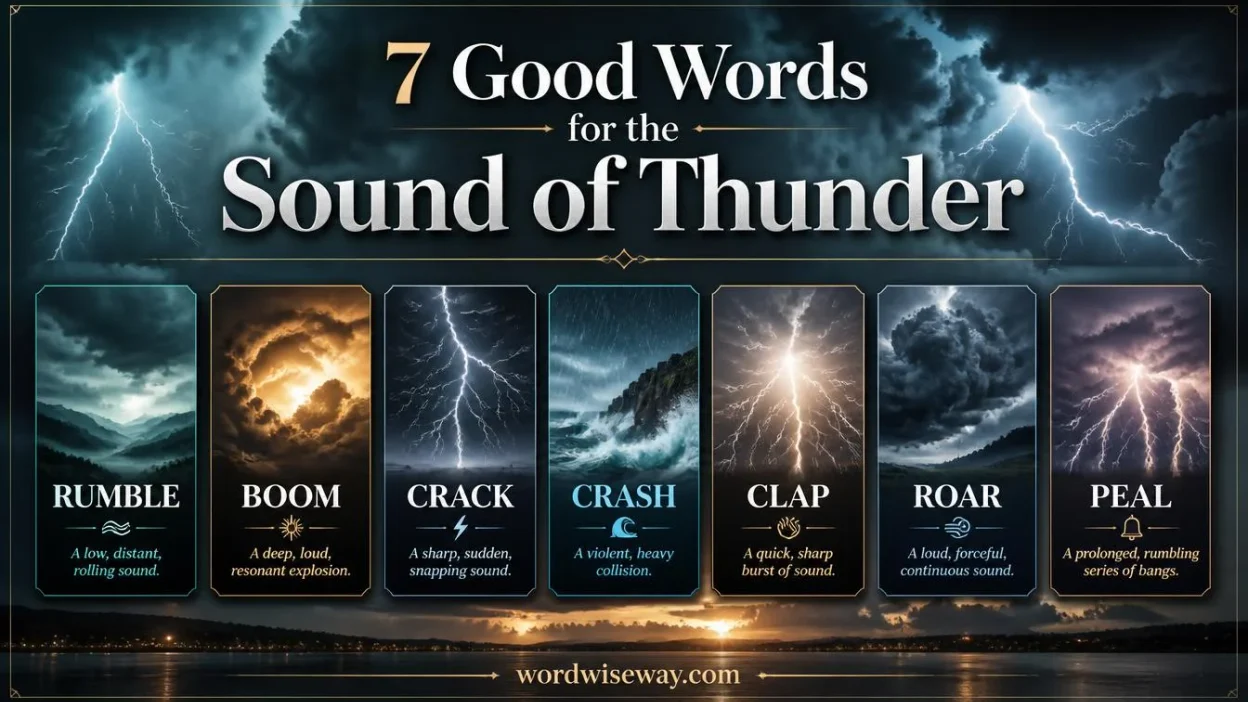
Seven useful words for the sound of thunder are rumble, boom, crack, crash, clap, roar, and peal. Each word describes a slightly different quality of sound.
- Rumble: A deep, low, rolling sound.
- Boom: A loud, deep burst of sound.
- Crack: A sudden, sharp sound.
- Crash: A loud, forceful burst of noise.
- Clap: A distinct burst, as in a clap of thunder.
- Roar: A deep, powerful, sustained sound.
- Peal: A loud, resonant burst or succession of sounds.
The best choice depends on what you want your reader to hear in their imagination. For example, rumble suits distant thunder, while crack captures a sudden, sharp report.
What Is Onomatopoeia?
Onomatopoeia is the use of words that imitate or suggest the sounds they describe. Words such as buzz, hiss, pop, and bang are familiar examples. They help readers connect written language with sounds they recognize in everyday life.
Thunder descriptions often use sound-related words such as boom, crack, and rumble. These terms can evoke familiar sounds even when they don’t reproduce them exactly. The word boom, for instance, suggests a deep burst, while crack creates an impression of something sudden and sharp.
However, not every word that describes thunder is strict onomatopoeia. Roar describes a type of sound, and peal identifies a loud, resonant burst or series of sounds. Both can create a vivid impression without directly spelling out the noise.
Writers sometimes use invented sound effects such as kaboom or krrr-BOOM to imitate thunder more dramatically. These informal expressions can work in comics, children’s stories, and playful writing. In formal prose, established words usually communicate the sound more naturally.
Seven Good Words for the Sound of Thunder
Choosing the right word makes a storm description more believable. Each of these seven words highlights a different sound quality, so understanding their meanings helps you use them effectively.
Rumble
A rumble is a deep, low, rolling sound that may continue for several seconds. It often describes thunder that seems to travel across the sky or fade into the distance. The sound can begin softly, grow louder, and gradually disappear.
Writers frequently use rumble when describing thunder before or after a louder burst. It creates a sense of depth and duration rather than a single, sudden noise.
For example, imagine hearing thunder from inside your home. The windows remain still, but a low sound rolls across the distant hills. Rumble captures that lingering quality better than a word suggesting a brief, sharp report.
Example sentences:
- A distant rumble of thunder echoed beyond the mountains.
- Thunder began to rumble as dark clouds gathered overhead.
- The low rumble continued long after the lightning disappeared.
When to use it: Choose rumble for distant thunder, prolonged sounds, or a storm that seems to be building.
Boom
A boom is a deep, loud burst of sound. It suggests considerable force and often gives readers the impression that thunder has struck suddenly. Unlike rumble, which emphasizes duration, boom focuses on a powerful burst.
The word works particularly well when thunder sounds close or startling. It also appears in everyday expressions such as a loud boom and the boom of thunder.
Although boom can describe many loud noises, the surrounding sentence makes its meaning clear. Mentioning dark clouds, lightning, or a storm establishes the weather context immediately.
Example sentences:
- A tremendous boom of thunder shook the quiet evening.
- Suddenly, a loud boom sounded above the village.
- Each boom of thunder sent the birds flying from the trees.
When to use it: Choose boom when you want to emphasize thunder’s deep, powerful impact.
Crack
A crack is a sudden, sharp sound that seems to break through the surrounding silence. It can describe thunder that arrives abruptly, particularly when a lightning flash and its accompanying thunder seem closely connected.
The word gives a sentence a quick, striking rhythm. It also suggests a different sound quality from rumble. A rumble rolls, while a crack seems to snap through the air.
In realistic descriptions, the sound of thunder varies with the lightning strike’s distance, the surrounding landscape, and atmospheric conditions. Therefore, crack is useful when the sound seems sharp rather than distant and rolling.
Example sentences:
- A sharp crack of thunder startled everyone in the room.
- Lightning flashed across the sky, followed by a sudden crack.
- The thunder cracked overhead as rain began to fall.
When to use it: Choose crack for abrupt, sharp-sounding thunder that interrupts a quieter scene.
Crash
A crash describes a loud, forceful noise that seems overwhelming. It often suggests a dramatic burst of sound rather than a quiet or distant rumble. When applied to thunder, it makes the storm feel intense and powerful.
The word can also suggest the impression of something breaking or colliding. That association gives it a forceful quality, making it especially useful in fiction and dramatic descriptions.
However, crash and crack aren’t interchangeable in every sentence. A crack sounds short and sharp, while a crash can feel broader and more overwhelming. The distinction depends on the sound you’re trying to convey.
Example sentences:
- A sudden crash of thunder drowned out the sound of rain.
- The storm sent a crash of thunder rolling through the valley.
- A powerful crash overhead made the entire night feel more dramatic.
When to use it: Choose crash when you want to emphasize the force and intensity of thunder.
Clap
A clap is a distinct burst of sound. In weather descriptions, the familiar expression clap of thunder refers to a noticeable burst of thunderous noise.
The word often suggests a brief, clearly defined sound rather than a continuous roar. It can also help readers imagine thunder arriving in a single, recognizable burst.
You may encounter both a clap of thunder and a thunderclap. These expressions are closely related, but they fit different sentence structures. The first uses clap as a noun modified by thunder, while thunderclap combines the ideas into one word.
Example sentences:
- A sudden clap of thunder broke the afternoon silence.
- The first clap of thunder sent everyone indoors.
- A distant thunderclap signaled the approaching storm.
When to use it: Choose clap when describing an individual burst of thunder or using the established expression clap of thunder.
Roar
A roar is a loud, powerful sound that continues rather than ending immediately. Although people often associate roaring with animals, engines, and crowds, the word also describes intense natural sounds.
When thunder roars, the storm seems to fill the surrounding space with noise. The word creates an impression of power and scale, especially when paired with descriptions of heavy rain, dark clouds, or repeated lightning flashes.
Unlike boom, which emphasizes a burst, roar suggests a sustained sound. It can also describe a series of thunderous sounds blending into one another.
Example sentences:
- Thunder began to roar above the storm-darkened countryside.
- The roar of thunder rolled across the open fields.
- As the storm intensified, thunder roared through the night.
When to use it: Choose roar for powerful, sustained thunder or a storm that seems to surround the listener with sound.
Peal
A peal is a loud, resonant burst or succession of sounds. The expression a peal of thunder is especially common in literary descriptions, where writers want a more formal or expressive tone.
The word can describe thunder that rings out across the sky. It may also suggest a sequence of sounds rather than one isolated burst, depending on the sentence.
Compared with boom, peal sounds more literary. Both can describe loud thunder, but boom feels direct and conversational, while peal adds a more traditional storytelling quality.
Example sentences:
- A peal of thunder echoed through the narrow valley.
- The first peal of thunder announced the approaching storm.
- Several peals of thunder sounded above the distant hills.
When to use it: Choose peal for literary descriptions, traditional storytelling, and writing that calls for a more formal expression.
Comparison Table
Although these seven words overlap in meaning, each emphasizes a different feature of thunder. Use the comparison below to find the best fit for your sentence.
| Word | Main sound quality | Best use |
| Rumble | Deep, low, rolling | Distant or prolonged thunder |
| Boom | Deep, loud, forceful | A powerful burst |
| Crack | Sharp, sudden, abrupt | Thunder with a snapping quality |
| Crash | Loud, forceful, overwhelming | Dramatic or intense thunder |
| Clap | Distinct, noticeable burst | An individual burst of thunder |
| Roar | Powerful, sustained | Thunder that seems to fill the sky |
| Peal | Loud, resonant, ringing | Literary or expressive descriptions |
One useful distinction is duration. Crack, boom, and clap often describe individual bursts, while rumble and roar can suggest sounds that continue. Crash emphasizes force, and peal adds a resonant or literary quality.
These aren’t strict scientific categories. Real thunder can contain several sound qualities at once, and writers may choose different words to emphasize the same event.
How to Choose the Right Word for Thunder
The easiest way to select a thunder word is to imagine the sound before writing the sentence. Is it distant, sudden, forceful, or prolonged? Your answer will help you choose a more precise expression.
Words for Distant Thunder
Rumble is often the clearest choice for distant thunder because it conveys a low, rolling sound. Peal can also work when you want a more literary description of thunder echoing across a landscape.
For example:
- A faint rumble drifted across the distant mountains.
- A soft peal of thunder echoed beyond the horizon.
The first sentence emphasizes a low sound that continues. The second presents thunder as a resonant event, using a more literary expression.
Words for Sudden Thunder
Crack, clap, and boom work well when thunder arrives abruptly. However, each word emphasizes a slightly different quality.
- A sharp crack of thunder interrupted the conversation.
- A sudden clap of thunder startled the sleeping dog.
- A deep boom shook the quiet evening.
Use crack for sharpness, clap for a distinct burst, and boom for depth and force.
Words for Powerful Thunder
Crash, roar, and boom help describe thunder that feels especially powerful. Choose among them according to whether the sound seems overwhelming, sustained, or concentrated in a single burst.
- A deafening crash of thunder rolled over the village.
- Thunder began to roar as the storm moved closer.
- A mighty boom echoed across the open countryside.
Remember that deafening describes extreme loudness, not a separate kind of thunder. It adds information about how the sound affects the listener.
Examples
Seeing these words in context makes their differences easier to remember. The examples below show how each term can fit into descriptive writing without making a sentence unnecessarily complicated.
- Rumble: A low rumble of thunder warned us that the storm was approaching.
- Boom: A deep boom of thunder echoed across the empty fields.
- Crack: A sharp crack of thunder shattered the peaceful afternoon.
- Crash: A sudden crash of thunder drowned out the patter of rain.
- Clap: One loud clap of thunder sent the children running inside.
- Roar: Thunder continued to roar while the wind swept through the trees.
- Peal: A resonant peal of thunder rolled beyond the distant hills.
A Short Example of Thunder Words in Creative Writing
Consider this short storm scene:
The evening sky darkened as rain began tapping against the windows. Far away, a low rumble of thunder rolled across the hills. Moments later, a sharp crack split the silence, followed by a deep boom that echoed through the valley. Soon, thunder seemed to roar overhead as another peal sounded in the distance.
This paragraph uses several words because the scene changes as the storm develops. The rumble establishes distance, the crack introduces a sudden sound, and the boom adds force. The roar suggests sustained intensity, while peal gives the final description a more literary quality.
The lesson is simple: use different words when the sound changes. Replacing every instance of thunder with a synonym won’t automatically improve your writing. Each choice should help the reader imagine a particular moment.
Common Mistakes
Even a strong vocabulary can lose its effect when words don’t fit their context. Understanding a few common mistakes will help you write more naturally.
Treating Every Thunder Word as a Synonym
Words such as rumble, crack, and roar all describe thunder, but they don’t communicate exactly the same thing.
For example, a distant rumble suggests a low, rolling sound. By contrast, a sharp crack suggests a sudden burst. Replacing one with the other can change the scene’s entire atmosphere.
Writing tip: Choose a word based on the sound’s quality rather than selecting whichever synonym comes to mind first.
Using Too Many Sound Words Together
A sentence can become difficult to read when several descriptive words compete for attention. Consider this example:
The loud, booming, crashing, roaring thunder shook the dark, stormy sky.
The sentence contains several related descriptions, yet it doesn’t give each word a distinct purpose. A simpler version communicates the same basic idea more effectively:
Thunder roared across the sky as rain battered the windows.
The revised sentence combines one strong sound word with a concrete detail. This approach gives the reader something specific to imagine.
Confusing Sound Words With Emotional Descriptions
Words such as frightening, ominous, and terrifying describe the impression thunder creates rather than its sound itself. They can be useful, but they serve a different purpose.
Compare these sentences:
- Sound: A deep rumble of thunder rolled across the valley.
- Emotion: An ominous rumble of thunder made the evening feel unsettling.
The first sentence focuses on the sound. The second combines the sound with the mood it creates.
Both approaches are valid. The right choice depends on whether you want to describe the storm itself or the way a character experiences it.
Using Dramatic Words in the Wrong Context
Not every storm needs a crash or a deafening boom. Sometimes, a quiet rumble creates a more realistic and effective description.
For example, a character watching dark clouds gather might hear distant thunder before the rain begins. Describing the first sound as a tremendous crash could make the scene feel exaggerated unless the context supports that intensity.
Writing tip: Match the strength of your word to the strength of the sound you want to portray.
Read More: Is It Correct to Say “Thank You All”? Meaning and Usage
FAQs
1. What is the best word to describe the sound of thunder?
Rumbling is a useful word for describing thunder that rolls across the sky. It captures the deep, continuous sound often heard during a storm.
2. What are seven good words for the sound of thunder?
Seven descriptive words are rumbling, roaring, booming, cracking, crashing, thundering, and rattling. Each word describes a different quality or effect of thunder.
3. What is an example of thunder onomatopoeia?
Boom! is a common example of thunder onomatopoeia. It imitates the deep, powerful sound of thunder and makes descriptions more expressive.
4. How do you describe loud thunder in writing?
Use words such as crashing, booming, or roaring to communicate thunder’s intensity. You can also describe how the sound echoes across hills or shakes nearby windows.
5. What word describes thunder that continues for a long time?
Rumbling describes thunder that continues across the sky. The word works especially well when a storm produces a deep, rolling sound rather than one sudden crash.
6. What is the difference between rumbling and booming thunder?
Rumbling usually describes a low sound that continues or rolls along. Booming emphasizes a deep, powerful burst of sound that may seem to echo through the surroundings.
7. Which words describe the sudden sound of thunder?
Cracking and crashing are useful for describing sudden thunder. Both words create a sense of immediacy, although cracking sounds sharper while crashing suggests a forceful burst.
8. How can thunder sound words improve creative writing?
Thunder sound words help readers imagine a storm without hearing it themselves. They also establish mood, build suspense, and make scenes feel more vivid through carefully chosen descriptions.
9. Can you use onomatopoeia to describe thunder in a story?
Yes, onomatopoeia can make a story more engaging. For example, writing “Boom! Thunder echoed across the valley” gives readers a stronger impression of the sound.
10. How do you choose the right adjective for thunder?
Consider the sound’s intensity, duration, and mood. Choose rumbling for distant thunder, booming for deep bursts, or cracking for sharp, sudden sounds.
Conclusion
Choosing the right words for thunder can transform a simple weather description into something readers can almost hear. Words like rumbling, roaring, booming, cracking, crashing, thundering, and rattling each capture a different quality of a storm. The best choice depends on the sound you want to describe and the atmosphere you want to create.
Onomatopoeia adds another useful element to your writing. Expressions like boom and bang imitate familiar sounds, making stories and descriptions more lively. You can also combine these words with details about rain, lightning, or distant hills to help readers picture the scene. A few precise words often communicate more than a long, repetitive description.
The next time you hear thunder, pay attention to how it sounds. Does it rumble softly in the distance or crack sharply overhead? Noticing these differences will help you choose more accurate expressions. With practice, you’ll develop a stronger vocabulary and make your writing more natural, descriptive, and memorable.

Amelia Sanders has spent 14 years in Harvard University’s English Department, helping students navigate literary analysis, interpretive theory, and narrative techniques. Her academic pursuits center on 18th-century British prose, romantic poetry, diasporic writing, and digital editing exploring how textual choices influence cultural perspectives. Amelia has spoken at major international meetings and contributed essays to respected academic volumes, demonstrating her dedication to thoughtful scholarship and effective teaching.