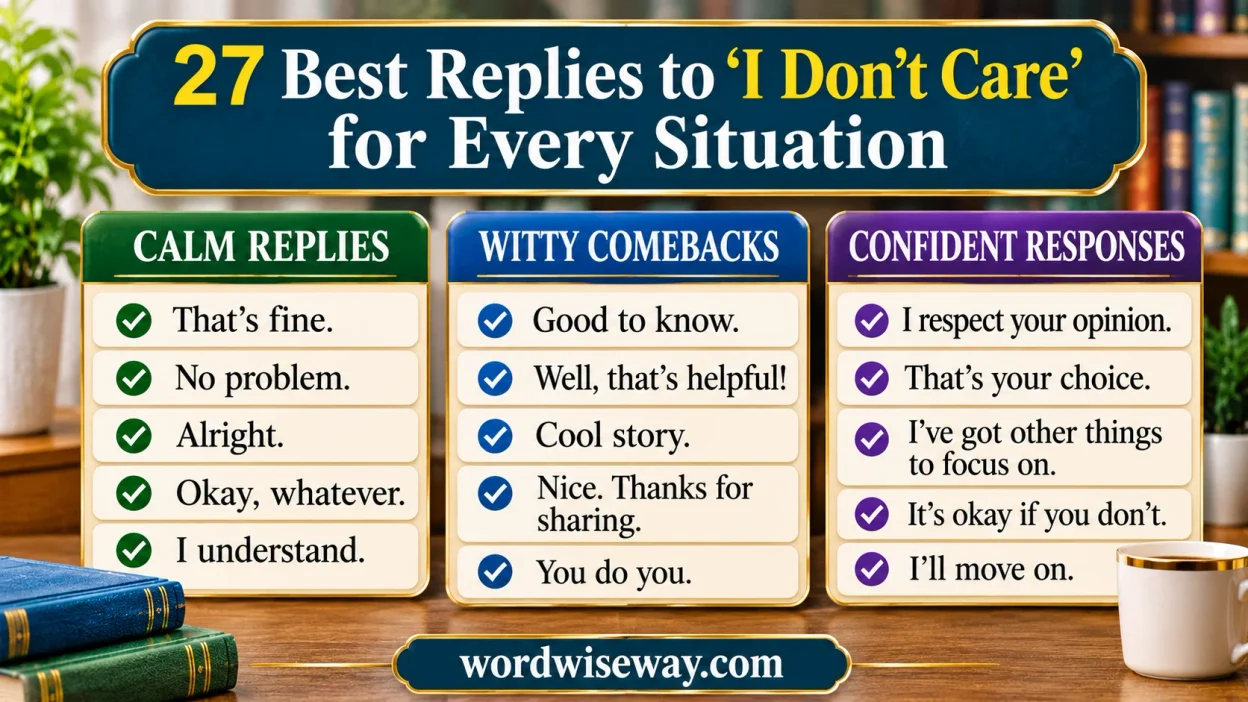
When someone says “I don’t care,” you may feel hurt, ignored, or rejected. 27 Best Replies to “I Don’t Care” for Every Situation helps you find suitable words for different conversations. Sometimes, these words hide frustration or hurt feelings. Other times, they show genuine indifference. Understanding the context and tone helps you choose an appropriate response.
Knowing what to say when someone says “I don’t care” makes difficult conversations easier. You can use sarcastic comebacks, funny replies with friends, or calm responses during serious discussions. Professional situations often require respectful communication. Avoid reacting out of anger or frustration.
Protect your self-worth by setting healthy boundaries and expressing yourself clearly. Whether you’re handling rejection or responding to rude comments, choose words that match the situation. Sometimes, a calm, confident reply communicates more than a sharp comeback.
Quick Answer:
The best reply to “I don’t care” is one that matches the situation without making the conversation more difficult. If the person sounds dismissive, stay calm. If they’re joking, a lighthearted comeback might work better.
Here are five useful replies you can use in different situations:
| Reply | Best Situation |
| “That’s your choice.” | When you want to sound confident |
| “Okay, I just wanted you to know.” | When you’ve shared information |
| “You don’t have to agree, but you can be respectful.” | When someone is being rude |
| “Fair enough. Let’s move on.” | When you want to end the discussion |
| “Got it. I won’t push it.” | When someone needs space |
Before choosing a response, consider your goal. Do you want to keep the conversation going, make the other person laugh, or establish a boundary? A thoughtful reply can help you accomplish that without turning a small disagreement into a bigger problem.
Best Replies to “I Don’t Care”
Some responses work in almost any everyday conversation. They’re short, natural, and flexible enough for friends, classmates, family members, and acquaintances.
The following replies help you communicate clearly without sounding defensive.
1. “That’s your choice.”
This response shows that you respect the other person’s freedom to have an opinion. You don’t need to convince everyone to care about the same things you do.
Use it when someone dismisses your suggestion or refuses to consider your perspective. It communicates confidence without inviting another argument.
2. “Okay, I just wanted you to know.”
Sometimes, you share information because someone needs to hear it, not because you expect a particular reaction.
This reply works when you’ve explained something important and the other person seems uninterested. It lets you finish your point without demanding their approval.
3. “Fair enough. Let’s move on.”
Not every disagreement deserves a lengthy discussion. If the conversation has stopped being productive, this response helps both people move forward.
It’s particularly useful during minor disagreements with friends or classmates. You acknowledge their position while making it clear that you don’t want to keep arguing.
Calm and Mature Replies to “I Don’t Care”
A calm response can prevent an uncomfortable exchange from becoming unnecessarily personal. Instead of matching someone’s dismissive tone, focus on what you want the conversation to accomplish.
These replies work well when the relationship matters more than winning an argument.
4. “That’s fine. We don’t have to agree.”
People can have different opinions without turning those differences into personal conflicts. This response makes room for disagreement while keeping the conversation respectful.
For example, imagine you’re discussing a movie with a friend who dislikes your recommendation. You don’t need to defend your taste endlessly. Agreeing to disagree keeps a small difference of opinion from becoming a bigger issue.
5. “I understand. I’ll leave it there.”
This reply acknowledges the other person’s response and signals that you won’t continue pushing the subject.
Use it when someone clearly doesn’t want to discuss something. It can be especially helpful when emotions are running high and continuing the conversation would probably make things worse.
6. “You don’t have to care, but I wanted to be honest.”
Sometimes, the topic matters to you even if it doesn’t matter to the other person. This response allows you to express yourself without demanding that they share your feelings.
It’s useful when discussing personal concerns, preferences, or decisions. You can communicate your perspective while recognizing that the other person may not respond as you hoped.
Witty and Clever Replies to “I Don’t Care”
A clever comeback can lighten the mood when someone says “I don’t care” casually. However, humor works best when both people understand the joke and nobody feels targeted.
Choose a playful response when the situation is relaxed rather than emotionally charged.
7. “Good thing I wasn’t asking for a vote.”
This response adds a little humor while reminding the other person that sharing information doesn’t always require their approval.
For example, if you’re telling a friend about a hobby and they dismiss it, this comeback may keep the conversation light. Avoid using it when someone is genuinely upset because it could sound confrontational.
8. “And yet, here we are discussing it.”
This line works when someone claims not to care but continues engaging in the conversation.
The humor comes from the contrast between their words and their actions. Still, don’t assume that continued conversation always means someone secretly cares. They might simply want to explain their position.
9. “Noted. I’ll alert absolutely nobody.”
This exaggerated response can make a casual exchange more amusing. It works best with friends who appreciate dry humor and understand your tone.
Keep it playful rather than using it to embarrass someone. A witty response should add humor to the conversation, not turn the other person into its target.
Severe but Classy Replies to “I Don’t Care”
Sometimes, you need a confident response that communicates self-respect without resorting to insults. A classy comeback keeps your message firm and avoids unnecessary personal attacks.
These options are useful when someone dismisses your opinion or acts as though your feelings don’t matter.
10. “You don’t have to care for me to move on.”
This response reminds the other person that their approval isn’t necessary for you to continue with your plans.
It works when someone repeatedly dismisses your choices or refuses to support something that matters to you. The message is simple: you can respect their opinion without allowing it to determine your decisions.
11. “That’s okay. I’m not here to convince you.”
You can explain your position without spending all your energy trying to change someone’s mind.
Use this reply when a conversation has become repetitive. It communicates that you’ve made your point and don’t intend to argue endlessly for acceptance.
12. “Your opinion is yours. My decision is mine.”
This is a firm response when someone tries to discourage you from making a personal choice.
For example, a classmate might dismiss your decision to learn a new skill. You can listen to their opinion without abandoning your plans simply because they disagree.
The response works because it separates two things: another person’s right to have an opinion and your right to make your own decisions.
Polite Replies to “I Don’t Care”
A polite response is often the smartest option when you need to preserve a relationship or maintain a respectful atmosphere. This is particularly important around teachers, coworkers, relatives, and people you don’t know well.
13. “I understand. Thanks for letting me know.”
This reply is courteous and neutral. It acknowledges the other person’s position without suggesting that you agree with their attitude.
Use it in professional conversations or situations where a sarcastic response could create unnecessary tension.
14. “No problem. We can leave it for now.”
This response offers space without making the conversation feel like a contest.
It’s helpful when someone doesn’t want to discuss a subject immediately. You can revisit the issue later if it remains important and both people are willing to talk.
15. “That’s your perspective, and I respect that.”
This phrase recognizes that people approach situations differently. It doesn’t require you to accept their reasoning or abandon your own position.
For instance, if a family member dismisses your preference, you can acknowledge their perspective while continuing to make thoughtful choices for yourself.
Short and Simple Replies to “I Don’t Care”
Sometimes, a long response gives a minor remark more attention than it deserves. Short replies can help you keep things moving without sounding overly invested in the disagreement.
Here are four quick options.
16. “All right.”
Use this when the conversation doesn’t require further explanation. It’s simple, neutral, and suitable for everyday situations.
17. “Got it.”
This response shows that you’ve heard the other person. It doesn’t necessarily mean you agree with them.
18. “Fair enough.”
This works when you can accept that someone has a different preference or opinion. It helps close the discussion without adding tension.
19. “Your call.”
Use this when the decision belongs to the other person. For example, if a friend doesn’t care which restaurant you choose, you can let them decide whether they want to participate in the discussion.
Remember that short replies depend heavily on tone. “Fine” can sound neutral in one conversation and annoyed in another. Choose words that reflect your actual intention.
Replies to “I Don’t Care” When Someone Is Being Rude
There’s a difference between someone expressing disinterest and someone repeatedly dismissing you. You don’t need to tolerate disrespect to prove that you’re mature.
When a remark feels rude, focus on the behavior rather than attacking the person’s character.
20. “You can disagree without being disrespectful.”
This response addresses the way the person is speaking rather than demanding that they share your opinion.
It’s useful when someone repeatedly interrupts you, mocks your perspective, or dismisses a reasonable concern. Be direct, and avoid turning the boundary into a long lecture.
21. “If you don’t want to discuss it, just say so respectfully.”
Sometimes, the real problem isn’t that someone doesn’t care. It’s that they’re communicating their disinterest in a hurtful way.
This reply gives them a clear alternative. They can decline the conversation without insulting or belittling you.
22. “I’m happy to talk when we’re both ready to listen.”
Use this when a conversation has become one-sided or hostile.
The response leaves room for a better discussion later without forcing either person to continue immediately. If the other person keeps being disrespectful, stepping away may be more productive than repeating yourself.
Replies to “I Don’t Care” From Someone You Love
Hearing “I don’t care” from someone close to you can feel different from hearing it from a stranger. You might interpret it as rejection, especially when you’ve shared something personal or important.
However, the phrase doesn’t always mean that the person no longer values you. They might be frustrated, overwhelmed, distracted, or unwilling to discuss that particular issue. The surrounding context matters.
23. “Did something upset you, or do you need some space?”
This question creates an opportunity to understand what’s happening without immediately assuming the worst.
For example, imagine you tell a close friend about something that hurt your feelings and they respond dismissively. Asking whether they need space can help you distinguish between temporary frustration and a genuine unwillingness to discuss the issue.
Listen to their answer rather than deciding what they must be feeling.
24. “I care about this, so I’d appreciate it if you’d listen.”
This response is useful when the subject genuinely matters to you.
You aren’t demanding that the other person agree with you. You’re asking them to listen and treat your concern seriously.
If they aren’t ready to talk, you can suggest returning to the discussion later. However, if they repeatedly dismiss important concerns, consider whether the relationship allows both people to communicate openly and respectfully.
Replies to “I Don’t Care” During an Argument
Arguments can make ordinary words sound harsher than intended. When emotions rise, people may stop listening carefully and focus instead on defending themselves.
A productive response should reduce the pressure rather than introduce another challenge.
25. “Let’s take a break and talk when we’re calmer.”
This response recognizes that continuing an argument isn’t always the best way to resolve it.
Taking a break gives both people time to collect their thoughts. If the issue matters, agree on a reasonable time to revisit it instead of leaving the discussion unresolved indefinitely.
26. “I’m trying to understand your point, not fight with you.”
Use this when your attempt to explain something has turned into a disagreement.
It clarifies your intention and invites the other person to return to the actual issue. However, your tone matters. Say it sincerely rather than using it to suggest that the other person is the only one causing problems.
Replies to “I Don’t Care” Over Text
Text messages remove facial expressions, vocal tone, and other clues that help people interpret meaning. As a result, “I don’t care” can sound harsher in writing than the sender intended.
Before replying, consider the conversation that came before the message. A friend who usually jokes with you may mean something different from someone who has repeatedly dismissed your concerns.
Here are practical responses for different texting situations:
| Situation | Reply |
| Someone dismisses your suggestion | “No worries. We can choose something else.” |
| Someone responds coldly | “Okay. Is now a bad time to talk?” |
| Someone doesn’t want to discuss the issue | “Understood. We can leave it for now.” |
| Someone sounds unnecessarily rude | “I’m happy to talk, but let’s keep it respectful.” |
| You want to end the conversation | “All right. Take care.” |
Avoid sending several follow-up messages just to force a response. Give the person room to reply, and don’t assume that every short message reflects their feelings about you.
How to Choose the Right Reply to “I Don’t Care”
The most effective response depends on your goal. A funny comeback might work with a friend, while a calm boundary may be more appropriate during a serious disagreement.
Use these guidelines to make your choice.
| Your Goal | Recommended Approach | Example |
| Keep things friendly | Stay casual | “Fair enough!” |
| Protect your time | End the discussion | “Okay, let’s move on.” |
| Express your feelings | Be direct | “This matters to me.” |
| Address disrespect | Set a boundary | “Please speak to me respectfully.” |
| Understand their reaction | Ask a calm question | “Do you want to talk about it later?” |
| Avoid an argument | Acknowledge the difference | “We don’t have to agree.” |
| Respond playfully | Use gentle humor | “Good thing I wasn’t asking for a vote.” |
Before responding, ask yourself three questions:
- What happened before they said it? Their previous words and actions can help you interpret the remark.
- What do I want to achieve? Choose whether you want clarity, humor, a boundary, or an end to the conversation.
- Will my reply help? If a comeback will only intensify the disagreement, a short acknowledgment may work better.
You don’t need to deliver the cleverest line every time. Sometimes, the most confident choice is to say less.
Common Mistakes
A response can sound clever in your head but create a bigger problem in practice. Avoid these common mistakes when deciding what to say.
Trying too hard to prove your point
Repeating your explanation won’t necessarily change someone’s mind. Once you’ve communicated clearly, allow them to decide how they want to respond.
Using sarcasm during a serious conversation
A witty line might entertain your friends, but it can hurt someone who already feels frustrated. Match your response to the seriousness of the moment.
Assuming the person doesn’t value you
One dismissive comment doesn’t explain an entire relationship. Consider the person’s broader behavior before drawing conclusions about their intentions.
Ignoring repeated disrespect
Staying calm doesn’t mean accepting every remark. If someone repeatedly dismisses your concerns, communicate your boundary and consider limiting conversations that consistently become hurtful.
Responding immediately when you’re upset
You don’t have to answer every message the moment it arrives. Taking a little time to think can help you choose words that reflect your actual feelings rather than your immediate frustration.
Read More: Chose vs. Chosen: Meaning, Grammar, and Examples
FAQS
1. What Does “I Don’t Care” Usually Mean?
“I don’t care” can express disinterest, frustration, disappointment, or a desire to end a conversation. The meaning often depends on the person’s tone and the situation.
2. How Should You Reply When Someone Says “I Don’t Care”?
Stay calm and choose a response that fits the moment. You could say, “That’s fine, but I wanted to share my thoughts with you.”
3. What Is a Clever Comeback to “I Don’t Care”?
A clever comeback can be short without sounding unnecessarily rude. Try saying, “Good to know where you stand.”
4. How Can You Respond to “I Don’t Care” Without Being Rude?
Keep your reply respectful and direct. Saying, “I understand, but this matters to me,” helps you express your feelings without starting an argument.
5. What Is a Funny Reply to “I Don’t Care”?
With friends who enjoy humor, you could say, “I’ll inform my diary that your opinion has been noted.” Keep the joke light and friendly.
6. What Should You Say When Your Friend Says “I Don’t Care”?
Consider whether your friend feels upset or simply isn’t interested in the topic. You might ask, “Is something bothering you, or would you rather talk later?”
7. How Do You Respond to “I Don’t Care” at Work?
Professional conversations require a measured response. You could say, “I understand, but we still need to address this issue and agree on the next steps.”
8. What Should You Do When Someone Says “I Don’t Care” About Your Feelings?
Explain your feelings clearly without demanding a particular reaction. For example, say, “You don’t have to agree with me, but I’d appreciate it if you listened.”
9. Should You Ignore Someone Who Keeps Saying “I Don’t Care”?
Not necessarily. If the person repeatedly dismisses you, explain how their behavior affects your conversations. If nothing changes, consider setting boundaries and stepping back.
10. How Can You Stay Confident When Someone Says “I Don’t Care”?
Remember that another person’s response doesn’t determine your worth. Take a breath, speak calmly, and decide whether continuing the conversation is worth your time and energy.
Conclusion
Responding to “I don’t care” doesn’t have to turn a simple conversation into an argument. The right words depend on who you’re talking to, what happened, and how their response made you feel. Sometimes, a witty comeback can lighten the mood, while a calm reply can prevent unnecessary tension. Understanding the situation helps you choose words that feel natural rather than forced.
Remember, you don’t always need to prove your point or make someone understand your feelings. If a person genuinely isn’t interested, accepting their response can save you time and emotional energy. However, if someone repeatedly dismisses your feelings, it’s reasonable to speak up and establish boundaries. Confidence comes from expressing yourself clearly, not from having the last word.
Keep these 27 Best Replies to “I Don’t Care” for Every Situation in mind when you need help finding the right words. Choose a response that matches your personality and the relationship you share with the other person. A little humor might work with a friend, while a respectful, direct answer may suit a serious conversation. Whatever you choose, protect your self-respect and remember that your feelings deserve consideration, even when someone doesn’t agree with you.

Evelyn Shaw has spent 14 years at Yale University’s English Department, leading students through close readings, genre studies, and interpretive methodologies. Her scholarly interests include Renaissance drama, gothic fiction, feminist literary criticism, and archival research and examining how texts generate meaning across historical periods. Evelyn has presented at major academic conferences and published essays in peer-reviewed journals, reflecting her passion for rigorous analysis and student-centered learning.