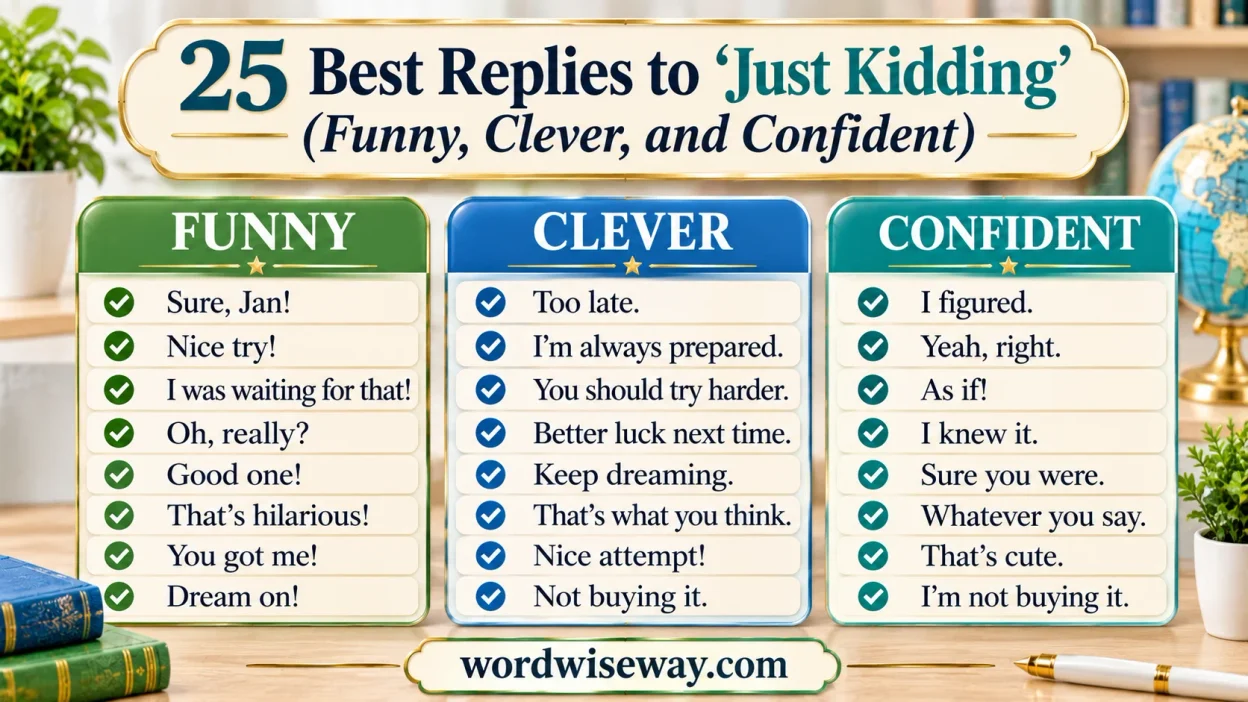
When someone says something hurtful and adds “just kidding,” you don’t have to laugh. 25 Best Replies to “Just Kidding” Funny, Clever, and Confident helps you respond with humor, wit, and confidence. Try saying, “Good save, but I’m not convinced,” to keep things light.
Clever comebacks like “That wasn’t funny to me” help you express feelings without starting an argument. If someone uses teasing, sarcasm, or inappropriate jokes to upset you, set boundaries. Remember, calling something a joke doesn’t erase its emotional impact.
Choose funny replies, witty comebacks, or assertive responses based on the situation. You can say, “You can do better than that,” or “Next time, tell a joke that doesn’t target me.” Stay calm, communicate clearly, and stand up for yourself respectfully.
Quick Answer
The best response depends on the comment, your relationship with the speaker, and the tone of the conversation. If the joke was harmless, a playful comeback usually works well. If the comment felt personal, a direct response may be more appropriate.
Here are five versatile replies you can use in different situations:
- “Nice save!” Use this when someone quickly takes back a surprising statement.
- “I figured.” Keep your response short and confident without prolonging the conversation.
- “You almost had me!” Try this when the joke briefly seemed believable.
- “Sure you were!” Tease the speaker when you both enjoy playful sarcasm.
- “I know, but that was a close one.” Acknowledge the joke while keeping the exchange lighthearted.
For example, imagine your friend claims they’ve forgotten your birthday and then laughs, saying, “Just kidding!” You could reply, “Nice save!” The response acknowledges the joke without turning a harmless moment into an argument.
However, not every situation calls for humor. If someone makes a hurtful comment and hides behind “just kidding,” you can calmly explain that the remark bothered you.
Funny Replies to “Just Kidding”
Funny replies work best when both people understand the joke and feel comfortable teasing each other. The goal isn’t to embarrass anyone. Instead, use a little humor to keep the conversation moving.
“Nice Save!”
This short response works when someone quickly changes their explanation after making a surprising statement. It playfully suggests that the speaker is trying to recover from an awkward moment.
For example:
Friend: “I told everyone your embarrassing story. Just kidding!”
You: “Nice save!”
The reply is brief, easy to remember, and suitable for casual conversations. Use it when the original comment doesn’t genuinely upset you.
“You Almost Had Me!”
Sometimes a joke sounds so believable that you briefly accept it as true. This response lets the speaker know their delivery was convincing without making the situation serious.
For example:
Friend: “I’m moving to another country tomorrow. Just kidding!”
You: “You almost had me!”
It’s especially useful when someone delivers a joke with a straight face. Your response acknowledges the surprise and gives the other person a chance to laugh along.
“Sure You Were!”
This playful comeback suggests that you’re not entirely convinced by the speaker’s explanation. It works particularly well when a friend makes an exaggerated claim and immediately backs away from it.
For example:
Friend: “I definitely didn’t eat the last slice of pizza. Just kidding!”
You: “Sure you were!”
Your tone matters here. A smile or a relaxed delivery makes the response sound teasing rather than accusatory.
“I Was Waiting for the Punchline.”
Not every joke lands. If someone makes a strange comment and then reveals that it was supposed to be funny, this response adds a little humor without becoming openly hostile.
For example:
Friend: “You’re so slow that a turtle could beat you. Just kidding!”
You: “I was waiting for the punchline.”
Use this response when the conversation is already playful. Avoid it when someone seems embarrassed or when the exchange is becoming tense.
“And Here I Was, Taking You Seriously.”
This reply works when someone makes a dramatic statement and then quickly dismisses it as a joke. It gently highlights the difference between their original claim and their later explanation.
For example:
Friend: “I’ve decided to become a professional chef. Just kidding!”
You: “And here I was, taking you seriously.”
The response feels natural because it comments on your own reaction rather than attacking the other person. It’s a good option when you want to sound amused and conversational.
Clever Replies to “Just Kidding”
A clever comeback doesn’t need to be loud or elaborate. Sometimes, a short observation makes a stronger impression than a long joke.
These responses are useful when you want to sound quick-witted without being unnecessarily rude.
“Good Recovery.”
This response treats the speaker’s explanation like an attempt to recover from an awkward moment. It’s short, confident, and slightly teasing.
For example:
Friend: “I borrowed your favorite hoodie and gave it away. Just kidding!”
You: “Good recovery.”
The reply works particularly well when someone realizes that their joke might have sounded believable. Keep it playful if the original comment was harmless.
“That Explains Everything.”
This understated response adds a little mystery to the conversation. Instead of explaining your reaction, you make a vague observation that can invite another joke.
For example:
Friend: “I finished the entire cake by myself. Just kidding!”
You: “That explains everything.”
Because the statement is intentionally vague, the humor depends on the context. Use it when the other person understands your sense of humor and the conversation can comfortably continue.
“I Had a Feeling There Was a Plot Twist.”
A sudden change in someone’s story can feel like an unexpected turn in a movie. This response turns that reversal into a playful observation.
For example:
Friend: “I accidentally deleted your project. Just kidding!”
You: “I had a feeling there was a plot twist.”
The reply suits conversations where someone enjoys dramatic storytelling. However, if the original statement involves something important, such as schoolwork or a valuable possession, a clear explanation may be better than another joke.
“You Should’ve Led With That.”
This comeback works when someone reveals the joke only after you’ve already reacted seriously. It lightly points out that the timing could have been better.
For example:
Friend: “Your favorite team lost again. Just kidding!”
You: “You should’ve led with that.”
It’s particularly effective when a conversation starts with a confusing statement. The reply feels witty without requiring a complicated punchline.
“I’ll Pretend I Believe You.”
This response combines playful skepticism with a little sarcasm. It suggests that you’re willing to accept the explanation for the sake of keeping things friendly.
For example:
Friend: “I didn’t touch your fries. Just kidding!”
You: “I’ll pretend I believe you.”
Use this with people who appreciate dry humor. If the situation involves a genuine disagreement, though, pretending to believe someone might create more confusion than clarity.
Sarcastic Replies to “Just Kidding”
Sarcasm can make a conversation more entertaining, but it depends heavily on timing and tone. A line that sounds funny between close friends might feel rude to someone who doesn’t know you well.
Choose these responses when the relationship allows for teasing and the original comment wasn’t seriously hurtful.
“Oh, Now It’s a Joke?”
This response highlights the moment someone changes their explanation after seeing your reaction. It works when the original statement sounded serious and the speaker suddenly tries to soften it.
For example:
Friend: “You never understand anything. Just kidding!”
You: “Oh, now it’s a joke?”
The response is sharper than a simple laugh. Use it when you want to question the timing rather than automatically accept the explanation.
If the remark genuinely hurt your feelings, however, saying so directly may be more productive.
“Convenient Timing.”
Sometimes, the phrase “just kidding” appears only after a comment receives an uncomfortable reaction. This comeback draws attention to that timing without requiring a lengthy explanation.
For example:
Friend: “I told everyone your secret. Just kidding!”
You: “Convenient timing.”
The line works as dry humor, but the context matters. If the person actually violated your trust, focus on the underlying issue instead of relying on sarcasm.
“What a Plot Twist.”
This is a simple, sarcastic response to an unexpected reversal. It treats the speaker’s sudden change of explanation as though it were a dramatic development.
For example:
Friend: “I forgot to invite you to the party. Just kidding!”
You: “What a plot twist.”
It’s short enough for text messages and casual conversations. You can also use it when someone enjoys making exaggerated announcements for comedic effect.
“I’ll Give That Recovery a Seven Out of Ten.”
This reply turns the speaker’s attempt to explain themselves into a mock performance review. It works best with friends who appreciate exaggerated humor.
For example:
Friend: “I ate your chocolate. Just kidding!”
You: “I’ll give that recovery a seven out of ten.”
The playful rating adds an extra layer to the comeback. It also gives the other person something to respond to, which can keep the conversation lively.
“You Really Committed to That One.”
Some people deliver jokes so seriously that their expressions make the comments seem genuine. This reply acknowledges their commitment to the performance.
For example:
Friend: “I’ve decided to quit school and open a zoo. Just kidding!”
You: “You really committed to that one.”
It’s a good choice when the joke relies on dramatic delivery. The response focuses on the performance rather than criticizing the person.
Confident Replies to “Just Kidding”
Not every conversation needs a clever comeback. Sometimes, the strongest response is one that sounds calm, natural, and self-assured.
Confident replies help you acknowledge what happened without feeling pressured to laugh, argue, or explain yourself.
“I Figured.”
This is one of the simplest replies because it doesn’t invite unnecessary discussion. It communicates that you understood the statement as a joke and don’t need to make a big deal of it.
For example:
Friend: “I bought a private island. Just kidding!”
You: “I figured.”
Use it when the comment is harmless and you want to move on. A brief response can be more effective than trying to invent a comeback for every situation.
“I Wasn’t Sure How to Take That.”
Sometimes, a remark falls somewhere between a joke and a serious statement. This response honestly communicates your uncertainty without accusing the speaker of having bad intentions.
For example:
Friend: “You’re the last person I’d ask for help. Just kidding!”
You: “I wasn’t sure how to take that.”
This reply is useful when the comment feels confusing or slightly personal. It also gives the other person an opportunity to explain what they meant.
Instead of guessing at their intentions, you invite a clearer conversation.
“Well, That Caught Me Off Guard.”
This response works when the joke surprises you and you need a moment to process it. It describes your reaction without automatically labeling the other person’s comment as good or bad.
For example:
Friend: “I signed you up to give a speech tomorrow. Just kidding!”
You: “Well, that caught me off guard.”
It’s a natural choice for unexpected statements, especially when you’re unsure whether the speaker intended to be funny.
“Next Time, Give Me a Warning.”
This response keeps the conversation friendly while acknowledging that the joke was unexpected. It works well when someone enjoys surprising people with dramatic statements.
For example:
Friend: “Your favorite celebrity is coming to our school tomorrow. Just kidding!”
You: “Next time, give me a warning.”
The line is playful without being overly sarcastic. It also works in text messages, where the reader can’t always tell whether a statement is serious.
“Let’s Just Say You Had Me for a Second.”
This response acknowledges that the joke briefly fooled you while keeping the conversation relaxed.
For example:
Friend: “I won a million dollars in a lottery. Just kidding!”
You: “Let’s just say you had me for a second.”
It’s useful when you want to admit that the statement sounded believable. There’s no need to pretend that you understood the joke immediately.
Firm Replies to “Just Kidding” When the Joke Hurts
Humor can bring people closer, but it can also leave someone feeling embarrassed, dismissed, or uncomfortable. When a comment targets something personal, you don’t have to laugh simply because the speaker calls it a joke.
A helpful distinction is that someone’s intention and the impact of their words aren’t always the same. A person might intend to be funny while still saying something hurtful.
The following replies help you express yourself without turning the exchange into a personal attack.
“I Know You Were Joking, but I Didn’t Find It Funny.”
This response acknowledges the speaker’s explanation while making your reaction clear. It doesn’t require you to prove that the person intended to hurt you.
For example:
Friend: “Nobody would want you on their team. Just kidding!”
You: “I know you were joking, but I didn’t find it funny.”
The statement is direct and respectful. It works when you want the person to understand that their comment didn’t land well.
“I Can Take a Joke, but That One Crossed a Line.”
Some jokes touch on sensitive subjects, including personal struggles, family matters, or private information. This response makes it clear that your concern is about the specific comment.
For example:
Friend: Makes a joke about a personal issue and then says, “Just kidding!”
You: “I can take a joke, but that one crossed a line.”
You don’t need to explain every detail of why the comment bothered you. If you feel comfortable doing so, you can identify the subject you’d prefer not to joke about.
“Maybe, but It Still Didn’t Feel Good to Hear.”
This reply recognizes that the speaker may have intended humor while explaining how the words affected you. It avoids arguing about whether the remark technically counts as a joke.
For example:
Friend: “I was only making fun of you. Just kidding!”
You: “Maybe, but it still didn’t feel good to hear.”
This approach can be useful when you want to preserve a friendship while being honest about your feelings. A respectful conversation leaves room for both people to explain themselves.
“Let’s Not Joke About That.”
Sometimes, you don’t need a long explanation. A short statement can establish a clear boundary around a subject that makes you uncomfortable.
For example:
Friend: Makes a joke about a private family matter.
You: “Let’s not joke about that.”
The response is firm without insulting the other person. It also makes your preference easy to understand.
If the speaker respects the boundary, you can move on. If they continue making the same comments, you may need to address the repeated behavior more directly.
“I Get That You Were Kidding. Please Don’t Make Comments Like That About Me.”
This response is especially useful when the same kind of joke keeps happening. It acknowledges the speaker’s explanation while making a clear request for the future.
For example:
Friend: Repeatedly makes personal remarks and dismisses them as jokes.
You: “I get that you were kidding. Please don’t make comments like that about me.”
The statement focuses on what you want to change rather than attacking the person’s character. That makes your boundary clear and gives them a fair opportunity to respect it.
If the behavior continues, remember that you can limit conversations about personal subjects or seek support from someone you trust.
How to Choose the Best Reply to “Just Kidding”
The right comeback depends on the situation, your relationship with the speaker, and what you want to communicate. Before responding, consider whether the comment was harmless, confusing, or genuinely hurtful.
| Situation | Best approach | Example reply |
| A friend makes a harmless joke | Playful humor | “Nice save!” |
| Someone catches you off guard | Clever response | “I had a feeling there was a plot twist.” |
| You want to tease a close friend | Light sarcasm | “Convenient timing.” |
| You’re unsure what someone meant | Honest communication | “I wasn’t sure how to take that.” |
| A comment hurts your feelings | Direct response | “I know you were joking, but I didn’t find it funny.” |
| Someone repeatedly makes personal jokes | Clear boundary | “Please don’t make comments like that about me.” |
Here are a few practical tips to help you choose your response.
- Consider your relationship. Close friends may understand sarcasm that would sound rude coming from an acquaintance.
- Pay attention to the original comment. A silly exaggeration usually deserves a different response than a personal insult.
- Match your tone to your goal. If you want to keep things light, choose humor. If you want the behavior to stop, speak clearly.
- Don’t force a reaction. You don’t need to laugh at every joke or invent a witty comeback on the spot.
- Notice how the other person responds. Someone who listens when you express discomfort may be willing to adjust their behavior.
The key is to respond in a way that fits the moment instead of choosing a line simply because it sounds clever.
Is “Just Kidding” Always an Excuse?
Not necessarily. People use “just kidding” for different reasons, and the phrase alone doesn’t reveal what they genuinely intended.
Sometimes, a person makes a harmless joke that doesn’t land as expected. They add the phrase to clarify that they weren’t being serious. In other situations, someone may use it to soften an awkward statement after realizing it sounded harsh.
The important distinction is what happens next.
A harmless joke usually allows room for both people to laugh or move on. If someone realizes their comment hurt you, they can acknowledge your reaction and avoid repeating it.
However, repeatedly making personal remarks and dismissing your discomfort as oversensitivity can create a different problem. Calling something a joke doesn’t automatically make its impact disappear.
Consider these two examples.
Example one: A joke that misses the mark
A friend makes a silly prediction about your favorite sports team. You don’t find it funny, so you say so. Your friend acknowledges your reaction and changes the subject.
Example two: A repeated personal remark
Someone repeatedly jokes about a subject you’ve asked them to avoid. Each time you object, they respond, “Relax, I’m just kidding.”
The difference isn’t simply the words used. It also involves whether the person respects your response and your clearly stated preferences.
If you’re unsure what someone meant, ask for clarification rather than assuming the worst. If the comment crossed a line, explain what bothered you and what you’d prefer going forward.
Read More: 27 Best Replies to “I Don’t Care” for Every Situation
FAQs
1. What should I say when someone says “just kidding”?
You can say, “Good save, but I’m not convinced,” or “I knew you were joking, but that wasn’t funny.” Choose a response that feels natural.
2. How do I reply to “just kidding” in a funny way?
Try a playful comeback like, “Your joke needs a little work,” or “I’ll laugh when it gets funny.” Keep your tone light if you want to avoid tension.
3. What is a clever comeback to “just kidding”?
A clever response is, “Funny how it becomes a joke after I react.” It points out the situation without requiring a long argument.
4. How can I respond confidently to a hurtful joke?
Stay calm and say, “I don’t find that funny.” Speaking clearly shows confidence and helps others understand your boundaries.
5. What should I say when someone uses “just kidding” as an excuse?
You could reply, “Calling it a joke doesn’t change how it sounded.” This explains your feelings without attacking the other person.
6. How do I respond to “just kidding” over text?
Keep your message short. Try “Not funny, honestly,” or “You almost got away with that one.” Pick a reply that matches your relationship with the sender.
7. Should I laugh when someone says “just kidding”?
You don’t have to laugh if the comment genuinely bothers you. You can smile, change the subject, or explain why the joke crossed a line.
8. How do I handle someone who constantly makes hurtful jokes?
Tell them calmly that the repeated comments bother you. If they continue, create some distance or limit conversations about sensitive topics.
9. How can I reply to “just kidding” without sounding rude?
Try saying, “I get that you’re joking, but I didn’t enjoy that comment.” This keeps your response respectful while making your feelings clear.
10. What is the best response when someone says “just kidding” after insulting me?
You could say, “I understand it was meant as a joke, but it still felt hurtful.” This response communicates your feelings without turning the moment into a bigger conflict.
Conclusion
Finding the right response to “just kidding” depends on the moment and the person you’re talking to. Sometimes, a funny comeback can turn an awkward exchange into a laugh. Other times, a simple, honest reply works better than trying to outsmart someone with sarcasm.
Remember, you don’t have to accept every hurtful comment just because someone calls it a joke. You can express your feelings without being rude, set boundaries without starting an argument, and use humor without making anyone feel small. Your response should reflect what feels right to you.
Next time someone says “just kidding,” take a moment before reacting. Choose a witty comeback if the situation feels lighthearted, or speak up if the joke crosses a line. Confidence isn’t about having the sharpest words ready. It’s about knowing when to laugh, when to respond, and when to let a comment go.

Emma Smith has dedicated 14 years to Princeton University’s English Department, mentoring students in textual interpretation, literary movements, and critical frameworks. Her research explores Shakespearean drama, Victorian serial fiction, postcolonial narrative theory, and manuscript studies and probing how literary forms evolve across cultures and centuries. Emma has delivered lectures at international humanities congresses and published findings in distinguished academic journals, underscoring her commitment to scholarly depth and vibrant teaching.