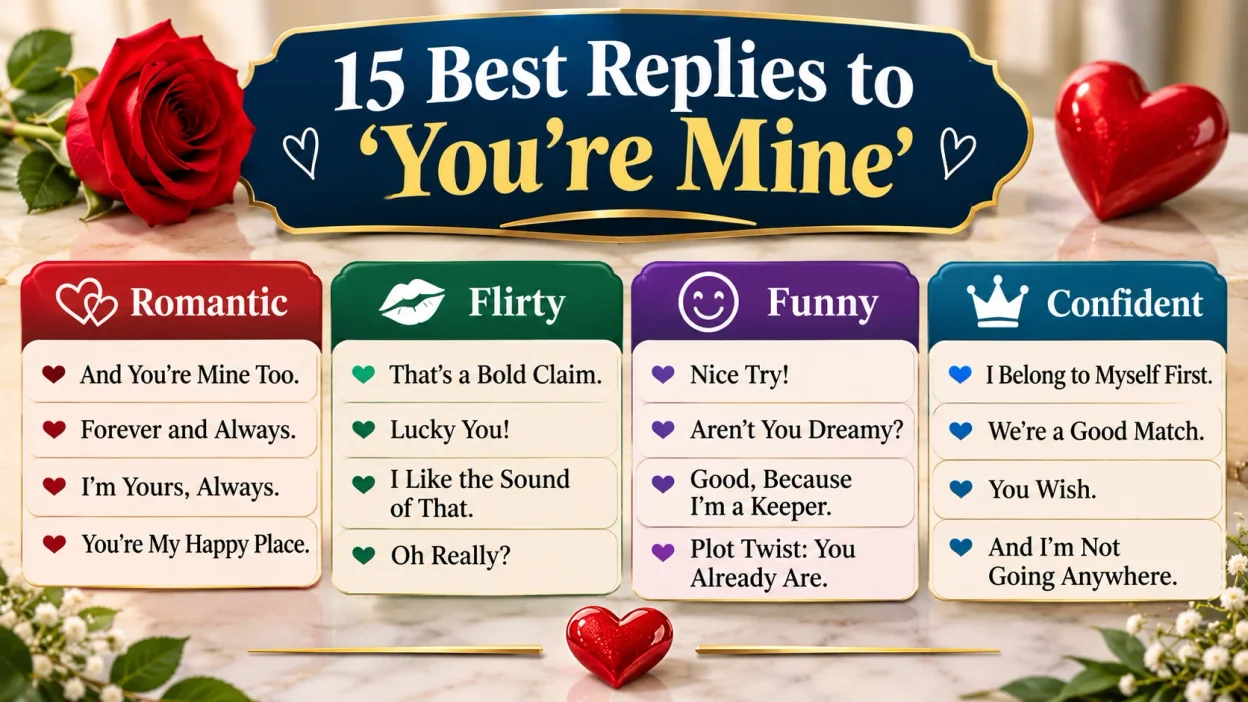
When a guy or romantic partner says “you’re mine,” your response depends on the tone, meaning, and relationship stage. 15 Best Replies to “You’re Mine” for Every Situation help you choose words that match your feelings and the moment.
In healthy relationships, this phrase can express affection, attraction, deep bonding, and romantic excitement. A playful or flirty reply can make someone laugh, spark romance, and create a sweet moment. However, possessiveness, jealousy, control, or dominance may feel uncomfortable. Your comfort level and personal boundaries always matter.
Choose a funny, confident, affectionate, or teasing response that feels natural. You might say, “Only if you can handle me!” to keep things playful. A thoughtful reply can deepen connection and make your romantic conversation more memorable. Stay honest, respect your feelings, and communicate clearly with your partner.
Quick Answer:
The best reply to “You’re mine” depends on your feelings and the conversation’s tone. Here are three responses for different situations.
| Your situation | Best reply | Why it works |
| You feel the same way | “And you’re mine too.” | Returns the affection warmly. |
| You want to tease them | “That’s a bold claim.” | Keeps the conversation playful. |
| You feel uncomfortable | “I belong to myself first.” | Communicates independence and personal boundaries. |
Before choosing a response, consider the relationship. A sweet reply makes sense when the feeling is mutual, while an honest response works better when you’re uncertain. You never have to agree with someone else’s claim about you just to keep a conversation pleasant.
15 Best Replies to “You’re Mine”
The following responses cover romantic, flirty, funny, confident, and boundary-setting situations. Each one includes its tone, meaning, and an example to help you use it naturally.
“And You’re Mine Too.”
Best for: Romantic partners and mutual affection.
This is one of the sweetest replies when you genuinely share the other person’s feelings. It returns their affection without making the conversation complicated.
The phrase communicates mutual interest and emotional closeness. It works particularly well when you’re already dating or have openly expressed your feelings.
Example conversation:
- Them: “You’re mine.”
- You: “And you’re mine too.”
- Them: “That’s exactly what I wanted to hear.”
Why it works: The response feels warm, direct, and reassuring. It shows that the affection goes both ways rather than suggesting that one person owns the other.
Use this reply when you mean it. You don’t need to say it just because the other person expects a romantic answer.
“I Like the Sound of That.”
Best for: Flirty conversations and growing romantic interest.
Want to show interest without sounding overly serious? This response strikes a comfortable balance between playful and affectionate.
It suggests that you enjoy the person’s attention and feel positive about the idea of being close to them. However, it doesn’t necessarily promise a committed relationship.
Example conversation:
- Them: “You’re mine.”
- You: “I like the sound of that.”
- Them: “So we’re on the same page?”
Why it works: The reply leaves room for the conversation to develop naturally. It feels confident without requiring a dramatic declaration of love.
Choose this response when you’re interested in someone but want to let the relationship unfold at its own pace.
“Then Treat Me Right.”
Best for: Playful flirting with a meaningful message.
This reply adds a little attitude while reminding the other person that affection comes with responsibility. It suggests that sweet words matter most when someone’s actions support them.
The phrase can sound flirtatious in a healthy relationship. It can also encourage a useful conversation about respect, honesty, and expectations.
Example conversation:
- Them: “You’re mine.”
- You: “Then treat me right.”
- Them: “Always. You deserve that.”
Why it works: It keeps the exchange light while reinforcing an important point. Caring about someone means considering their feelings, respecting their choices, and keeping promises.
Use a playful tone if you’re joking around. If you’re addressing a genuine concern, say what you need clearly rather than relying on humor alone.
“Oh Really? Since When?”
Best for: Teasing someone who enjoys playful banter.
Sometimes the best reply is a question that makes the other person explain themselves. This response adds humor without immediately accepting or rejecting their statement.
It works best when both people feel comfortable teasing each other. Your facial expression and tone can make the difference between playful curiosity and genuine annoyance.
Example conversation:
- Them: “You’re mine.”
- You: “Oh really? Since when?”
- Them: “Since you stole my heart.”
Why it works: The question gives the other person an easy opportunity to continue the conversation. It can lead to a funny comeback or a sweeter exchange.
Avoid this response if the person seems angry, controlling, or unwilling to respect your boundaries. Playful teasing should feel enjoyable for both people.
“That’s a Bold Claim.”
Best for: Confident flirting and witty comebacks.
This response is ideal when you want to sound clever without giving a predictable answer. It acknowledges what the person said while leaving your own position open.
The word bold adds a playful challenge. It can encourage the other person to explain their confidence or come up with a more charming response.
Example conversation:
- Them: “You’re mine.”
- You: “That’s a bold claim.”
- Them: “Should I make a better argument?”
Why it works: The reply sounds self-assured and leaves space for more banter. It also avoids suggesting that someone gets to decide your relationship status without your agreement.
Use it when the mood is light and you’re both comfortable with witty exchanges.
“Guess We’re Even, Then.”
Best for: Mutual flirting and lighthearted affection.
This reply works when you want to return the sentiment without making the conversation overly emotional. It creates the impression that both people have equal feelings for each other.
The phrase is especially suitable for couples who enjoy joking around rather than exchanging dramatic romantic declarations.
Example conversation:
- Them: “You’re mine.”
- You: “Guess we’re even, then.”
- Them: “Fair enough. Sounds like a deal.”
Why it works: The response introduces a sense of equality and mutual interest. Instead of making one person sound like the owner, it frames the relationship as something both people choose.
It’s a good option when you want your response to feel affectionate but relaxed.
“You Wish!”
Best for: Cheeky jokes and friendly teasing.
If your conversations usually involve playful challenges, this short comeback might fit perfectly. It gives the other person a humorous response without requiring a serious discussion.
However, the meaning depends heavily on your delivery. A smile can make the phrase sound playful, while a cold tone might make it sound dismissive.
Example conversation:
- Them: “You’re mine.”
- You: “You wish!”
- Them: “I’ll have to work on my charm, then.”
Why it works: It’s short, memorable, and easy to use in a casual chat. It also lets you maintain a playful sense of independence.
Choose another response if the person might interpret this as encouragement when you aren’t interested. Clear words are kinder than accidentally creating false expectations.
“Do I Get a Say in This?”
Best for: Sarcastic humor or situations that need clarification.
This reply questions the assumption behind the statement. Depending on your tone, it can sound like a clever joke or a genuine request for respect.
If the person is flirting and you both enjoy sarcasm, it can keep the conversation lively. If the statement feels uncomfortable, the same question can help you address the issue directly.
Example conversation:
- Them: “You’re mine.”
- You: “Do I get a say in this?”
- Them: “Of course. I was hoping you’d choose me too.”
Why it works: The reply highlights an important distinction between mutual affection and control. A healthy relationship gives both people a voice in decisions about their relationship.
If you’re serious about the question, don’t feel pressured to laugh it off. You can explain what made you uncomfortable and what you expect instead.
“You’re Getting Ahead of Yourself.”
Best for: Slowing down an overly intense conversation.
Sometimes someone expresses strong feelings before you’re ready to respond in the same way. This reply lets you acknowledge the moment while signaling that the conversation might be moving too quickly.
It can sound teasing when the relationship is new and both people are comfortable flirting. It can also establish a boundary when someone assumes more commitment than you’ve agreed to.
Example conversation:
- Them: “You’re mine.”
- You: “You’re getting ahead of yourself.”
- Them: “Fair enough. I’ll let things develop naturally.”
Why it works: The response doesn’t attack the other person’s feelings. Instead, it reminds them that relationships develop through shared decisions and mutual understanding.
If you like the person, you can follow up with reassurance. For example, explain that you’re interested but prefer taking things slowly.
“That’s Actually Sweet.”
Best for: Acknowledging affection without making a big declaration.
Not every romantic moment needs a clever comeback. Sometimes a simple, sincere response communicates more than a long message.
This phrase works when you appreciate the person’s affection but don’t want to respond with equally intense language. It recognizes their intention without automatically agreeing to every implication of their words.
Example conversation:
- Them: “You’re mine.”
- You: “That’s actually sweet.”
- Them: “I’m glad you think so.”
Why it works: It keeps the interaction warm and natural. You can express appreciation without promising feelings or commitment you haven’t decided on.
If you’re uncertain about what the person means, you can also ask what prompted the comment.
“I’m Glad You Feel That Way.”
Best for: Responding kindly when you’re unsure about your own feelings.
This reply is useful when you don’t want to embarrass the other person or encourage a romantic commitment prematurely. It acknowledges their feelings without claiming that you share them.
For example, you might enjoy spending time with someone but still need time to understand your own emotions. A thoughtful response gives you that space.
Example conversation:
- Them: “You’re mine.”
- You: “I’m glad you feel that way.”
- Them: “Does that mean you feel the same?”
- You: “I’m still figuring out how I feel.”
Why it works: It leaves room for honesty rather than forcing an immediate yes or no. It also helps prevent misunderstandings when the relationship is still developing.
If the person asks directly how you feel, answer as honestly as you can. You don’t owe anyone a romantic commitment simply because they have expressed interest.
“Let’s Not Rush Things.”
Best for: New relationships and conversations that feel too intense.
Romantic excitement can move faster than emotional comfort. When someone uses possessive language before you’ve established a relationship, you might want to slow the conversation down.
This response sets a limit without dismissing the other person’s feelings. It communicates that you’re open to understanding each other but aren’t ready to make assumptions about commitment.
Example conversation:
- Them: “You’re mine.”
- You: “Let’s not rush things.”
- Them: “I understand. We can take our time.”
Why it works: It creates space for trust to develop naturally. Instead of making promises under pressure, both people can discuss what they want from the relationship.
A respectful person should be willing to hear this. If someone repeatedly pressures you after you’ve asked to slow down, pay attention to that behavior.
“I Belong to Myself First.”
Best for: Expressing independence when a comment feels possessive.
This response is firm, direct, and centered on personal autonomy. It reminds the other person that a romantic relationship doesn’t erase either person’s individuality.
The phrase can be useful when someone treats affection as permission to control your friendships, decisions, time, or personal space.
Example conversation:
- Them: “You’re mine.”
- You: “I belong to myself first.”
- Them: “I didn’t mean it that way.”
- You: “I understand. I just want us to respect each other’s independence.”
Why it works: It communicates a clear principle without insulting the other person. Healthy relationships allow people to care deeply about each other while maintaining their own identities.
You can care about someone and still make your own choices. Those two things belong together.
“I’m Not Comfortable With That.”
Best for: Setting a clear boundary when the comment feels wrong.
Sometimes humor isn’t the right response. If someone tells you “You’re mine” in a way that makes you uncomfortable, a direct statement can communicate your feelings more effectively than a clever comeback.
You don’t need to prove that the person intended harm before expressing discomfort. Your feelings deserve consideration even when the other person says they were joking.
Example conversation:
- Them: “You’re mine.”
- You: “I’m not comfortable with that.”
- Them: “Why? I was only joking.”
- You: “I understand, but I don’t like being spoken about as if I’m someone’s property.”
Why it works: The response identifies the problem without relying on insults or assumptions about the other person’s motives.
If the person listens and adjusts their behavior, that creates room for a more respectful conversation. If they dismiss your concerns or continue pushing, you can end the conversation and seek support from someone you trust.
“I’m Flattered, but I Don’t Feel the Same Way.”
Best for: Turning down romantic interest respectfully.
When you don’t share someone’s feelings, a clear and considerate response is usually the fairest option. It prevents the other person from interpreting playful flirting or vague language as a promise.
This reply acknowledges their interest without pretending that you feel something you don’t.
Example conversation:
- Them: “You’re mine.”
- You: “I’m flattered, but I don’t feel the same way.”
- Them: “I understand.”
- You: “Thank you for understanding.”
Why it works: It combines kindness with honesty. You don’t need to invent an excuse or agree to a relationship to protect someone’s feelings.
If the person refuses to accept your answer, you can repeat your boundary without debating it. Your decision doesn’t require their approval.
How to Choose the Right Reply to “You’re Mine”
The best comeback isn’t always the funniest or most romantic one. Choose a response that matches your feelings and the kind of relationship you want with the other person.
If You Like the Person
When the feeling is mutual, choose a warm response that makes your interest clear. You can return the affection without turning a simple exchange into a serious conversation.
Try these replies:
- “And you’re mine too.”
- “I like the sound of that.”
- “That’s actually sweet.”
Helpful tip: Pick a response that feels natural for your relationship. If you usually speak casually, a simple reply may sound more genuine than an elaborate romantic statement.
If You Want a Flirty Reply
Flirting works best when both people enjoy the conversation. A teasing response can add excitement while leaving room for the other person to respond.
Try these options:
- “Oh really? Since when?”
- “That’s a bold claim.”
- “Guess we’re even, then.”
- “Then treat me right.”
For example, if someone sends a playful text saying “You’re mine,” responding with “That’s a bold claim” gives them an opportunity to continue the banter.
However, pay attention to how the other person reacts. Good flirting feels enjoyable for both people, not like a competition to see who can push further.
If You’re Unsure About Your Feelings
You don’t have to decide how you feel about someone on the spot. Sometimes you need more time to understand your emotions or figure out what the other person expects.
Consider these responses:
- “That’s actually sweet.”
- “I’m glad you feel that way.”
- “Let’s not rush things.”
Each response acknowledges the comment without promising a romantic relationship.
If the person asks whether you feel the same way, answer honestly. Being uncertain is a perfectly reasonable position, and you don’t need to pretend otherwise.
If the Comment Makes You Uncomfortable
Your comfort matters more than finding the perfect comeback. If the phrase feels controlling rather than affectionate, use direct language instead of forcing yourself to laugh.
You could say:
- “I belong to myself first.”
- “I’m not comfortable with that.”
- “Please don’t talk about me that way.”
A clear response gives the other person a chance to understand your boundary. You can explain your feelings if you want, but you don’t have to keep defending them if someone refuses to listen.
If You Don’t Like the Person Romantically
When someone expresses romantic interest that you don’t share, kindness and clarity work better than misleading flirtation.
For example, say, “I’m flattered, but I don’t feel the same way.”
This response acknowledges their feelings while making your position clear. Although rejection can feel uncomfortable, an honest answer is generally more helpful than suggesting a relationship might happen when you don’t want one.
What Does “You’re Mine” Mean?
The phrase “You’re mine” doesn’t have one fixed meaning. The relationship, tone, timing, and surrounding behavior all help explain what the speaker intends.
Romantic Affection
In a mutual relationship, someone might use the phrase to express closeness, attraction, or a sense of commitment.
For example, a partner might say it while exchanging affectionate messages. If both people enjoy that language, it may simply be part of their shared way of expressing love.
Still, affectionate words don’t automatically establish an agreement. Both people should feel comfortable with the language they use.
Playful Flirting
Sometimes “You’re mine” is simply a teasing line intended to create a fun exchange.
A person might say it with a smile or use it during a lighthearted text conversation. In that context, a witty response such as “Oh really? Since when?” can keep things playful.
Context matters here. The same words can feel charming in one conversation and uncomfortable in another.
Possessiveness or Controlling Behavior
The phrase deserves closer attention when someone uses it to justify controlling your choices or ignoring your wishes.
For example, someone might claim that you’re theirs and then expect you to stop talking to friends, share private information, or follow rules you never agreed to.
One sentence alone doesn’t prove that a person is controlling. Repeated behavior matters more than a single phrase. Pay attention to whether the person respects your independence, accepts disagreement, and listens when you express discomfort.
A healthy relationship involves mutual care, trust, and choice. It doesn’t require either person to give up their identity or freedom.
Example Conversations: How to Reply to “You’re Mine”
Seeing a reply in context makes it easier to understand how the words might sound in a real conversation.
Example: When the Feeling Is Mutual
Alex: You’re mine.
Jordan: And you’re mine too.
Alex: That makes me happy.
Jordan: Good, because I mean it.
This exchange works because both people express affection willingly. Neither person has to guess whether the sentiment is mutual.
Example: When You Want to Flirt
Alex: You’re mine.
Jordan: That’s a bold claim.
Alex: Should I prepare a convincing argument?
Jordan: You can start by making me laugh.
The conversation stays light because both people participate in the teasing. The response doesn’t require either person to make a serious commitment.
Example: When You Want to Set a Boundary
Alex: You’re mine.
Jordan: I care about you, but I still make my own choices.
Alex: I didn’t mean to make you uncomfortable.
Jordan: I understand. I just want us to respect each other’s independence.
This exchange shows how someone can address uncomfortable wording without attacking the other person. It also gives the other person an opportunity to respond respectfully.
Read More: 26 Best Replies to “Mind Your Own Business” Clever and Calm
FAQs
1. What does “You’re Mine” mean in a relationship?
“You’re mine” usually expresses affection, attraction, or a feeling of closeness. Depending on the tone and relationship, it can sound romantic, playful, or possessive.
2. How should I reply when a guy says “You’re Mine”?
Choose a response that matches your feelings. You could say, “And what makes you so sure?” for a playful reply or “That’s sweet of you” for a warm response.
3. What is a funny reply to “You’re Mine”?
Try saying, “Did you get the ownership papers signed?” This humorous response keeps the conversation light without making things awkward.
4. How can I respond confidently to “You’re Mine”?
You can say, “I belong to myself, but I like your confidence!” It sounds self-assured while keeping the conversation friendly and playful.
5. What should I text back when someone says “You’re Mine”?
Keep your text simple and natural. Try “Oh really? Tell me more!” if you want to continue the conversation without making your feelings too obvious.
6. How do I reply romantically to “You’re Mine”?
If you share the same feelings, you could say, “And you have a special place in my heart.” This expresses affection without sounding overly dramatic.
7. What does it mean when someone says “You’re Mine” jokingly?
They might be flirting, teasing you, or trying to make you smile. Consider your usual conversations and their tone before deciding what they mean.
8. Is “You’re Mine” a red flag?
Not necessarily. It can be harmless flirting between people who respect each other. However, if someone uses it to control you, limit your friendships, or ignore your boundaries, take those behaviors seriously.
9. How do I respond to “You’re Mine” if I don’t feel the same way?
Be polite but clear. You could say, “I appreciate you, but I don’t feel that way about you.” You don’t need to pretend to have romantic feelings to protect someone’s emotions.
10. How can I make my reply to “You’re Mine” more memorable?
Choose words that reflect your personality and the situation. A clever joke, a sincere compliment, or a confident response can make the conversation memorable while keeping your feelings and boundaries clear.
Conclusion
Finding the best reply to “You’re Mine” depends on your feelings, your relationship, and the moment you share. Sometimes, a funny comeback keeps the conversation light, while a sweet response makes someone feel appreciated. You don’t need a perfect line to make your answer meaningful. Choose words that sound natural and reflect your personality.
If you’re flirting with someone, try a playful or confident reply that keeps the conversation going. If you share a close relationship, a thoughtful answer can express affection and deepen your connection. However, remember that romance should never come at the cost of your comfort. You can enjoy playful words without giving up your independence or personal boundaries.
Ultimately, the best response is one that feels right to you. Be honest about your feelings, pay attention to the other person’s intentions, and don’t be afraid to add a little humor. Whether you choose a clever comeback, a romantic expression, or a clear boundary, let your words reflect who you are. A genuine response will always feel better than one you force yourself to give.