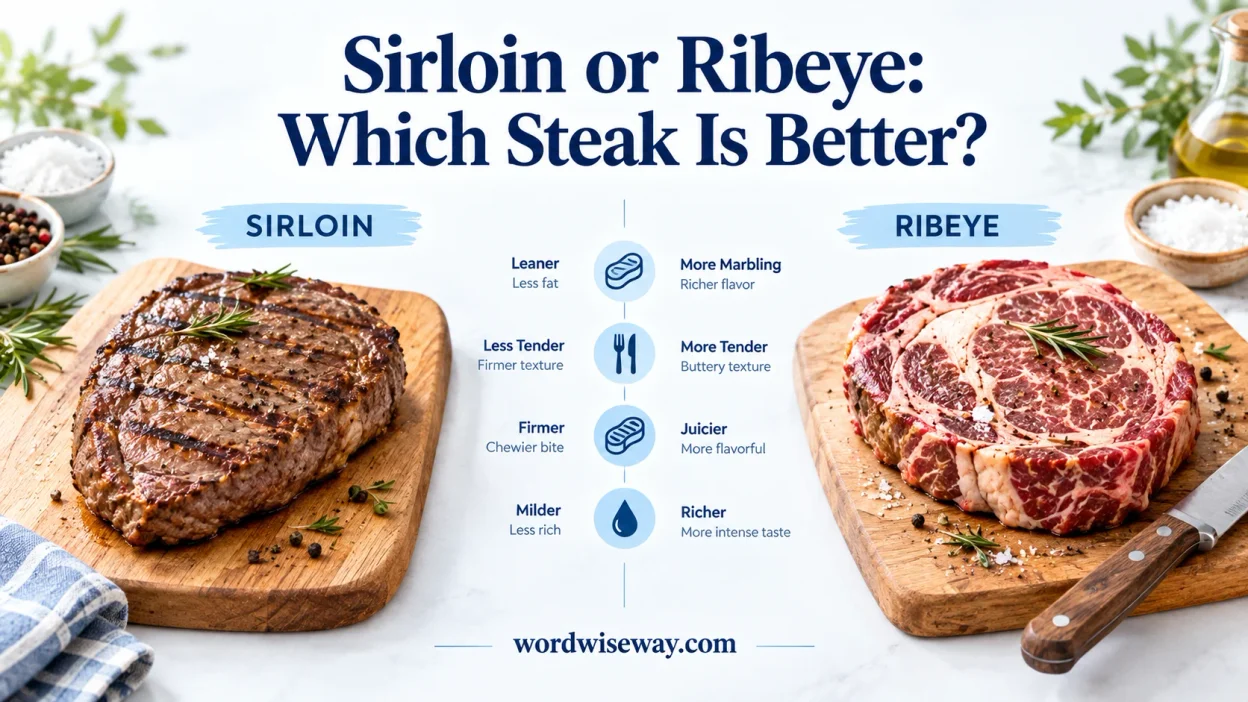
Sirloin or Ribeye: Which Steak Is Better? Choosing between sirloin and ribeye can be confusing when ordering at a restaurant, buying meat, or planning a grilling meal.
Both cuts are popular, juicy, and packed with flavor, yet they have a different texture and taste. A ribeye is famous for rich fat marbling and a buttery flavor, while sirloin is leaner, firmer, and more affordable. Their look can vary, and restaurants may describe these steaks differently, adding to the confusion.
When I compare them, I consider how you plan to eat the steak instead of choosing automatically. A budget-friendly steak such as sirloin works well for meal prep, while a premium, juicy cut such as ribeye suits someone seeking a richer experience. Both can work for grilling or pan-frying when prepared properly.
This guide explains the key differences in simple language, including where the cuts come from, how they taste, and whether one may be healthier for your needs. These details can make the decision easier and give you more confidence when selecting your next steak, especially if you are deciding whether one tastes better, costs less, or cooks more easily.
Quick Answer
Sirloin is generally leaner, firmer, and more affordable. It has a pronounced beef flavor and works well for grilling, pan-searing, slicing, and everyday meals.
Ribeye usually contains more intramuscular fat, known as marbling. That fat melts during cooking and creates a richer flavor, softer texture, and juicier eating experience.
| Feature | Sirloin | Ribeye |
| Fat content | Usually lower | Usually higher |
| Marbling | Moderate to low | Moderate to abundant |
| Flavor | Beefy and clean | Rich and buttery |
| Tenderness | Tender when cooked properly | Usually very tender |
| Juiciness | Moderate | High |
| Price | Usually lower | Usually higher |
| Best for | Everyday meals, grilling, slicing | Rich steak dinners, grilling, pan-searing |
| Beginner-friendly | Yes | Yes |
Neither cut automatically wins every category. The better choice depends on the steak experience you’re after.
What Is Sirloin?
Sirloin comes from the area toward the rear section of the beef loin. This broad area contains several different cuts, so the word sirloin doesn’t always describe exactly the same steak.
Some common sirloin-related cuts include top sirloin, bottom sirloin, tri-tip, sirloin cap, and petite sirloin. Their tenderness and fat levels can vary considerably.
Sirloin Flavor
Sirloin usually delivers a straightforward beef flavor. It doesn’t rely heavily on fat to create its character.
That makes it useful when you want the natural taste of beef to stand out without an especially rich or buttery mouthfeel.
A properly cooked sirloin can develop a beautiful browned crust while keeping a juicy center. The trick is avoiding excessive cooking, especially with leaner versions.
Sirloin Tenderness
Sirloin can be tender, but tenderness varies by the specific cut and how you cook it.
Top sirloin is generally more tender than tougher sirloin cuts. Proper trimming, aging, thickness, and cooking temperature also influence the final texture.
Cutting the steak against the grain after cooking can make each bite feel more tender because it shortens the muscle fibers.
Types of Sirloin
Sirloin isn’t just one steak.
Common examples include:
- Top sirloin: Tender, versatile, and popular for grilling.
- Bottom sirloin: Often firmer and better suited to certain larger cuts.
- Tri-tip: A triangular cut that works especially well with roasting and grilling.
- Sirloin cap: Known for its flavorful outer fat layer.
- Petite sirloin: Smaller and often chosen for practical everyday meals.
This variety is one reason sirloin can fit so many different recipes.
What Is Ribeye?
Ribeye comes from the rib section of the animal. It’s famous for its marbling, which refers to small streaks and pockets of fat distributed throughout the muscle.
When the steak cooks, some of that fat melts and spreads through the meat. That creates the signature richness associated with ribeye.
Ribeye Flavor
Ribeye is known for a rich, beefy flavor with a noticeably buttery quality.
The marbling plays a major role. As the fat renders, it contributes moisture, aroma, and richness to the steak.
If you enjoy a steak that feels indulgent rather than lean and straightforward, ribeye’s texture and flavor profile may suit you better.
Ribeye Tenderness
Ribeye is generally very tender because of its location and internal fat.
The fat doesn’t simply make the steak taste richer. It also contributes to the perception of tenderness and juiciness.
Bone-in ribeye can offer an especially dramatic presentation. Boneless ribeye, meanwhile, is easier to portion and handle in many cooking situations.
Bone-In vs. Boneless Ribeye
Both versions can be excellent.
Bone-in ribeye has a substantial bone attached and creates a classic steakhouse presentation. It can also provide a different cooking experience because the bone affects the shape and thickness of the steak.
Boneless ribeye offers convenience. It’s easier to portion, turn, slice, and fit into a skillet.
The bone doesn’t magically make every steak tastier. Steak quality depends on several factors, including the cut, marbling, aging, thickness, seasoning, and cooking technique.
The Major Differences
The biggest differences become clearer when you look beyond the names.
Marbling and Fat
This is probably the most noticeable distinction.
Sirloin is generally leaner. Ribeye usually contains considerably more intramuscular fat.
Marbling can improve the eating experience by adding richness and juiciness. However, more fat isn’t automatically better for every meal.
If you prefer a cleaner, leaner bite, sirloin may be more appealing.
If you enjoy rich and buttery steak, ribeye offers more of that experience.
Flavor
Sirloin delivers a strong, direct beef flavor.
Ribeye combines beef flavor with the richness created by its marbling.
Think of the difference as two different styles rather than a simple quality contest. One emphasizes leanness and beefiness. The other emphasizes richness and fat-driven flavor.
Tenderness
Ribeye is generally very tender.
Sirloin can also be tender, especially when you choose a tender sirloin cut and cook it carefully.
Thickness matters here, too. A thick steak gives you more control over crust development and internal temperature than a very thin steak.
Juiciness
Ribeye usually has the advantage in perceived juiciness because of its higher fat content.
Sirloin can still be juicy. However, overcooking has a greater impact on leaner cuts.
A thermometer is more reliable than guessing based only on cooking time.
Price
Sirloin is generally less expensive than ribeye.
That makes it attractive for regular meals, family dinners, meal preparation, and recipes where the steak gets sliced or combined with other ingredients.
Ribeye often costs more because of its popularity, tenderness, and desirable marbling.
Price also changes according to grade, aging, thickness, source, and market conditions.
Which Steak Is Better for Grilling?
Both work beautifully on a grill.
Sirloin benefits from high heat that creates a flavorful crust without leaving the center dry.
Ribeye handles high heat well, but its rendered fat can create flare-ups. Keeping an eye on the grill is important.
For either cut:
- Pat the steak dry.
- Season it appropriately.
- Preheat the cooking surface.
- Sear over strong heat.
- Turn when a good crust develops.
- Monitor the internal temperature.
- Let the steak rest before slicing.
The exact cooking time depends on thickness, starting temperature, cooking equipment, and desired doneness.
Which Is Better for Pan-Searing?
A heavy skillet works exceptionally well for both cuts.
Sirloin benefits from a strong sear because the browned exterior adds extra flavor to its leaner interior.
Ribeye can become particularly flavorful in a skillet because its fat renders as it cooks.
For ribeye, avoid filling the pan with unnecessary oil. The steak already contains plenty of fat.
For sirloin, a small amount of cooking fat can help with browning and heat transfer.
Which Is Better for Beginners?
Both are beginner-friendly, but each has a different learning curve.
Sirloin teaches you an important steak lesson: don’t overcook lean meat.
Ribeye teaches another useful lesson: manage rendered fat and heat.
If you’re cooking steak for the first time, focus less on memorizing exact minutes and more on understanding temperature.
A reliable thermometer can turn steak cooking from guesswork into a repeatable process.
Which Has More Protein?
Both sirloin and ribeye can provide substantial protein.
However, nutritional values vary according to the exact cut, serving size, trimming, grade, and preparation method.
Because sirloin is generally leaner, it can provide a higher proportion of protein relative to calories in some preparations.
Ribeye generally contributes more calories because of its greater fat content.
If nutrition matters to you, check the information for the exact cut and serving size rather than assuming every sirloin or ribeye has the same nutritional profile.
Which Steak Is Leaner?
Sirloin is generally the leaner choice.
That doesn’t mean every sirloin steak is extremely lean. Some sirloin cuts contain noticeable fat, especially around the exterior.
Likewise, ribeye can vary in marbling.
Look closely at the steak before buying it. You can often see the difference immediately.
Less visible internal fat usually points toward a leaner eating experience. More fine white streaks distributed throughout the meat indicate greater marbling.
Which Is Better for a Special Dinner?
Ribeye often fits a rich, steakhouse-style meal.
Its marbling creates a luxurious texture, while its substantial size can make the steak feel like the centerpiece of the plate.
Sirloin can still make an excellent special dinner. A thick top sirloin with a carefully developed crust, roasted vegetables, and a flavorful sauce can look and taste impressive without the heavier richness.
The occasion doesn’t determine the steak. Your preferred eating experience does.
Which Is Better for Everyday Meals?
Sirloin often makes practical sense for everyday cooking.
It’s versatile enough for:
- Steak salads
- Steak sandwiches
- Rice bowls
- Tacos
- Stir-fries
- Grilled steak plates
- Meal preparation
- Sliced steak dishes
Ribeye can work in these meals too. However, using an expensive, highly marbled steak in a heavily sauced dish may hide some of what makes the cut distinctive.
Does Beef Grade Matter?
Yes.
Quality grading can influence tenderness, marbling, and overall eating experience.
Higher grades generally contain more desirable marbling. Lower grades can still produce good steak when handled correctly.
However, grade isn’t the whole story.
Two steaks with the same grade can taste different because of:
- Cut
- Thickness
- Aging
- Marbling distribution
- Trimming
- Cooking method
- Seasoning
- Final internal temperature
Learning to judge the steak itself is more useful than relying on a single label.
Why Aging Matters
Beef can undergo different aging processes before it reaches the kitchen.
Wet aging usually involves sealed packaging that allows the meat to age in its own environment.
Dry aging exposes beef to controlled conditions that reduce moisture and concentrate flavor while changing the texture.
Aging can make a noticeable difference, especially in premium steaks.
However, an aged steak isn’t automatically the right steak for everyone. Some people prefer a clean, straightforward beef flavor, while others enjoy the deeper character associated with longer aging.
How to Cook Sirloin Properly
Sirloin rewards careful temperature control.
Because many sirloin cuts are relatively lean, cooking them too far can quickly reduce their juiciness.
For a good result:
- Start with a properly heated cooking surface.
- Dry the steak before seasoning.
- Season evenly.
- Build a strong crust.
- Monitor the internal temperature.
- Avoid repeatedly flipping or pressing the steak.
- Allow it to rest before cutting.
- Slice against the grain when appropriate.
Don’t flatten the steak with a spatula. Pressing it repeatedly can push valuable juices out of the meat.
How to Cook Ribeye Properly
Ribeye gives you more fat to work with, but that doesn’t make it impossible to overcook.
Start with a hot cooking surface and allow the steak to develop a deep crust.
As the fat renders, watch for excessive flare-ups if you’re using a grill.
For pan-searing, you can carefully position the steak so its fatty edge contacts the pan and renders some of that fat.
Then finish cooking the steak while monitoring its internal temperature.
Resting matters here too. Give the steak a few minutes before slicing so the juices can redistribute.
Common Steak-Cooking Mistakes
Even an excellent steak can disappoint when the technique goes sideways.
Starting With a Wet Steak
Surface moisture prevents efficient browning.
Pat the steak dry before it touches the pan or grill.
Using a Cold Cooking Surface
A weak initial sear can leave the exterior pale and underdeveloped.
Preheat the pan or grill properly before cooking.
Overcooking Lean Sirloin
This is one of the easiest ways to turn a good sirloin into a dry steak.
Keep a close eye on the internal temperature.
Ignoring Ribeye Fat
Ribeye’s fat is an advantage, but excessive rendered fat can cause grill flare-ups.
Manage the heat instead of letting the flames take over.
Cutting Immediately
Cutting into a steak the moment it leaves the heat can release juices before the meat has had time to settle.
Give it a short rest.
Relying Only on Cooking Time
A recipe might say five minutes per side, but steaks aren’t identical.
Thickness, heat level, starting temperature, and equipment all change cooking time.
Use internal temperature as your guide.
Practical Examples
Imagine you’re preparing dinner on an ordinary weeknight.
You want something flavorful, relatively lean, and versatile enough for leftovers. Sirloin fits that situation naturally.
Now imagine you’re preparing a celebratory dinner. You want a thick steak with generous marbling and a rich, buttery texture. Ribeye becomes a natural option.
Another example involves meal preparation. You plan to slice the steak into strips and add it to vegetables and rice. Sirloin’s leaner profile can work especially well.
The lesson is simple: choose the cut according to the meal, not merely the reputation of the steak.
Read More: Peeking or Peaking: Meaning, Difference, and Correct Usage
How to Choose the Right Steak at the Store
Don’t judge a steak only by its name.
Look at several characteristics.
Check the Marbling
Fine streaks of fat running through the meat can contribute to flavor and juiciness.
Check the Thickness
A thicker steak usually gives you more room to develop a crust while controlling the center.
Check the Color
Fresh beef should have an appropriate, natural appearance for its packaging and storage conditions. Avoid relying on color alone because packaging and oxygen exposure can affect appearance.
Check the Fat
A clean exterior trim can reduce unnecessary waste. With ribeye, however, some external and internal fat is expected.
Consider Your Cooking Method
A steak destined for the grill doesn’t need the same characteristics as one you’re planning to slice into a stir-fry.
Final Comparison
| Category | Sirloin | Ribeye |
| Beef flavor | Strong and direct | Rich and beefy |
| Marbling | Usually lower | Usually higher |
| Fat | Generally leaner | Generally fattier |
| Texture | Firm and tender when properly cooked | Soft, juicy, and rich |
| Cooking | Grill, pan, roast, slice | Grill, pan-sear, roast |
| Everyday use | Excellent | Good |
| Special occasions | Excellent | Excellent |
| Budget | Usually friendlier | Usually more expensive |
| Best feature | Versatility | Richness |
FAQs
Is sirloin or ribeye better for flavor?
Ribeye usually has a richer flavor because its higher fat content and marbling add a buttery, juicy quality. Sirloin has a cleaner, beefier taste with less richness.
Which steak is more tender, sirloin or ribeye?
Ribeye is generally more tender because of its marbling. Sirloin can still be tender when cooked properly, but its firmer texture is more noticeable.
Is sirloin cheaper than ribeye?
Yes, sirloin is typically more affordable than ribeye. It can be a practical choice when you want a satisfying steak without paying the higher price often associated with premium cuts.
Which steak is better for grilling?
Both cuts work well on the grill. Ribeye is especially popular for grilling because its fat helps create a juicy steak, while sirloin is a good option when you prefer a leaner cut.
Is sirloin healthier than ribeye?
Sirloin is generally leaner and may contain less total fat than ribeye. However, the nutritional difference depends on the specific cut, portion size, and preparation method.
Which steak is easier to cook?
Both are relatively straightforward to cook, but sirloin can become dry if overcooked because it contains less fat. Ribeye is more forgiving because its marbling helps retain moisture.
Can I use sirloin for meal prep?
Yes. Sirloin works well for meal prep because it is lean, flavorful, and easy to portion. Sliced sirloin can be added to salads, rice bowls, vegetables, or sandwiches.
Why does ribeye have so much fat?
Ribeye comes from an area of the beef that develops significant intramuscular fat. This marbling melts during cooking, helping create the rich flavor and juicy texture associated with ribeye.
Which steak should I choose for pan-frying?
Either cut can be pan-fried successfully. Ribeye is a strong option when you want a rich, juicy result, while sirloin suits those who prefer a leaner steak with a firmer bite.
Can sirloin taste as good as ribeye?
Yes, although the two cuts offer different eating experiences. Sirloin can taste excellent when seasoned and cooked well, while ribeye provides more richness from its higher level of marbling.
Conclusion
Choosing between sirloin or ribeye comes down to what you want from your steak. Ribeye brings rich marbling, a buttery texture, and a juicy bite, while sirloin offers a leaner texture, strong beef flavor, and a generally more affordable price. Neither cut fits every meal in exactly the same way, so your preference for richness, tenderness, and portion size matters.
If you are planning a casual grilling meal, preparing food for the week, or watching your budget, sirloin can be a practical option. If you want a more indulgent steak with noticeable marbling and rich flavor, ribeye offers a different experience. Cooking method also matters, because proper seasoning, heat, and timing can make a major difference with either cut.
The simplest way to decide is to match the steak with your priorities. Think about taste, texture, fat content, price, and how you plan to cook it. Once you understand these differences, the choice between sirloin and ribeye becomes much easier, and you can order or prepare your steak with greater confidence.